
Why Basements Make Great Home Gyms
Basements naturally provide the quiet, enclosed space ideal for focus and physical activity. They’re also separated from the rest of the house — perfect for heavy equipment, loud music, or early-morning routines.
| Advantage | Benefit |
|---|---|
| Temperature Control | Cooler year-round, ideal for workouts. |
| Noise Isolation | Keeps thumping weights or treadmills from disturbing the rest of the home. |
| Flexible Space | Customize for cardio, weights, yoga, or boxing. |
| Added Home Value | Finished gyms are a huge resale perk, especially in Utah’s fitness-focused market. |
1. The Minimalist Setup
A minimalist gym setup keeps your workouts focused, your space flexible, and your mind clear. Instead of cluttering the basement with oversized machines or random gear, this design prioritizes open floor space, movement freedom, and visual simplicity. It’s perfect for anyone who values efficiency, cleanliness, and adaptability in their fitness environment.
- Use neutral walls: Shades like white, light gray, or beige reflect light and make the room feel larger and brighter.
- Invest in a few essentials: A solid bench, dumbbells, resistance bands, and a mat cover most strength and mobility workouts.
- Add a full-length mirror: Enhances light, expands visual depth, and helps perfect form during training.
- Maximize lighting: Combine overhead LEDs with wall sconces or lamps for even illumination.
- Keep cables hidden: Concealed power outlets or cord channels maintain the clean aesthetic.
| Feature | Benefit |
|---|---|
| Neutral Wall Colors | Brighten the basement and enhance focus without overwhelming the senses. |
| Essential Equipment Only | Reduces clutter and supports a wide range of workouts efficiently. |
| Full-Length Mirror | Improves form, posture, and awareness while visually expanding the space. |
| Layered Lighting | Eliminates shadows and maintains motivation with consistent brightness. |
| Hidden Wiring | Preserves a polished, professional gym appearance with no visual distractions. |
Pro Tip: Rubber interlocking mats protect floors, dampen noise, and instantly give your basement gym a clean, commercial-quality finish.
2. The Strength-Training Zone
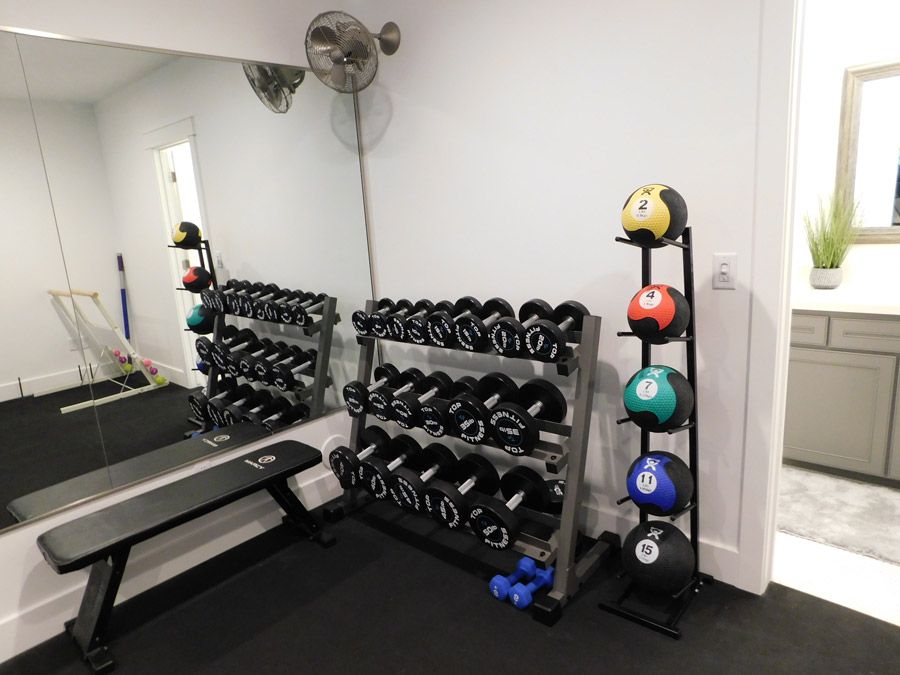
For serious lifters, your basement gym should revolve around durability and layout. Weight training equipment can be heavy, noisy, and demanding on your structure — so plan for reinforcement, smart organization, and the right flooring from the start. A well-designed strength zone lets you lift safely, move freely, and keep every piece of gear within reach without feeling cramped.
- Use heavy-duty rubber flooring: Thick mats absorb shock, protect concrete slabs, and reduce vibration during lifts.
- Include a squat rack and adjustable bench: The foundation for compound lifts and versatile training routines.
- Install mirrors strategically: Helps monitor form, track progress, and visually opens the room.
- Reinforce load-bearing areas: Distribute heavy equipment weight safely with subfloor support.
- Organize with smart storage: Wall hooks, dumbbell trees, and plate racks keep gear tidy.
| Feature | Benefit |
|---|---|
| Heavy-Duty Rubber Flooring | Protects both equipment and flooring while reducing impact noise and vibration. |
| Squat Rack + Adjustable Bench | Creates a complete, efficient setup for strength training at every level. |
| Strategic Mirror Placement | Improves form accuracy and boosts motivation by enhancing visibility. |
| Load Reinforcement | Prevents floor damage and maintains structural safety for heavy equipment. |
| Smart Storage Solutions | Keeps pathways clear and gives your gym a clean, professional finish. |
Pro Tip: A wall-mounted storage rack saves valuable floor space and keeps weights organized and off the ground — perfect for tight basements.
3. The Cardio Corner
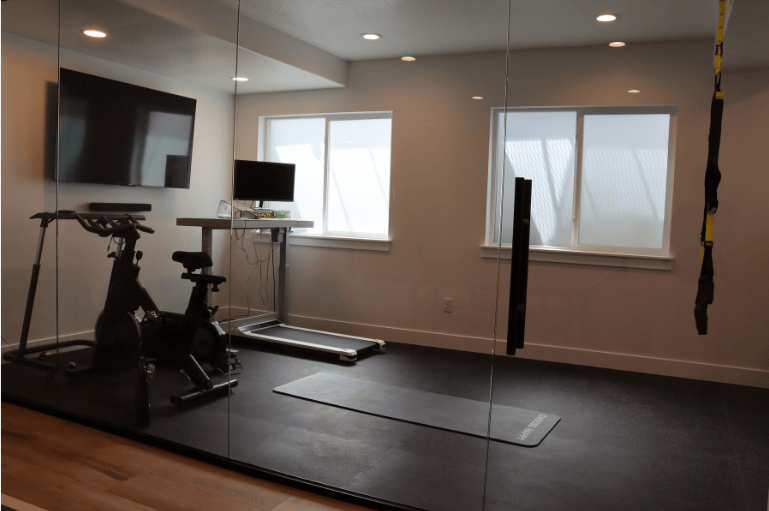
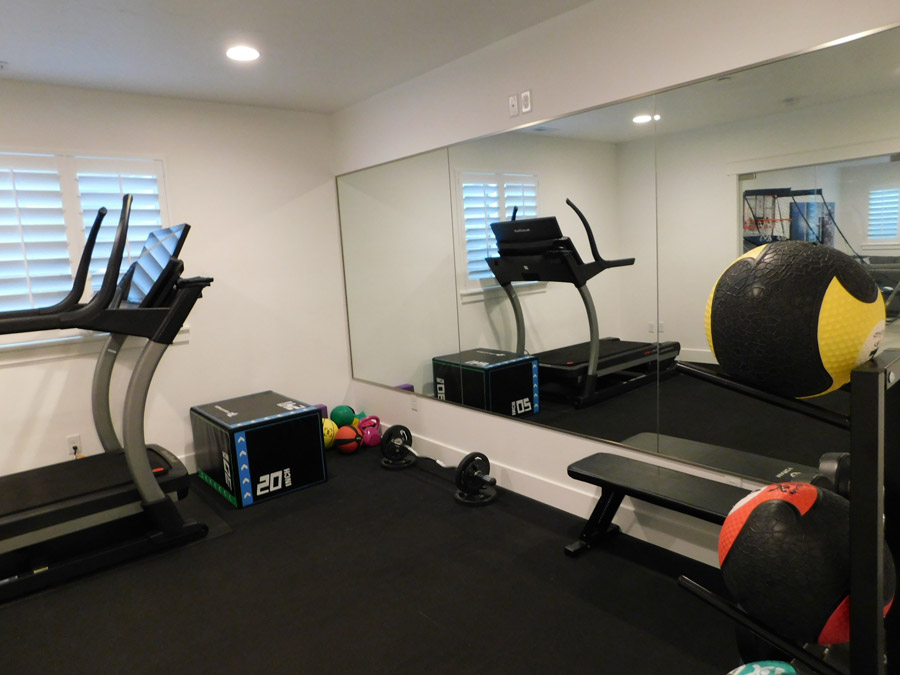
Your cardio area should feel energizing, well-ventilated, and equipped for endurance training. Basements can trap heat and humidity, so airflow is everything. Position treadmills, bikes, and rowers where ventilation and power access are best — this helps maintain performance and comfort throughout longer sessions.
- Install fans or ceiling vents: Keeps air circulating and prevents overheating during intense workouts.
- Add shock-absorbing mats: Minimizes machine vibration and protects the flooring beneath treadmills or rowers.
- Keep power sources accessible: Plan outlets near machines for easy setup and fewer extension cords.
- Wall-mount a screen or tablet holder: Perfect for guided classes or entertainment.
- Natural airflow: If possible, position near egress windows or vents for fresh oxygen flow.
| Feature | Benefit |
|---|---|
| Ventilation System | Prevents heat buildup and creates a refreshing workout environment. |
| Shock-Absorbing Mats | Protects your floor and reduces machine noise and vibration. |
| Accessible Outlets | Supports safe and tidy power management for cardio equipment. |
| Mounted Screen Setup | Allows you to follow training programs or enjoy entertainment hands-free. |
| Window or Vent Placement | Increases airflow and light, helping you stay energized during long sessions. |
Pro Tip: Mount a TV or tablet at eye level — it keeps posture aligned and makes workouts more engaging.
4. The Yoga + Stretch Studio
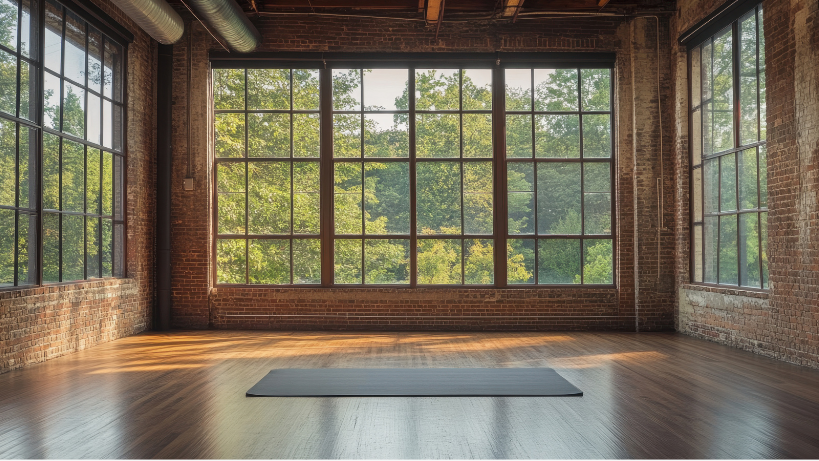
Every good gym needs a recovery zone. A designated yoga and stretch area helps improve flexibility, focus, and balance while giving your body space to cool down. This section of your basement gym should feel calm, open, and naturally soothing — a visual and mental contrast to your strength and cardio zones.
- Use light wood or vinyl flooring: Warm underfoot, easy to clean, and soft enough for floor-based movement.
- Incorporate plants and soft lighting: Creates a tranquil environment for stretching or mindfulness work.
- Add acoustic panels: Keeps the space peaceful by reducing echo and external noise.
- Include a large mirror or wall mural: Visually expands the space and adds character.
- Designate storage: A built-in bench or cabinet keeps mats, straps, and towels tidy.
| Feature | Benefit |
|---|---|
| Light Wood or Vinyl Flooring | Comfortable, durable, and visually warms the room for a peaceful aesthetic. |
| Natural Elements + Lighting | Promotes calm and enhances focus for yoga or meditation sessions. |
| Acoustic Panels | Improves sound quality and blocks background distractions. |
| Wall Mirror or Mural | Visually opens the space and adds an artistic, personal touch. |
| Built-In Storage Bench | Keeps accessories organized and accessible without cluttering the floor. |
Pro Tip: Integrate a small built-in bench for mats and gear — it doubles as seating and keeps your peaceful zone clutter-free.
5. The HIIT or CrossFit Space
If high-intensity interval training is your style, your basement can absolutely handle the challenge — with the right setup. HIIT and CrossFit sessions involve explosive movements, heavy equipment, and constant motion, so the design should prioritize durability, ventilation, and open space. A well-planned area keeps energy high while protecting your body and your home.
- Use high-density rubber flooring: Cushions joints, absorbs shock, and minimizes floor damage from jumps or weights.
- Open layout: Keep at least an 8×8 ft clear area for dynamic movement like burpees, box jumps, or sprints.
- Install industrial fans: Maintain airflow and oxygen levels during intense workouts.
- Wall storage systems: Hang ropes, kettlebells, or resistance bands for quick access.
- Bright lighting: Keeps energy levels up and visibility clear for fast-paced training.
| Feature | Benefit |
|---|---|
| High-Density Rubber Flooring | Protects joints and surfaces from repeated high-impact movements. |
| Open Layout | Allows unrestricted movement for circuits and full-body exercises. |
| Industrial Fans | Improves airflow, cooling, and overall endurance during intense workouts. |
| Wall-Mounted Storage | Frees up floor space and keeps equipment organized and safe. |
| Bright, Even Lighting | Enhances motivation and ensures proper visibility for safe form. |
Pro Tip: Reinforce ceiling joists before installing pull-up bars, punching bags, or gymnastic rings — safety first in any high-impact setup.
6. The Smart Tech Gym
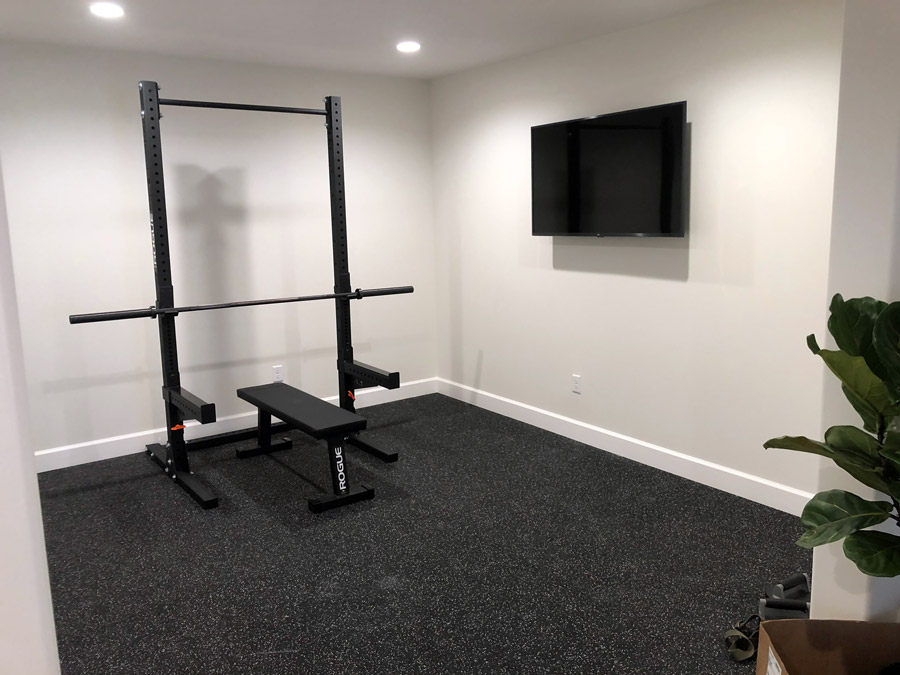
Modern home gyms are evolving fast, and your basement is the perfect hub for a connected fitness setup. From wall-mounted virtual trainers to AI-powered workout tracking, integrating smart technology makes training more efficient, interactive, and motivating. With the right wiring and connectivity, your gym can easily rival a commercial facility.
- Install wall outlets at mid-height: Ideal for mounting screens or smart mirrors without visible cords.
- Strong Wi-Fi or wired connection: Crucial for seamless streaming and equipment connectivity.
- LED lighting control: Use smart bulbs or light strips to shift between energizing and recovery modes.
- Mounted screens or projectors: For guided classes, performance metrics, or virtual coaching.
- Smart sensors: Track temperature, humidity, and motion for a fully automated gym environment.
| Feature | Benefit |
|---|---|
| Mid-Height Wall Outlets | Keep cords hidden for a clean, professional look around smart equipment. |
| Reliable Wi-Fi or Ethernet | Prevents streaming interruptions during guided sessions or classes. |
| Smart LED Lighting | Sets different energy moods for warm-ups, workouts, and cooldowns. |
| Mounted Screens | Integrates seamlessly with virtual trainers and fitness apps. |
| Smart Environment Sensors | Optimizes comfort and safety automatically by adjusting conditions. |
Pro Tip: Add acoustic drywall and soundproofing if you’re running speakers, screens, or guided training sessions — it keeps sound crisp and the peace upstairs intact.
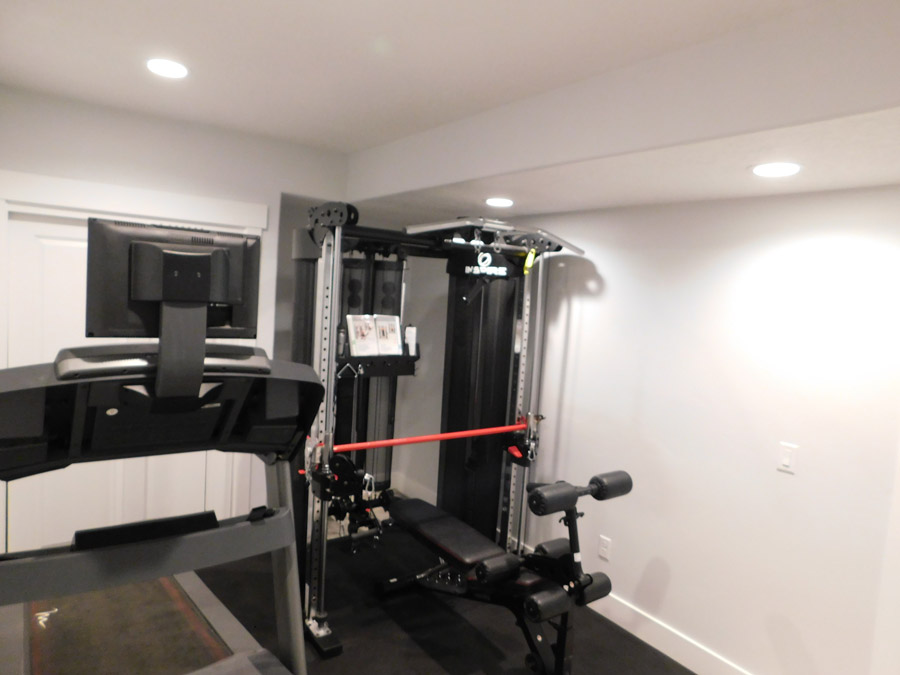
7. The Multi-Purpose Fitness Room
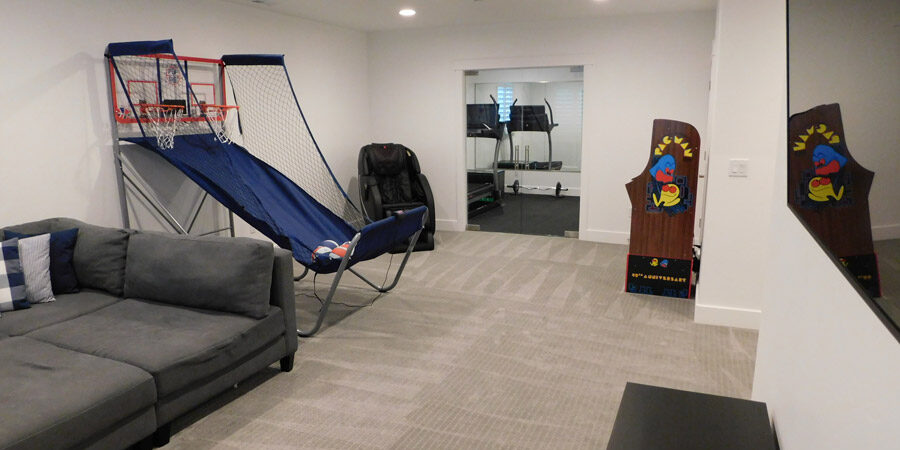
Not every basement gym has to be purely about exercise. A multi-purpose layout blends fitness, productivity, and relaxation — perfect for homes where space needs to adapt throughout the day. With smart zoning, you can transition seamlessly from a workout to work mode or family time.
- Use glass dividers or open shelving: Separates areas while preserving an open, airy feel.
- Blend flooring: Use durable vinyl or rubber tiles for gym sections, and soft carpet or cork for lounge or office zones.
- Lighting layers: Bright white lighting for focus, and dimmable warm tones for winding down.
- Hidden storage: Keeps fitness gear out of sight when the room transitions to another use.
- Flexible furniture: Foldable desks or movable benches let you switch functions quickly.
| Feature | Benefit |
|---|---|
| Glass Dividers or Shelving | Defines zones without blocking natural light or making the space feel boxed in. |
| Mixed Flooring Materials | Differentiates zones visually and functionally while maintaining cohesion. |
| Layered Lighting Design | Adapts brightness and color temperature to different activities. |
| Hidden Storage | Maintains a clutter-free, visually calm space when not working out. |
| Flexible Furniture | Enables quick transitions between gym, office, and playroom setups. |
Pro Tip: Install dimmers and smart lighting controls so you can instantly shift the atmosphere from intense training to relaxed cooldown — all with one tap.

8. The Luxury Wellness Suite
For the ultimate home upgrade, transform your basement gym into a full-fledged wellness retreat. By combining fitness and recovery in one cohesive space, you can go from heavy lifts to deep relaxation without leaving the room. The basement’s privacy, plumbing access, and sound insulation make it perfect for saunas, steam showers, or massage areas that complete your wellness experience.
- Waterproof materials: Tile, sealed vinyl, or epoxy flooring withstands moisture from saunas and steam rooms.
- Ventilation system: Proper airflow prevents humidity buildup and protects finishes from long-term damage.
- Built-in sound system: Delivers calming playlists for recovery or energizing beats during workouts.
- Ambient lighting: Soft, indirect illumination sets the mood for relaxation post-training.
- Plumbing integration: Ideal for showers, cold plunges, or hydrotherapy tubs.
| Feature | Benefit |
|---|---|
| Waterproof Flooring | Prevents damage from moisture and ensures easy maintenance. |
| Ventilation System | Keeps the air fresh, prevents mold, and regulates temperature. |
| Built-In Sound System | Creates a spa-like atmosphere for cooling down and recovery. |
| Ambient Lighting | Enhances tranquility and complements the wellness aesthetic. |
| Integrated Plumbing Access | Allows seamless installation of saunas, steam showers, and tubs. |
Pro Tip: See our Basement Spa Ideas guide to explore how to pair fitness and recovery in one luxury setup.
9. The Compact Basement Gym
Limited square footage doesn’t mean limited results. With efficient planning and the right storage, a compact basement gym can deliver the same performance and versatility as a large-scale setup. The key is to maximize vertical space, keep the floor open, and use multi-functional gear.
- Foldable benches or racks: Collapse easily after workouts to free up valuable space.
- Wall-mounted storage hooks: Hold mats, resistance bands, and accessories neatly.
- Light colors and mirrors: Reflect light to make smaller rooms feel more spacious.
- Compact equipment: Adjustable dumbbells or under-desk bikes save space while offering variety.
- Ceiling-mounted pull-up bar: Uses overhead space instead of walls or floors.
| Feature | Benefit |
|---|---|
| Foldable Equipment | Frees up space quickly and keeps the area multi-functional. |
| Wall-Mounted Storage | Organizes small gear neatly without cluttering the floor. |
| Light Colors & Mirrors | Brightens and visually expands compact layouts. |
| Compact, Multi-Use Gear | Offers full-body workouts in minimal space. |
| Ceiling-Mounted Accessories | Optimizes unused vertical space for training variety. |
Pro Tip: Combine your compact gym with a home office or lounge zone — balance productivity and fitness in one efficient design.
10. The Motivational Design
Your environment impacts your consistency more than you think. A motivating design makes you actually *want* to work out — every day. With the right color palette, lighting, and visuals, you can transform your basement gym into an inspiring atmosphere that fuels progress and energy.
- Paint in energizing colors: Shades like blue, orange, or red-orange enhance focus and endurance.
- Add LED accent lighting: Create dynamic color transitions that match your workout intensity.
- Display goals or progress charts: Visible reminders keep motivation high and accountability strong.
- Inspirational wall decals: Subtle quotes or mantras help reinforce mindset during tough sessions.
- Personal playlist corner: Dedicated shelf or dock for music devices completes the vibe.
| Feature | Benefit |
|---|---|
| Energizing Paint Colors | Boost focus, motivation, and workout performance through color psychology. |
| LED Accent Lighting | Creates an immersive and energizing gym atmosphere. |
| Goal & Progress Displays | Visual tracking increases accountability and habit consistency. |
| Inspirational Wall Art | Sets a positive tone and reinforces your fitness mindset. |
| Music Integration Zone | Supports rhythm, pace, and focus for better workout performance. |
Pro Tip: Invest in wireless speakers — studies show consistent music pacing can boost workout performance by up to 20%.
Basement Gym Remodel Cost Breakdown
According to HomeAdvisor, the average home gym remodel ranges from $3,000 to $25,000, depending on size, finishes, and equipment. A basic DIY setup may start under $2,000, while luxury basement gyms with smart tech or saunas can exceed $40,000.
| Feature | Average Cost (USD) | Notes |
|---|---|---|
| Rubber or Vinyl Flooring | $500 – $3,000 | Durable and impact-resistant options. |
| Mirrors & Wall Finishes | $300 – $1,000 | Functional and aesthetic improvement. |
| Lighting & Electrical | $800 – $2,500 | Includes outlets, fans, and LED setups. |
| Equipment & Storage | $2,000 – $10,000+ | Depends on machines and weights. |
| Soundproofing & Insulation | $1,000 – $4,000 | Optional but ideal for noise control. |
| Total Estimated Range | $3,000 – $25,000+ | Varies by equipment, design, and finishes. |
Remodeling Tips Before You Start
- Plan ceiling height: Minimum 8 ft clearance recommended for safe workouts.
- Ensure proper ventilation: Basements can overheat during intense exercise.
- Install GFCI outlets: Required for electrical safety near moisture.
- Waterproof first: Always seal and dehumidify before finishing.
- Future-proof layout: Leave room for new machines or expanded zones.
Build a Basement Gym That Moves You
A basement gym isn’t just about equipment — it’s about freedom. No more commutes, waiting for machines, or sharing space with strangers. When designed well, it becomes a personal sanctuary that energizes your body and clears your mind.
Pro Worx Construction specializes in basement finishing, home remodels, and custom gym builds designed for performance and style. From durable flooring and soundproofing to lighting and ventilation, we create workout spaces built to inspire consistency and results.
Get a Free Quote from Pro Worx Construction
Your best gym isn’t across town — it’s right downstairs.
Frequently Asked Questions
How much does it cost to build a basement gym?
Most basement gyms cost between $3,000 and $25,000 depending on size, finishes, and equipment quality.
What flooring is best for a home gym?
Rubber or vinyl flooring offers the best durability and shock absorption for basements.
Do I need special ventilation for a basement gym?
Yes — proper airflow and dehumidifiers prevent odors and moisture buildup.
Can I add a sauna or shower to my basement gym?
Absolutely. Basements have easy plumbing access, making saunas or steam showers ideal add-ons.
Is a home gym a good investment?
Yes. It boosts home value, saves membership costs, and encourages long-term wellness.
Additional Resources: