In This Article
Tile covers more square footage than any other material in a bathroom renovation, floor, shower walls, sometimes an accent wall too, and it sets the tone for the entire room before you've hung a single towel bar. We've installed more tile than we can count across Utah County and the Salt Lake Valley, and the projects that go sideways almost always trace back to the same handful of tile decisions made too fast at the showroom.
Here's how we walk clients through tile selection, room by room and surface by surface.
Porcelain vs. Ceramic: Get This Choice Right First
Both porcelain and ceramic are fired clay tiles, but porcelain is denser and fired at a higher temperature, which makes it less porous and more durable. Porcelain absorbs less than 0.5% moisture, compared to as much as 3% for ceramic. For bathroom floors and shower walls, where water contact is constant, porcelain is the right call almost every time. It's virtually waterproof on its own, before grout and sealer even enter the picture.
Where Ceramic Still Makes Sense
Ceramic isn't a downgrade everywhere. It's lighter, often cheaper, and perfectly fine for an accent wall or a backsplash behind a vanity where it's not taking direct shower spray. If you've fallen in love with a ceramic pattern that doesn't come in porcelain, use it somewhere dry.
Natural Stone: Marble, Travertine, and Slate
Natural stone brings a depth and variation you can't fake with manufactured tile. Marble veining is genuinely one of a kind, and nothing else looks quite like it. But stone is porous and needs regular sealing, typically once a year for honed stone, and it's softer than porcelain, which means it scratches and etches more easily. Acidic products, even a dropped bottle of shampoo with citric acid in it, can etch unsealed marble permanently.
Our general rule: use natural stone as an accent rather than the whole room. A marble mosaic niche inside the shower, a travertine feature wall behind a freestanding tub, a strip of slate as a floor border. You get the beauty without committing to resealing an entire shower surround every year.
Large Format vs. Small Format Tile
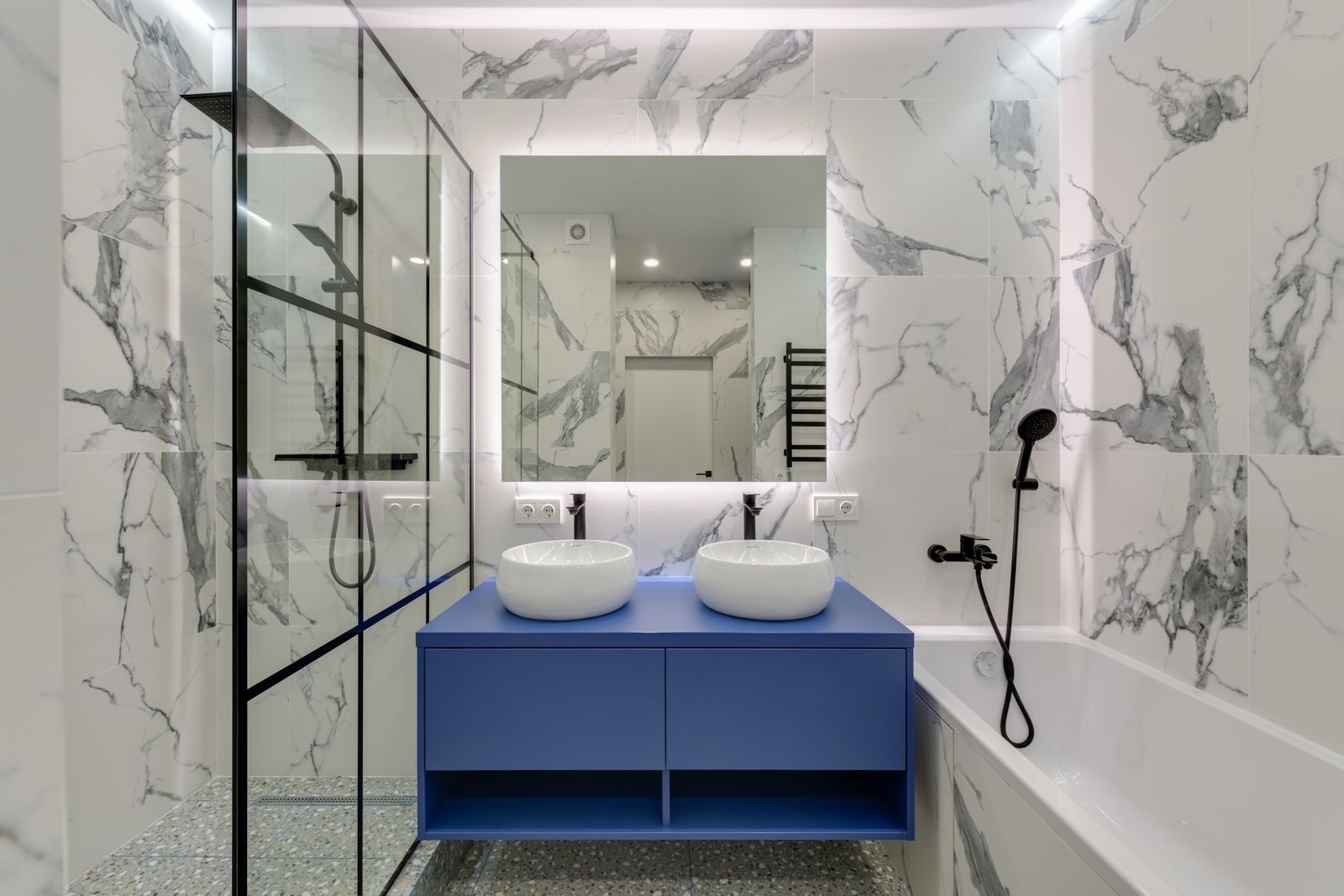
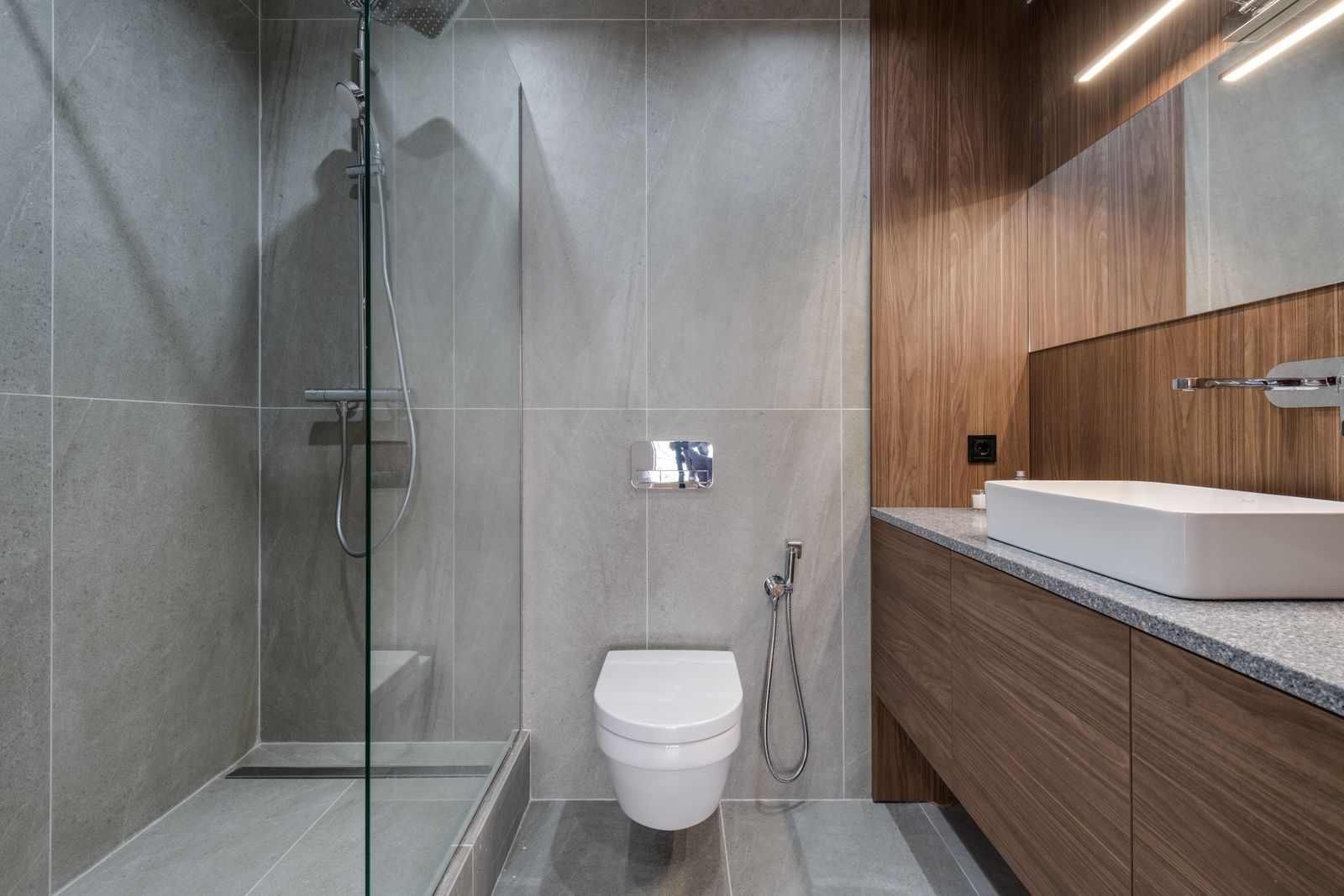
Large-format tile, generally 12x24 inches and up, has become the default look for modern bathrooms because fewer grout lines mean a cleaner appearance and less grout to clean. The tradeoff is that large tile demands a nearly perfectly flat substrate. Any waviness in the wall or floor telegraphs through a big panel in a way it never would with smaller tile.
Small format tile, mosaics, 4x4 squares, subway tile, is more forgiving on uneven surfaces and it's genuinely required in one specific spot: the shower floor. Shower floors need to slope toward the drain, and you can't slope a single 24-inch tile. Small tile or mosaic sheets flex into that pitch without cracking or leaving lippage at the seams.
Thinking about a bathroom renovation project of your own?
Get a Free EstimateFloor Tile and Slip Resistance
Bathroom floors get wet, which means slip resistance isn't optional. Look for tile with a Dynamic Coefficient of Friction (DCOF) rating of 0.42 or higher, which is the standard threshold for wet-area flooring. Matte and textured finishes consistently outperform glossy, polished tile in wet conditions, even when the DCOF rating looks similar on paper. A glossy tile can look stunning in a showroom and turn into a hazard the first time someone steps out of the shower with wet feet.
A combination we use constantly: large-format matte porcelain on the main bathroom floor, paired with a small-format mosaic on the shower floor itself for both slope and extra slip resistance where it matters most.
Grout: The Detail Everyone Forgets
Grout color changes the entire look of a tile job, and it's usually decided in the last five minutes of a selection meeting. Matching grout to tile color creates a seamless, monolithic look that makes the room feel bigger. Contrasting grout, white subway tile with charcoal grout is the classic example, highlights the tile pattern and gives the room graphic punch, but it shows dirt and soap scum faster and needs more frequent cleaning.
Epoxy grout costs more upfront, generally 2 to 3 times the price of standard cementitious grout, but it's essentially stain-proof, doesn't need sealing ever, and resists mildew far better in a wet shower environment. For shower floors and showers overall, we lean epoxy whenever the budget allows. For a dry main floor, standard cement-based grout with a quality sealer is a perfectly reasonable place to save.
Tile Costs in Utah
| Tile Type | Installed Cost per Sq Ft | Best Use | Maintenance |
|---|---|---|---|
| Ceramic | $5 – $12 | Accent walls, backsplash | Low |
| Standard porcelain | $8 – $18 | Floors, shower walls, shower floor (mosaic) | Low |
| Large-format porcelain | $12 – $25 | Shower walls, main floor | Low |
| Travertine | $12 – $30 | Feature walls, low-moisture flooring | High, needs sealing |
| Marble | $15 – $40 | Accent/feature wall, shower niche | High, needs annual sealing |
| Large-format porcelain slab (book-matched) | $25 – $50 | Statement shower walls, vanity backsplash | Low |
Thinking about a bathroom renovation project of your own?
Get a Free EstimateWhere to Use Which Tile, Zone by Zone
- Main bathroom floor: large-format matte porcelain, DCOF 0.42 or higher.
- Shower floor: small-format porcelain mosaic sheets, sloped to the drain, with epoxy grout.
- Shower walls: large-format porcelain or a porcelain slab for minimal grout lines; save natural stone for a single niche or feature wall.
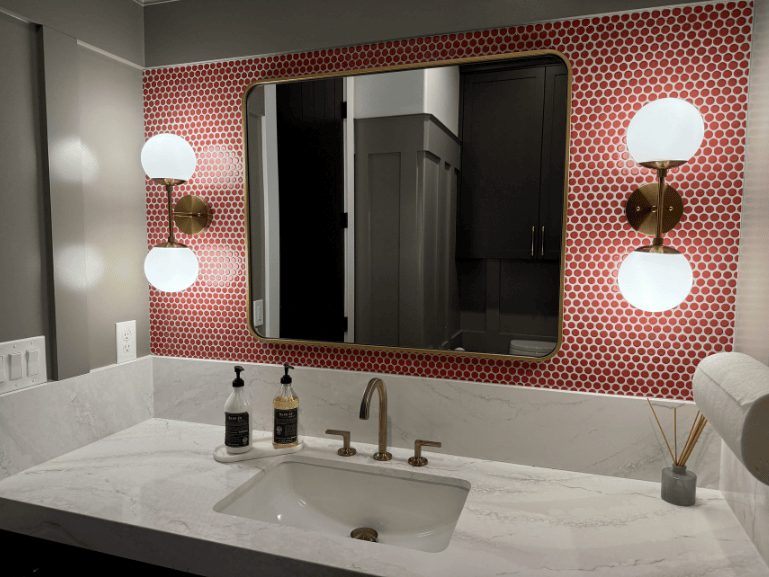
- Backsplash or dry accent wall: ceramic, marble mosaic, or a bold patterned tile, since it never gets direct water exposure.
- Shower niche: a great low-cost spot to use that expensive marble mosaic you fell in love with, without the upkeep of covering a whole wall.
FAQs
What DCOF rating should I actually look for?
Aim for 0.42 or higher for any bathroom floor tile, and don't rely on the showroom description alone, ask to see the manufacturer's spec sheet. Matte and textured finishes generally outperform polished tile of the same nominal rating once the floor is actually wet.
Is porcelain or ceramic better for a shower floor?
Porcelain, without question. Its lower water absorption rate means it holds up far better under constant moisture, and it's available in the small-format mosaic sheets you need to pitch the floor toward the drain.
Do I need to seal porcelain tile?
No, porcelain itself doesn't require sealing since it's essentially non-porous. You do still need to seal the grout lines, unless you've chosen epoxy grout, which never needs it.
How often does grout need to be resealed?
Standard cementitious grout sealer typically needs reapplication every 1 to 2 years in a shower, more often in high-use bathrooms. Epoxy grout never needs sealing, which is a big part of why we recommend it for shower floors and walls despite the higher upfront cost.
Final Thoughts
Tile is one of the few bathroom finishes you'll live with for 15 to 20 years without touching it again, so it's worth slowing down on this decision rather than picking whatever's on sale at the first showroom you visit. Our design team walks every client through physical samples and digital renderings before anything gets ordered, because tile that looks right on a 4x4 sample can read completely differently covering 80 square feet of shower wall.
Ready to Start Your Bathroom Renovation Project?
Get a free consultation and estimate from Utah's trusted home renovation experts.

Bryant Bitner
Founder & Lead Project Manager, Pro-Worx Construction
Bryant leads Pro-Worx Construction and has helped hundreds of Utah families plan and build renovations they actually use, from basement finishes to full home remodels. He focuses on honest scoping, code compliance, and clear numbers from the first conversation.