In This Article
- 01Overview
- 02Why Do Utah Basement Inspections Keep Getting Stricter?
- 03What Changed With Utah Basement Electrical Code After 2021?
- 04Why Are Egress Windows Still One of the Top Inspection Failures in Utah?
- 05What Did Utah’s HB 65 Energy Code Change for Basements in 2026?
- 06What Smoke and CO Detector Rules Are Now Catching Older Utah Basements?
- 07What Bathroom Ventilation Changes Are Tripping Homeowners Up?
- 08Does an Older Permitted Basement Have to Meet Today’s Code?
- 09How Do You Know If Your Utah Basement Needs to Be Updated Before You Sell?
- 10Frequently Asked Questions
Overview
Utah adopted the 2021 International Residential Code on July 1, 2023, and HB 65’s energy amendments took effect July 1, 2026. Put those two changes together and a basement finish that sailed through inspection five years ago would fail several specific items today. This guide walks through exactly what changed, what inspectors are catching now that they weren’t before, and what it means if you own an older basement finish and want to sell it, modify it, or add on to it.
We get this call often enough that we can see it coming. A homeowner lists the house, the buyer’s inspector walks the finished basement, and flags three or four items the homeowner swears passed inspection when the space was built. They’re not wrong about that. Those items did pass, just under a code Utah doesn’t use anymore.
We finish basements across Utah County, Salt Lake County, Davis County, and Summit County, and we’re in front of city inspectors constantly. Here’s exactly what changed and what it means for you.
Why Do Utah Basement Inspections Keep Getting Stricter?
Utah updates its building code on a rolling cycle tied to the International Residential Code releases. According to MeltPlan’s Utah building code guide, the state runs on roughly a three-year adoption cycle matched to the I-Code release schedule, and each cycle tightens specific requirements based on safety data, energy goals, and updated engineering standards.
| Code Adoption | Utah Effective Date | Key Impact for Basements |
|---|---|---|
| 2018 IRC cycle | Prior to July 1, 2023 | Baseline most older finished basements were built and inspected under |
| 2021 IRC and 2020 NEC | July 1, 2023 | Expanded electrical protection requirements, tightened smoke and CO detector interconnection, updated ventilation standards |
| HB 65 energy amendments | July 1, 2026 | Higher window performance standards and updated insulation R-values for basement walls |
A basement finished under the 2018 IRC and inspected in 2019 or 2020 was built correctly for that cycle. Measured against today’s 2021 IRC and HB 65 standards, though, several of those same items would fail now. That doesn’t mean the basement is unsafe. It just means the bar moved.
What Changed With Utah Basement Electrical Code After 2021?
The 2020 NEC, adopted in Utah effective July 1, 2023, expanded GFCI and AFCI protection well beyond what the previous code required. It’s the single area where we see the most older basement finishes come up short.
What changed and where older basements commonly fail:
| Electrical Requirement | Under Older Code | Under 2020 NEC / 2021 IRC | Failure Rate in Older Basements |
|---|---|---|---|
| AFCI protection | Required only in bedrooms in many older cycles | Required in all basement bedroom circuits. Utah amendments specify exact locations. Confirm with your city. | Very high. Most pre-2021 basements lack full AFCI coverage. |
| GFCI protection in basement areas | Required in unfinished areas. Finished basement outlets less consistently required. | Expanded to cover basement receptacles more broadly. No wall outlet can be more than 6 feet from any point on a wall. | Moderate. Depends on how the original work was done. |
| Outlet spacing | 12-foot rule between outlets on same wall | Same rule but now strictly enforced with no exceptions for partial walls | Low to moderate. Usually compliant if original work was done by a licensed electrician. |
| Dedicated circuits for wet areas | Required for bathroom but sometimes not enforced strictly | Bathroom must have dedicated 20-amp GFCI circuit. Strictly enforced. | Moderate. A common shortcut in older DIY or budget builds. |
Fixing missing AFCI protection is usually easier than homeowners expect. Most of the time it’s a panel upgrade, swapping standard breakers for AFCI breakers without opening a single wall. A licensed electrician can tell you whether your existing wiring handles that swap or whether some wall access is needed. It’s one of the most common pre-sale electrical fixes we run into on Utah basement resales.
A homeowner in Provo listed their home, and the buyer’s inspector flagged missing AFCI protection on both basement bedroom circuits. The basement had been finished in 2019 and passed inspection under the code in effect back then. This time, the buyer’s lender wouldn’t close without the AFCI upgrade. A licensed electrician swapped the panel breakers in four hours, total cost $480, and the sale went through without further issue. The homeowner had been sure the basement was fully up to code because it passed inspection once. It had, in 2019.
Thinking about a basement finishing project of your own?
Get a Free EstimateWhy Are Egress Windows Still One of the Top Inspection Failures in Utah?
Egress window requirements under the Utah IRC haven’t moved much on core dimensions across several code cycles, yet they’re still the single most common inspection failure we see in older Utah basements, for three reasons.
Current Utah egress window requirements under 2021 IRC:
- Minimum net clear opening of 5.7 square feet
- Minimum clear opening height of 24 inches
- Minimum clear opening width of 20 inches
- Maximum sill height of 44 inches from the finished floor
- Window well required if the bottom of the opening is below ground level
- Window well must be at least 9 square feet in area if deeper than 44 inches
Why older basements fail this today:
- Windows installed before the current standards sometimes meet the opening size but fail on sill height if the floor was later raised by a subfloor system
- DIY or handyman installations often used nominal window size rather than net clear opening, which is a different and smaller measurement
- Windows used in utility or storage rooms that were later repurposed as bedrooms were never sized for egress because they did not need to be at the time
- Window well sizing and drainage requirements have been more strictly enforced under the 2021 IRC cycle
What Did Utah’s HB 65 Energy Code Change for Basements in 2026?
Utah House Bill 65 took effect July 1, 2026, bringing updated energy and building envelope standards statewide. For basement finishing projects permitted after that date, two changes matter.
| Area | Pre-HB 65 Standard | Post-HB 65 Standard (July 2026) | Impact on New Permits |
|---|---|---|---|
| Basement wall insulation | R-15 continuous or R-19 cavity for Utah climate zones | Updated R-values in effect. Confirm with your city building department for current requirements. | New permits after July 1, 2026 must comply. Older finished basements are not retroactively required to upgrade. |
| Window performance | U-factor and solar heat gain coefficient requirements under 2021 IECC | Higher performance thresholds for window U-factor. Any new egress window added to a basement permit after July 1, 2026 must meet updated performance specs. | Affects window selection and cost on new projects. Does not trigger retroactive upgrades on existing windows. |
HB 65 only applies to new permits, not retroactively to work already permitted. If your basement was finished and permitted before July 1, 2026, you don’t have to bring the insulation or windows up to the new standard, unless you pull a new permit for additional work in that same space.
What Smoke and CO Detector Rules Are Now Catching Older Utah Basements?
The 2021 IRC tightened both smoke alarm and carbon monoxide detector rules in ways that catch a lot of older basement finishes off guard, especially when a homeowner pulls a new permit to modify or expand the space.
Current smoke alarm requirements that older basements commonly miss:
- Smoke alarms must be interconnected throughout the home, meaning when one sounds they all sound. Many older homes and basement finishes had standalone battery-operated detectors that do not interconnect.
- A smoke alarm is required in every sleeping room, outside every sleeping area, and on every level of the home including the basement.
- When you add a new bedroom to a basement or pull a new basement permit, some Utah jurisdictions now require the interconnection upgrade to extend to the entire home, not just the new space.
Current CO detector requirements:
- Carbon monoxide alarms are required in every home with an attached garage or fossil fuel burning appliance, which covers virtually every Utah home with a gas furnace
- CO alarms must be placed outside each sleeping area and on every level
- In a finished basement with a bedroom, a CO alarm is required in or near the sleeping area
- Many older basement finishes have smoke detectors but no CO detectors at all
A homeowner in Centerville pulled a permit to add a wet bar to their finished basement, originally permitted back in 2018. The inspector found a standalone smoke detector with no interconnection and no CO detector near the sleeping room, and the wet bar permit couldn’t close until both were fixed. Adding hardwired, interconnected smoke and CO detectors throughout the basement ran $380 in materials plus a half-day of electrical work. The homeowner said the inspector was genuinely helpful about explaining what was needed and why. Once they knew what was required, the fix was straightforward.
Thinking about a basement finishing project of your own?
Get a Free EstimateWhat Bathroom Ventilation Changes Are Tripping Homeowners Up?
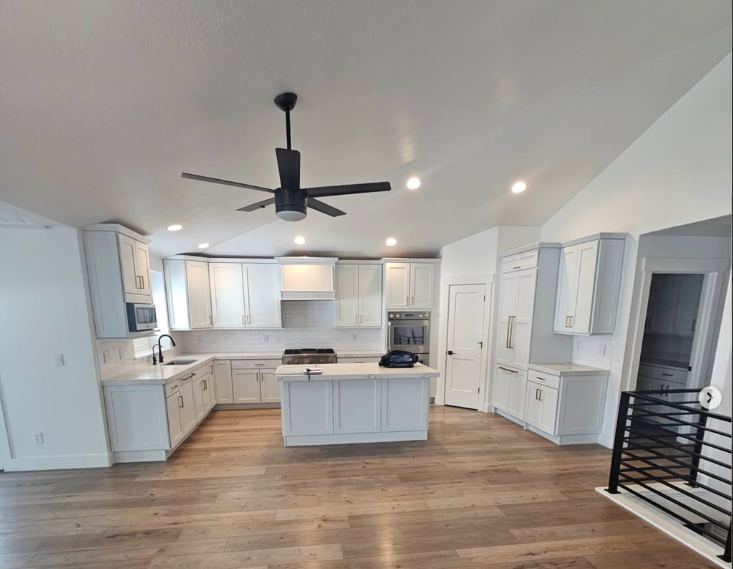
IRC 2021 Section R303.3 requires every bathroom to vent to the outdoors. Sounds simple enough, but it’s caught a surprising number of older Utah basement bathrooms at inspection time.
The two compliant options:
- An operable window with at least 1.5 square feet of openable area
- A mechanical exhaust fan that vents directly to the exterior, either through the exterior wall or through the roof, rated at minimum 50 CFM for intermittent use or 20 CFM for continuous use
What fails in older basement bathrooms:
- An exhaust fan that vents into the attic or ceiling space rather than directly outdoors. This was a common shortcut and it fails current code completely.
- Exhaust fans that are undersized or no longer functional.
- Basement bathrooms with no window and no exhaust fan at all, which were sometimes passed under older, less strictly enforced interpretations.
- Fans that technically vent outdoors but through a duct that is too long, too restricted, or has too many elbows to provide adequate airflow.
Does an Older Permitted Basement Have to Meet Today’s Code?
Almost every homeowner with an older basement asks us this, and the answer has some real nuance to it.
| Situation | Must It Meet Current Code? | Practical Reality |
|---|---|---|
| Older permitted basement, no new work planned | No, legally grandfathered | Does not need to be upgraded to current code unless new work is added |
| Older permitted basement, pulling new permit for additions | The new work must meet current code. Some jurisdictions trigger broader upgrade requirements. | Adding a bedroom, wet bar, or bathroom to an older basement may require smoke, CO, and electrical upgrades beyond just the new area |
| Older permitted basement being sold | No legal requirement to upgrade to current code | A buyer’s inspector will note code deficiencies under current standards. Buyers often negotiate credits or repairs based on those findings. |
| Unpermitted basement | Must meet current code if seeking retroactive permit | Retroactive permits require compliance with today’s code, not the code when the work was done |
Here’s what that means if you’re getting ready to sell: an older permitted basement doesn’t legally need an upgrade, but a buyer’s inspector is still going to document every item that falls short of current code. Whether those items turn into a negotiating point depends on the buyer, the market, and how strong your other offers are. Knowing what they’ll find before you list is almost always worth it.
How Do You Know If Your Utah Basement Needs to Be Updated Before You Sell?
The simplest move is a pre-listing contractor walkthrough focused specifically on current code compliance. It’s not a full home inspection, it’s a targeted look at the exact items Utah inspectors flag most often on older basement finishes.
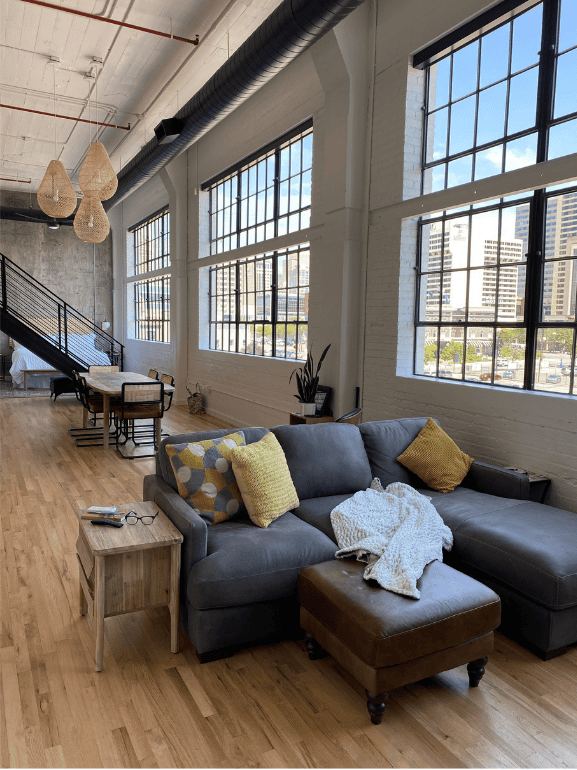
Pre-listing basement code checklist for Utah homeowners:
- Electrical: Are AFCI breakers installed on all bedroom circuits? Are GFCI outlets present at all required locations?
- Egress windows: Does every bedroom have a compliant egress window? Is the net clear opening at least 5.7 square feet? Is the sill height 44 inches or less from the finished floor?
- Smoke detectors: Are detectors in every bedroom, outside sleeping areas, and on every level? Are they interconnected? Are they hardwired or battery-operated?
- CO detectors: Is there a carbon monoxide detector near every sleeping area and on every level?
- Bathroom ventilation: Does every bathroom have a working exhaust fan that vents directly to the exterior, or a compliant operable window?
- Ceiling height: Is the minimum 7-foot clearance maintained in all habitable areas, accounting for any beams, ducts, or obstructions?
- Permit record: Is there a permit on record for the original basement finish? If not, the issues compound significantly.
A contractor who knows what to look for can run through that checklist in about an hour and give you an honest read on what a buyer’s inspector will find. Knowing ahead of time beats negotiating under deadline pressure once an offer is already on the table.
A homeowner in West Valley City asked us for a pre-listing walkthrough before putting the home on the market. The basement had been finished in 2017. We found four items a buyer’s inspector would likely flag: missing AFCI protection on the bedroom circuits, one egress window that met the opening size but had a sill height of 47 inches instead of the 44-inch maximum, standalone smoke detectors with no interconnection, and a bathroom exhaust fan venting into the ceiling space instead of outdoors. Fixing all four ran $2,100 total. The homeowner told us that knowing that number before listing let them price the home accurately instead of getting blindsided by a buyer’s credit request after an offer came in.
Selling or Adding to an Older Utah Basement?
Get a pre-listing code compliance walkthrough before a buyer’s inspector does it for you
We know exactly what Utah inspectors are looking for right now, and we’ll tell you what it costs to fix before you list.
Thinking about a basement finishing project of your own?
Get a Free EstimateFrequently Asked Questions
When did Utah adopt the 2021 IRC building code?
Utah adopted the 2021 International Residential Code and the 2020 National Electrical Code effective July 1, 2023, so any basement finishing project permitted after that date has to comply with those standards. HB 65 then added updated energy and building envelope amendments effective July 1, 2026.
Does my older Utah basement have to be upgraded to meet the 2021 code?
Not automatically. A basement permitted and inspected under an older code cycle is grandfathered under that code, so you’re not legally required to bring it up to current standards unless you pull a new permit for additional work. At that point the new work has to meet current code, and some jurisdictions may require broader upgrades as a condition of approving the permit.
What is the most common inspection failure in older Utah basement finishes?
Missing AFCI protection on bedroom circuits is the electrical failure we see most often. Egress windows that meet the opening size but fail on sill height or net clear opening are the most common structural failure. Buyer’s inspectors flag both constantly during home sales, even when the original basement passed inspection fine under the code in effect when it was built.
Can a buyer’s inspector fail a Utah basement that was already permitted?
A buyer’s home inspector can note anything they observe that doesn’t meet current code, regardless of when the work was done. That doesn’t mean the work was illegal when it was done, it means the standards changed since. Whether those findings become a negotiating point is a separate matter between buyer and seller, but inspectors document everything against current code no matter the permit history.
What does HB 65 change for Utah basement finishes in 2026?
HB 65, effective July 1, 2026, updated energy and building envelope standards, including basement wall insulation R-values and window performance requirements. Projects permitted after that date have to comply. Older permitted basement finishes aren’t retroactively required to upgrade insulation or windows for HB 65 unless a new permit gets pulled for work on the same space.
Are smoke detectors in a Utah basement required to be interconnected?
Under the 2021 IRC, smoke alarms have to be interconnected throughout the dwelling so that when one goes off, they all do. A lot of older Utah homes and basement finishes still have standalone battery detectors that don’t interconnect and don’t meet this requirement. When a new permit gets pulled for basement work, many Utah jurisdictions now require the interconnection upgrade to extend through the whole home, not just the new area.
How do I find out what code my Utah basement was originally built under?
Pull the original permit record from your city’s building department. The permit application and inspection record usually reference the code edition in effect at the time. You can also cross-reference the permit date against Utah’s code adoption history: the state ran under the 2018 IRC before July 1, 2023, and the 2021 IRC from that date forward.
Ready to Start Your Basement Finishing Project?
Get a free consultation and estimate from Utah's trusted home renovation experts.
Bryant Bitner
Founder & Lead Project Manager, Pro-Worx Construction
Bryant leads Pro-Worx Construction and has helped hundreds of Utah families plan and build renovations they actually use, from basement finishes to full home remodels. He focuses on honest scoping, code compliance, and clear numbers from the first conversation.