

Every spring, Utah homeowners walk outside, look at their deck, and realize winter did more damage than they expected. Cracked boards. Soft spots. Warping. Loose fasteners. Sometimes worse.
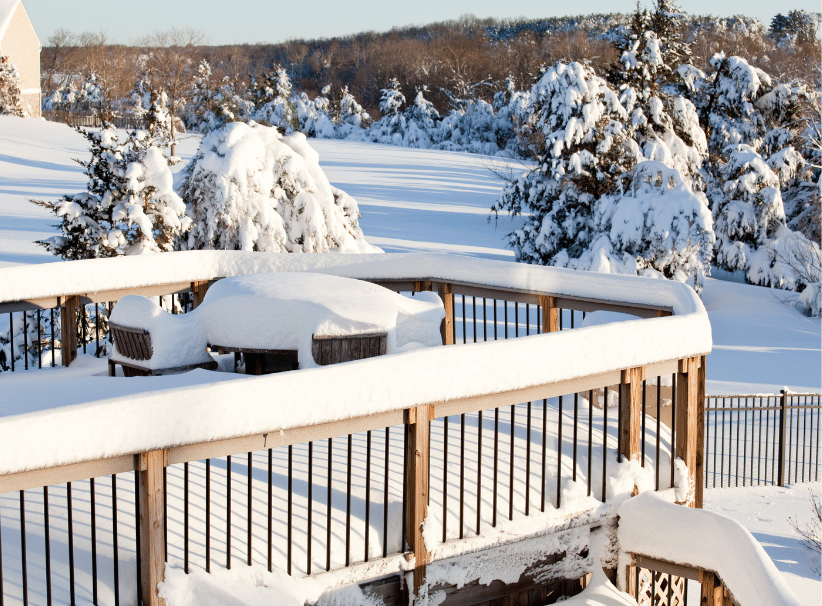
Utah’s freeze–thaw cycles are brutal on outdoor structures. Snow melts during the day, refreezes overnight, and forces moisture deep into decking materials. By the time everything thaws out, many decks are no longer safe—or worth fixing.
Winter Deck Damage Isn’t Just Cosmetic
What starts as minor surface cracking often turns into deeper structural problems once Utah’s freeze–thaw cycles take hold. Snow melts during the day, water seeps into joints and fastener holes, then refreezes overnight—expanding and forcing materials apart from the inside out.
Over time, this cycle loosens fasteners, weakens framing connections, and allows moisture to reach areas homeowners can’t easily see. By the time damage becomes visible in spring, the underlying structure is often already compromised.
In Utah, this process happens faster than many homeowners expect—especially on decks that face repeated snow buildup, limited winter sun, or poor drainage. What looks like a simple repair can quickly turn into a much larger project.
By late winter or early spring, many homeowners are facing a tough choice: repair the deck again—or rethink whether that money would deliver more value if invested elsewhere in the home.
The Pivot: From Outdoor Repairs to Indoor Space
This is where we see a major mindset shift for Utah homeowners. After dealing with winter deck damage year after year, many start questioning whether pouring more money into outdoor repairs actually makes sense.
Decks are exposed. They take the full hit from snow, ice, UV, and temperature swings—and in Utah, that wear adds up fast. Even well-built decks often need ongoing repairs or upgrades just to stay safe and functional.
At some point, homeowners stop asking, “How do we fix the deck?” and start asking, “Where would this money actually improve how we live in our home?”
That’s when attention shifts indoors. Instead of investing in a space that’s only usable part of the year, many Utah homeowners choose to remodel their basement—adding warm, dry, comfortable square footage that works in every season.
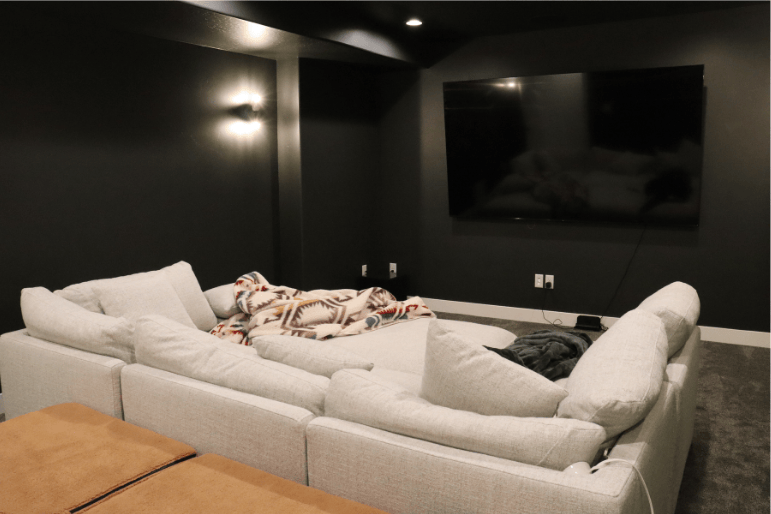
A basement remodel transforms underused space into something practical: a family room, home office, guest suite, gym, or entertainment area. It’s protected from snow and ice, insulated from temperature extremes, and designed for everyday life—not just fair-weather weekends.
For many homeowners, it’s not about spending more—it’s about spending smarter. When comparing repeated outdoor repairs to long-term indoor value, the basement often comes out ahead.
Why Basements Make More Sense in Utah
Utah homes are uniquely well-suited for basement remodels. With colder winters, hot summers, and wide temperature swings throughout the year, indoor living space delivers far more consistent value than outdoor structures exposed to the elements.
When homeowners compare where their remodeling budget will have the biggest day-to-day impact, basements often rise to the top—especially when that space is already under the roof and protected from weather-related wear.
- Year-round living space: Unlike decks or patios, basements are usable in every season, regardless of snow, heat, or rain.
- Stronger long-term return: Finished basements add livable square footage, which tends to carry more resale value than outdoor-only improvements.
- Lower ongoing maintenance: Once properly built and finished, basements avoid the repeated sealing, repairs, and weather damage common with exterior structures.
- Flexible use: Basements can adapt as needs change—family rooms, home offices, guest suites, workout spaces, or entertainment areas.
- Improved comfort for growing households: Extra indoor space reduces overcrowding, supports remote work, and creates separation between living zones.
For many Utah homeowners, the appeal isn’t just added square footage—it’s creating space that works every day, in every season, without constantly battling the elements.
Basement Remodel vs Outdoor Repairs: Long-Term Value Comparison
When homeowners step back and compare long-term value—not just upfront cost—the difference between continued outdoor repairs and a basement remodel becomes clear. One is about maintaining condition. The other is about adding usable, livable space.
For many Utah homeowners, this comparison is the turning point. When the goal shifts from “fixing what’s worn down” to “adding space that improves daily life,” basement remodeling consistently delivers more lasting value.
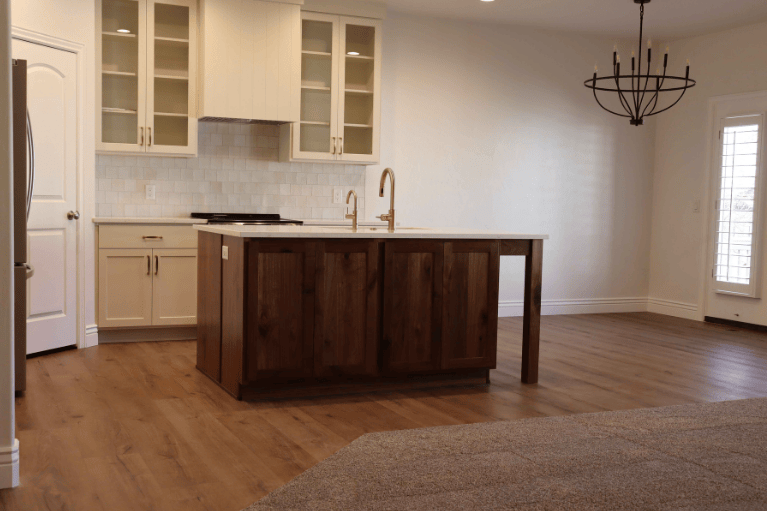
Deck Repairs vs Basement Remodels: A Reality Check
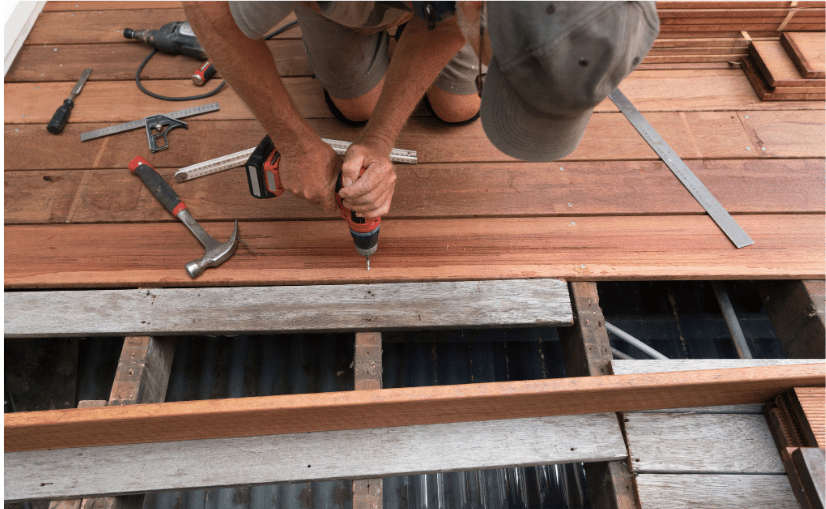
After winter, many homeowners are surprised by how quickly deck repair costs add up. What begins as board replacement or surface repairs often expands once contractors uncover structural issues caused by moisture intrusion and freeze–thaw damage.
In Utah, it’s common for deck repair or partial rebuild projects to move into the five-figure range—especially when framing, supports, or fasteners need to be addressed to meet safety standards.
Basement remodels are larger projects, but they’re also fundamentally different in purpose. Instead of restoring an outdoor structure to usable condition, a basement remodel adds finished, livable square footage that can be used every day of the year.
For homeowners weighing where to invest next, this comparison often reframes the conversation. When the goal is long-term comfort, flexibility, and value—not just short-term fixes—basement remodeling tends to deliver more lasting returns.

Common Conversations We Hear
“We planned to rebuild the deck, but winter damage pushed the cost way higher than expected.”
“We realized we barely used the deck, but needed more space inside.”
“Once we compared the numbers, finishing the basement made more sense long-term.”
Frequently Asked Questions
Is deck repair ever the right choice?
Yes. If damage is limited to surface boards and the underlying structure is still sound, targeted repairs can make sense. However, once framing or supports are compromised, repair costs can escalate quickly.
Why do decks deteriorate so quickly in Utah winters?
Utah’s freeze–thaw cycles are tough on outdoor structures. Snow melts during the day, water penetrates small openings, then refreezes overnight—forcing materials apart and accelerating wear beneath the surface.
Does a basement remodel always cost more than deck repairs?
A basement remodel is typically a larger upfront project, but it serves a different purpose. Instead of restoring existing condition, it adds livable square footage that’s usable year-round, which many homeowners find delivers better long-term value.
Will finishing a basement increase my home’s value?
Finished basements are generally attractive to buyers because they add functional living space. While exact returns vary by home and market conditions, additional usable square footage often improves resale appeal.
How long does a basement remodel usually take?
Timelines depend on scope, design complexity, and permitting. Most basement remodels take several weeks to a few months from start to finish, with planning and design playing a key role in keeping projects on track.
Should I remodel my basement in winter or wait until spring?
Basement remodels can be completed year-round. Winter can actually be a good time to plan and build, since indoor work isn’t affected by weather in the same way outdoor projects are.
Weighing Repairs vs Remodeling?
If winter deck damage has you rethinking where to invest, a basement remodel may offer better
long-term value, comfort, and usable space for your home.
Talking through your options early can help you avoid repeated repair costs and make a smarter,
more strategic decision.
Schedule a Basement Remodel Consultation
Not ready yet?
Explore basement remodeling options