
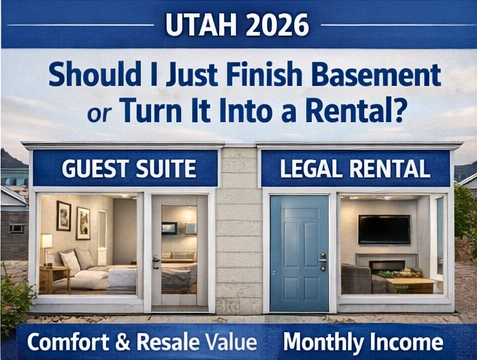
In 2026, Utah homeowners are asking one major question: “Should I just finish my basement, or should I turn it into a legal rental?”
With housing costs in Salt Lake County and Utah County remaining at historic highs, the “Basement Apartment” has become the ultimate house-hacking tool. But the path to a legal rental is significantly different than building a simple guest suite.
One adds comfort and resale value—the other adds a monthly paycheck. Which one is right for your budget and timeline?
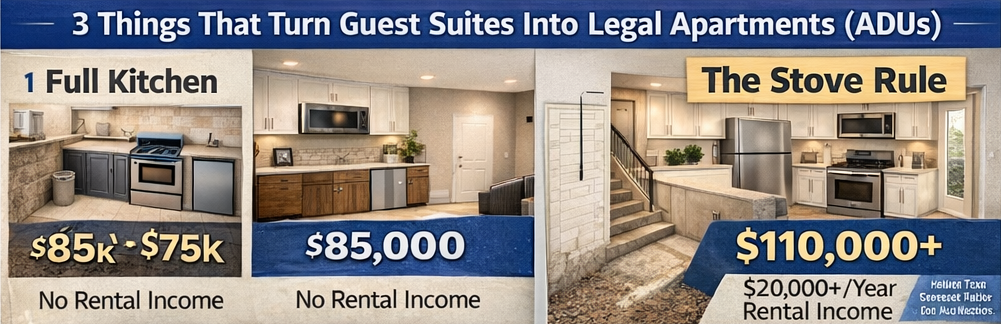
The Core Difference: Guest Suite vs. Legal Apartment (ADU)
Most Utahns use the terms interchangeably, but from a building code and permit perspective, they are worlds apart. A Guest Suite is technically part of your primary home. A Basement Apartment (officially known in Utah as an Internal Accessory Dwelling Unit or I-ADU) is a separate residence.
1. The Guest Suite: Comfort Without the Red Tape
A Guest Suite is designed for “extended family” or occasional visitors. It is an extension of your existing living space. In cities like Lehi and Sandy, this is the most common basement project because the permitting process is straightforward.
- Kitchen Status: Limited to a “Wet Bar.” You can have a sink, a microwave, and a small fridge, but no stove.
- Access: Usually accessed via the main interior staircase of the home.
- HVAC: Shares the same furnace and AC system as the upstairs.
- Utility Meters: One gas meter, one electric meter, one water bill.
2. The Legal Apartment (I-ADU): The Income Generator
An Internal Accessory Dwelling Unit (I-ADU) is a legal term in Utah for a basement apartment. Since the 2021 Utah State Legislature mandates (HB 82), most cities are now required to allow these, but they come with strict safety “must-haves” that a guest suite does not.
- The Full Kitchen: This is the legal threshold. Once you add a dedicated 220v outlet for a stove or a gas line for a range, you are building an apartment.
- Separate Entrance: While Utah law has loosened some “external entrance” requirements, most local inspectors in Draper and Herriman still require a dedicated path of egress that doesn’t involve walking through the owner’s kitchen.
- Life Safety Codes: This is where the budget changes. You must have fire-rated separation (Type X drywall) between the basement and the main floor to ensure that a kitchen fire in the basement doesn’t instantly spread upstairs.
Why the distinction matters for your 2026 Budget
When you call a contractor like Pro-Worx, the first thing we look at is your “Intent.” If you tell us you want a rental, we have to pull a different set of permits. If you try to “sneak” a kitchen into a guest suite, you might face heavy fines from the city or, worse, your insurance company might deny a claim if a fire occurs in an unpermitted kitchen.
In Utah County, we’ve seen a 40% increase in I-ADU applications over the last year. Homeowners are realizing that the $15,000–$25,000 extra it costs to meet “Apartment Code” pays for itself in less than two years of rental income.
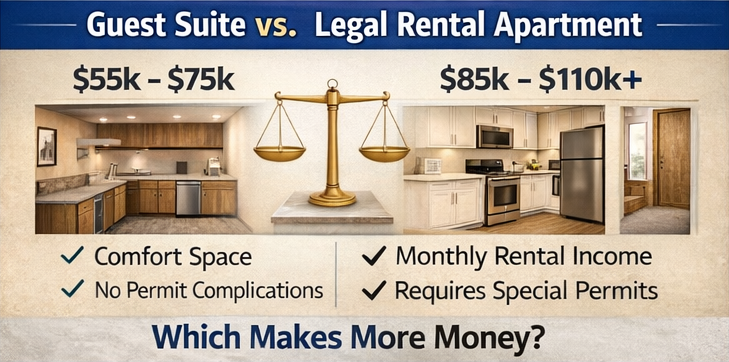
The “Stove” Rule: Why Your Kitchen Changes Everything
In the eyes of a city inspector in Lehi or Herriman, the moment you install a full range or oven, your basement ceases to be a “recreation room.” It becomes a second dwelling. The “Stove Rule” is the legal line in the sand—anything requiring a 220v outlet or a dedicated gas line is the “smoking gun” that triggers Internal Accessory Dwelling Unit (I-ADU) requirements.
Why does the city care so much about a stove? It’s about life safety. Cooking is the #1 cause of residential fires. When you have two separate families living under one roof, the 2026 Utah building codes mandate that the basement must be built to contain a fire long enough for the family upstairs to escape.
1. Fire Separation: The “Type X” Requirement
For a standard basement finish, you might use 1/2-inch regular drywall. However, for a legal apartment, 2026 codes typically require 5/8-inch Type X fire-rated drywall on the entire basement ceiling.
- The 1-Hour Barrier: Type X drywall contains glass fibers that prevent it from crumbling under extreme heat. This provides a roughly 1-hour fire rating, giving occupants time to exit.
- Full Coverage: This isn’t just above the stove; it’s the entire ceiling area to protect the floor joists of your main living space.
- Fire-Blocking: We must also install fire-blocking materials inside the wall cavities (the gaps between studs) to prevent a fire from “chimneying” up into your second story.
2. HVAC Zoning: More Than Just Comfort
In Utah County, code requirements for HVAC in rentals have tightened. You cannot simply cut a few vents into your existing trunk line and call it a day. A legal I-ADU requires independent climate control and specific ventilation standards.
- Separate Thermostats: Tenants must be able to control their own heat. We often recommend a Mini-Split System for apartments. It’s highly efficient and avoids the massive cost of a second full-sized furnace.
- Shared Air Risks: If a tenant burns something or gets sick, a shared HVAC system pulls that air through the entire house. 2026 standards prioritize “tight” seals and dedicated intake/exhaust for rental units.
- Kitchen Exhaust: A range hood must be vented directly to the outside—it cannot be a recirculating filter if you want to meet the highest safety standards for a legal kitchen.
3. Soundproofing: The Secret to Long-Term Tenants
While not always a strict “safety” code, soundproofing is a functional requirement for any Salt Lake County home intended for rental. If your tenant can hear every footstep or TV show from upstairs, they won’t renew their lease.
The Pro-Worx Sound Strategy: We utilize Rockwool (Mineral Wool) insulation instead of standard fiberglass. It’s denser, mold-resistant, and significantly better at absorbing airborne noise like voices and music.
- Resilient Channels: These are metal strips we install between the floor joists and the drywall. They “decouple” the ceiling, stopping the vibration of footsteps from traveling into the apartment.
- Solid Core Doors: Replacing a standard hollow-core door with a solid core variant can reduce sound transfer between the basement and the main home by up to 50%.
Pro-Worx Tip: If you aren’t ready for the “Apartment” permit price tag today, we can “Future-Proof” your build. We can rough-in the plumbing and electrical for a kitchen while labeling the space a “Wet Bar.” When you’re ready to go legal, the expensive work behind the walls is already done.
Navigating these codes in cities like Draper and Sandy is exactly what we do. We manage the inspections and the specialized trade work so you don’t have to guess if you’re compliant.
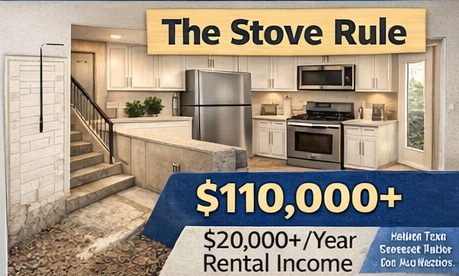
2026 ROI Breakdown: The Real Numbers
In the 2026 Utah real estate market, usable square footage is king—but monetized square footage is the emperor. Let’s look at the financial performance of both options based on current construction costs and appraisal data in Salt Lake and Utah Counties.
| Feature | Guest Suite Finish | Legal Rental Apt. (I-ADU) |
|---|---|---|
| Estimated Cost | $55,000 – $75,000 | $80,000 – $110,000+ |
| Property Value Add | Approx. 70% of cost | Approx. 85% – 110% (Market Dependent) |
| Monthly Income | $0 (Personal/Family Use) | $1,500 – $2,200 (Avg Utah Market) |
| Time to Recoup | Only at Resale | 3.5 – 5 Years (via Rental Income) |
The “Mortgage Helper” Advantage
Why is the ROI for a legal apartment so much higher? It’s simple: Debt-to-Income (DTI) ratios. In 2026, many lenders allow buyers to count up to 75% of the projected rental income from a legal ADU toward their mortgage qualification. This means a home with a legal basement apartment is actually affordable to a larger pool of buyers than a home without one.
Real World Example: The $2,000 Monthly Offset
If your basement apartment in Draper rents for $2,000 a month, that covers roughly $300,000 of a mortgage at 6.5% interest. You aren’t just selling a basement; you’re selling a house that pays for half of itself.
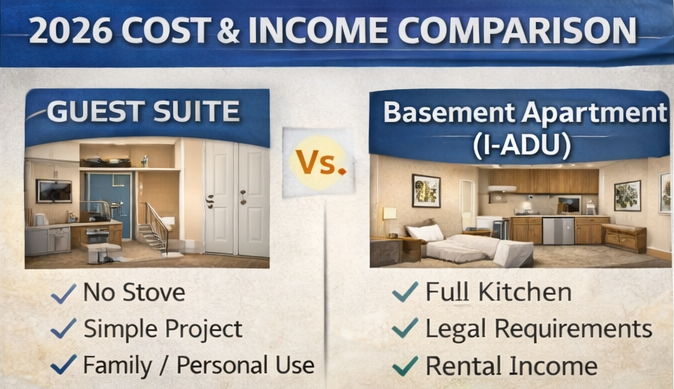
Appraisal Value: Above Grade vs. Below Grade
It is a common myth that basement square footage is worth the same as the main floor. In Utah, appraisers typically value finished basement space at 50% to 70% of the above-grade price per square foot. However, the addition of a full kitchen and a separate entrance moves the space into a different category. It becomes a “secondary dwelling unit,” which carries a flat value bump that often exceeds the price per square foot alone.
Hidden Costs of the “Cheaper” Guest Suite
Choosing a Guest Suite to save $25k on the upfront build might feel smart today, but consider the “Opportunity Cost.” By forgoing the I-ADU permit, you lose out on roughly $20,000 a year in passive income. In three years, the “savings” of the guest suite have actually cost you $60,000 in lost revenue. This is why at Pro-Worx, we always advocate for “future-proofing” your plumbing and electrical, even if you don’t install the stove on day one. For more resources check out our Basement Apartment ROI guide here.
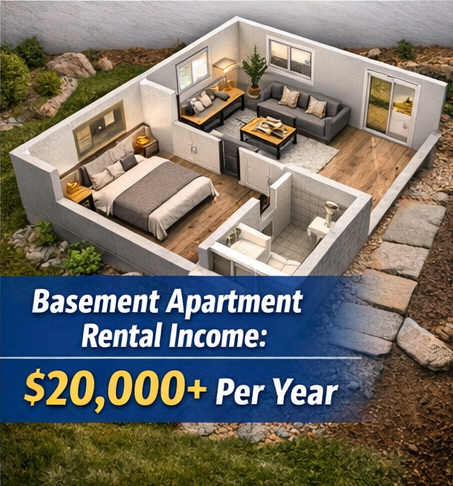
The Separate Entrance Requirement: Privacy vs. Legal Mandate
A basement apartment isn’t truly an apartment without privacy. In Draper and Sandy, many homes are built on slopes that allow for “walk-out” basements. These are the gold standard for I-ADUs because they offer immediate, grade-level access.
However, if you have a “full-dig” basement (common in flat areas of the Salt Lake Valley), creating a legal entrance is one of the most significant structural investments you’ll make. For a Guest Suite, you can rely on the interior stairs. For a Legal Apartment, 2026 local ordinances often require a dedicated path of travel that doesn’t cross the primary homeowner’s living space.
The Walk-Out Excavation: What to Expect
If your lot isn’t naturally sloped, we have to create the slope. This process, known as a concrete stairwell excavation, is a multi-step engineering feat that ensures your foundation remains stable while providing the tenant with a private front door.
- Excavation & Shoring: We dig out a significant portion of your yard to reach the foundation footings. In 2026, excavation costs in Utah average $85–$160 per cubic yard of dirt removed.
- The Concrete Cut: Using specialized diamond-blade saws, we cut a doorway through your 8-to-10-inch thick poured concrete foundation.
- Retaining Walls: To prevent your yard from sliding into the new stairwell, we pour reinforced concrete retaining walls. These must be engineered to handle Utah’s freeze-thaw cycles.
- Drainage (Crucial): You cannot simply dig a hole next to your house. We install a “French Drain” system connected to your home’s perimeter drain or a dedicated sump pump to ensure a heavy Salt Lake rainstorm doesn’t end up in your tenant’s living room.
2026 Cost Reality Check
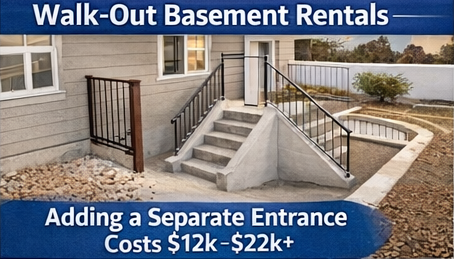
Adding a full concrete walk-out to an existing home typically adds $12,000 to $22,000 to your project. While this is a “heavy” upfront cost, it’s often the single biggest factor in increasing your home’s appraisal value, as it transforms the basement from “storage” to a “second unit.”
The “Egress” Loophole: Is a Window Enough?
Many homeowners ask: “Can’t I just use a large egress window as the entrance?” The answer is no. Per the 2026 International Residential Code (IRC) adopted by Utah, an egress window is for emergency escape and rescue only. It does not qualify as the “primary means of egress” for a dwelling unit.
However, for a Guest Suite, a high-quality egress window is all you need. If you’re building in Herriman or Utah County, we can install oversized window wells that bring in massive amounts of natural light, making the guest space feel like it’s above ground without the $20k price tag of a full walk-out.
Parking Laws: The “Hidden” ADU Rule
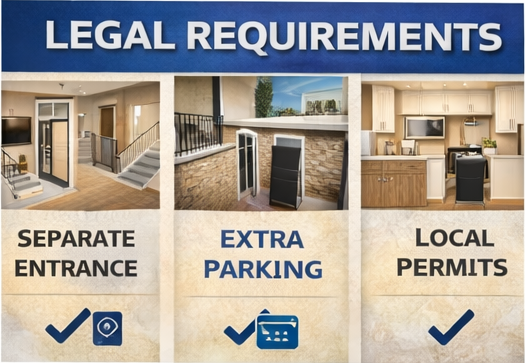
A blog about Utah rentals wouldn’t be complete without mentioning parking. Per current Utah regulations, while cities are encouraged to be flexible, they still hold the right to mandate dedicated off-street parking. In high-growth areas like Riverton and Eagle Mountain, this isn’t just a suggestion—it’s a requirement for your business license.
If you are building a legal Internal ADU (I-ADU), you must typically provide one off-street parking spot for your tenant in addition to the two spots required for the primary residence. This means a standard two-car driveway is rarely enough to satisfy a rental permit if you are also parking your own vehicles there.
The “Tandem” Parking Debate
Many homeowners assume they can just park one car behind the other (tandem parking). However, in 2026, several Utah cities have moved away from allowing tandem spots for rentals because they lead to “car shuffling” on the street. To be safe, your parking solution should ideally be a side-by-side configuration or a dedicated pad.
- Concrete Pads: Adding a 10×20 concrete pad alongside your driveway is the most common solution. In Salt Lake County, expect this to add $3,500 – $6,000 to your project cost.
- The 6,000 Sq. Ft. Rule: Under Utah state law, if your lot is smaller than 6,000 square feet, the city cannot technically force you to add a parking spot for an internal ADU—but they can still deny the permit based on “public safety” if the street is already narrow or congested.
- Garage Conversions: If you convert your garage into part of the living space, you must replace those lost parking spots elsewhere on your property with hard-surface (concrete or asphalt) stalls.
The “Neighbor” Risk: Many homeowners try to run “underground” rentals without a parking permit. In Utah’s tight-knit communities, a single neighbor complaint about street parking can trigger a city inspection. If you’re caught, the city can revoke your rental license and force the removal of the stove—essentially killing your ROI overnight.
Property Tax & Permits: What 2026 Homeowners Need to Know
One of the biggest hesitations we hear at Pro-Worx is the fear that registering a legal I-ADU will skyrocket your property taxes. In Utah, the reality is much more homeowner-friendly than most people think, thanks to the Primary Residential Exemption.
1. The 45% Exemption Still Applies
In Utah, primary residences are only taxed on 55% of their market value (a 45% exemption). Many owners worry that once they start collecting rent, their home will be reclassified as a “commercial” or “secondary” property, losing that massive discount.
As of 2026, as long as you live in the main portion of the home, the entire structure—including the basement apartment—typically retains that 45% exemption. In fact, Utah law (specifically HB 82) was designed to encourage these units to solve the housing crisis, not to punish homeowners for building them.
2. Will My Assessment Go Up?
Yes, but let’s look at the math. If a basement finish adds $80,000 in market value to your home, your property tax might increase by roughly $400–$600 per year (depending on your city’s specific 2026 mill rate). When you compare that to the $20,000+ per year you can earn in rental income, the tax increase is negligible.
The “Unpermitted” Danger
Some homeowners think they are “beating the system” by not pulling permits to keep their taxes low. However, in 2026, many Utah counties are using aerial photography and AI-driven data to spot new exterior entrances and HVAC units. If the county catches an unpermitted suite, they can back-tax you for the value added plus penalties, and the city may force a “tear-out” of the kitchen.
3. The 2026 Legislative Outlook
The Utah Legislature is currently discussing even more incentives for homeowners who provide long-term housing (stays over 30 days). By building a Legal Apartment now, you are positioning your property to take advantage of future tax breaks that won’t be available to “unpermitted” or “guest suite” owners.
Frequently Asked Questions: Utah Basement Rentals
Can I have a full kitchen in my basement without an I-ADU permit?
Legally, no. In Utah, the presence of a stove (gas or 220v electric) defines the space as a dwelling unit. Without an I-ADU permit, most cities only allow a “wet bar,” which excludes a range or oven. Attempting this without a permit can lead to insurance denials and city fines.
How much does an I-ADU permit cost in Utah County?
Permit fees vary by city but generally range from $1,500 to $3,500 for the application and inspections. Some cities also require an impact fee, though Utah state law (HB 82) has recently limited how much cities can charge for internal units to make them more affordable.
Do I have to live in the house to rent out my basement?
In most Utah cities, yes. Most Internal Accessory Dwelling Unit ordinances require owner occupancy, meaning the owner must live in either the main house or the basement unit. This prevents corporate investors from turning single-family homes into permanent duplexes.
Does a basement apartment require a separate electrical meter?
It is not a state requirement, but it is highly recommended. While you can bundle utilities into the rent, a separate meter allows tenants to pay their own Rocky Mountain Power bill, which simplifies management. If you don’t add a meter, a sub-metering system can help track usage.
How long does it take to build a legal basement apartment?
A standard basement finish takes about 8–10 weeks. For a legal I-ADU with a separate entrance and full kitchen, expect 12–16 weeks. The extra time usually comes from additional plumbing, HVAC zoning, inspections, and excavation for a walk-out entrance if required.
Which One Should You Choose?
Choose a Guest Suite If:
- You want a fast, 6–8 week turnaround.
- You primarily want space for family, a home gym, or a theater.
- You want to keep your property taxes and insurance simple.
Choose a Basement Apartment If:
- You want your basement to pay your mortgage.
- You’re looking for a long-term investment that survives market dips.
- You are willing to invest the extra 25% in costs for fire-safety and privacy.
Ready to See the ROI Potential of Your Basement?
Whether you want a luxury guest suite or a high-cash-flow rental, we handle the permits, codes, and construction across the Wasatch Front.