In This Article
- 01Why a Bar Countertop Lives a Harder Life Than a Kitchen Counter
- 02The Quick Comparison
- 03Quartz: The Practical Champion
- 04Granite: Beautiful, Durable, and a Little More Demanding
- 05Butcher Block and Concrete: Two Very Different Statement Looks
- 06Copper: The Showpiece Option
- 07Edge Profiles and Details That Change the Whole Look
- 08How to Choose for Your Space
- 09FAQs
- 10Final Thoughts
Why a Bar Countertop Lives a Harder Life Than a Kitchen Counter
People assume a bar top just needs to look nice, but in practice it takes more abuse than the kitchen counter ten feet away. A kitchen counter deals with a knife here and a hot pan there. A bar top deals with condensation rings sitting for hours, red wine and cranberry juice splashed during a pour, lime wedges left to sit, ice melting into a puddle, and bottles set down a little too hard after a long night. It's also usually the first surface guests touch and the first thing they judge.
We've installed every material on this list in Utah basements and bonus rooms over the years, and the honest answer is that there's no universally "best" countertop. There's a best countertop for how you actually use the bar. A family that mixes mocktails for the kids and the occasional margarita batch has very different needs than a couple who wants a moody whiskey nook with a show-stopping slab. Let's go through the real options.
The Quick Comparison
If you want the short version before reading the details, this is how the five materials we install most often stack up on the things that actually matter for a bar top.
| Material | Stain Resistance | Heat Resistance | Maintenance | Approx. Cost Installed | Best For |
|---|---|---|---|---|---|
| Quartz | Excellent | Good (not for hot pans) | None, wipe and go | $65 to $100+ per sq ft | Most bars, especially family or rental use |
| Granite | Good with sealing | Excellent | Annual sealing | $50 to $90 per sq ft | Classic look, heat-heavy use |
| Butcher Block | Fair, needs quick cleanup | Poor | Regular oiling, refinishing | $35 to $70 per sq ft | Rustic or farmhouse bars, dry bars |
| Concrete | Fair with sealing | Excellent | Periodic sealing | $70 to $125 per sq ft | Industrial or custom-shaped bars |
| Copper | Good, but dents easily | Excellent | Living patina, minimal cleaning | $100 to $200+ per sq ft | Statement bars, unique character |
Quartz: The Practical Champion
Quartz is what we recommend most often, and it's not because it's the cheapest or the flashiest, it's because it's the material people are happiest with five years later. Engineered quartz is roughly 90 to 95% crushed natural stone bound with resin, which makes it non-porous straight out of the factory. Red wine, coffee, citrus, and bitters all wipe off without staining, and you never have to think about sealing it.
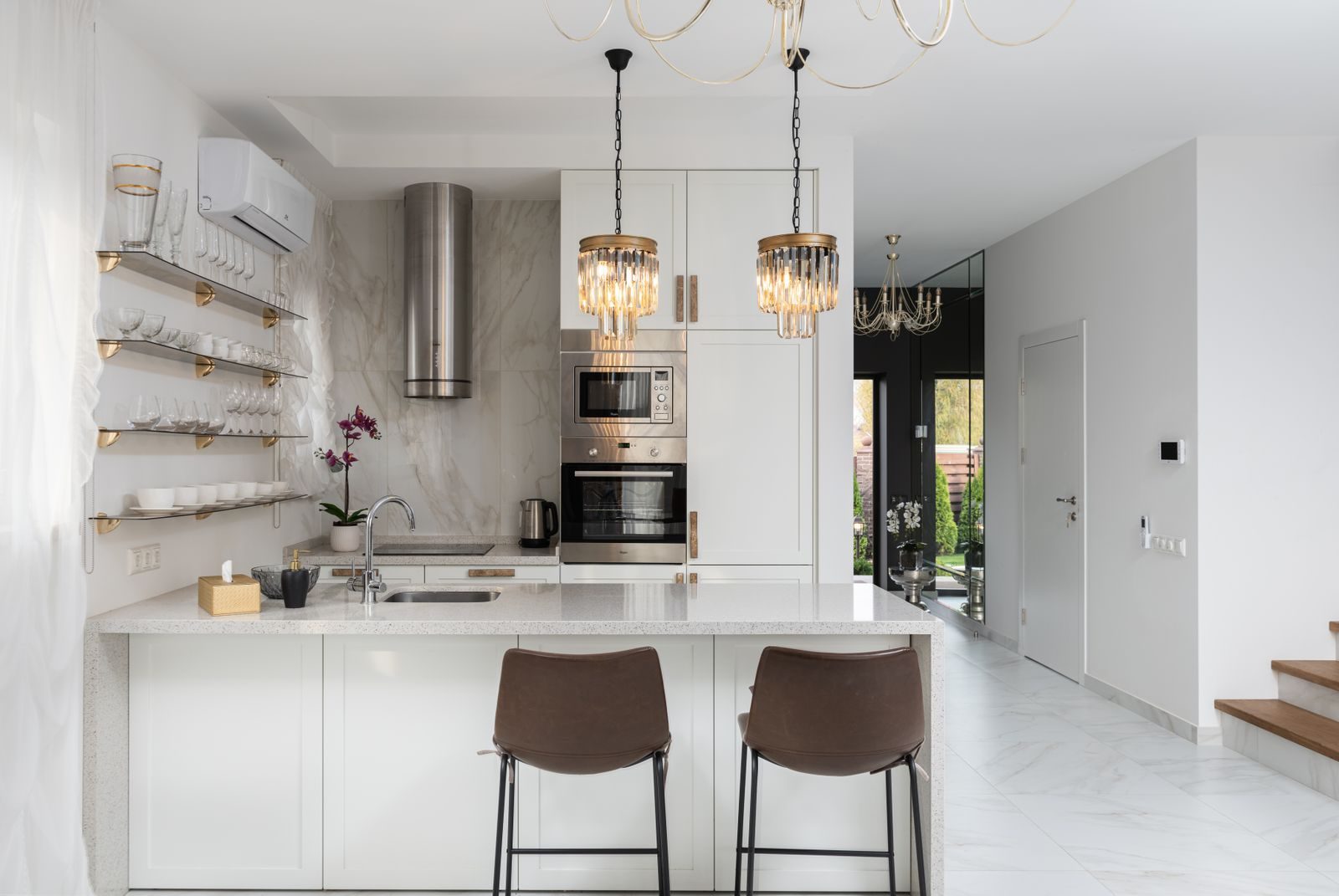
Because it's manufactured rather than quarried, quartz also gives you consistency across a long run of countertop, which matters a lot on an L-shaped or U-shaped bar where you're matching slabs across multiple sections. A waterfall edge, where the countertop material wraps down the front face of the bar instead of stopping at a standard edge profile, looks spectacular in quartz and has become one of the most requested details we build. The one caveat: quartz isn't meant for setting hot pans or cookware directly on it. For a bar, that's rarely an issue since you're dealing with glassware and bottles, not Dutch ovens.
Thinking about a wet bar & kitchenette project of your own?
Get a Free EstimateGranite: Beautiful, Durable, and a Little More Demanding
Granite is a natural stone, so every slab has its own veining and movement, no two bars look exactly alike. It's also the most heat-resistant option on this list by a wide margin; you can set a hot kettle or a mug straight off the stove on it without a second thought. For a bar that doubles as a coffee station or sits near a built-in espresso machine, that matters more than you'd think.
The trade-off is that granite is porous and needs annual sealing, which is a quick DIY job but an easy one to forget. Unsealed granite can absorb stains from acidic drinks over time, and dark colors like absolute black or blue pearl hide this far better than lighter stones. If you love the look of natural stone and don't mind a 20-minute sealing routine once a year, granite still holds up beautifully in a bar setting.
Butcher Block and Concrete: Two Very Different Statement Looks
Butcher Block
A butcher block top brings warmth that engineered materials can't fully replicate, and it's a natural fit for a farmhouse or rustic basement bar. The catch is that it needs regular oiling to stay protected, and standing water (a sweating cocktail shaker left overnight, for instance) can leave a water ring or cause the wood to warp if it's not wiped down. We generally steer clients toward butcher block for dry bars, where there's no sink splashing water around, or for bars where drinks get cleaned up promptly rather than left to sit.
Concrete
Poured concrete countertops are endlessly customizable. You can tint the color, cast in a custom shape, embed objects, and finish the surface anywhere from glass-smooth to a raw, textured look. It's genuinely one of the most personal choices you can make for a bar. Concrete needs sealing to resist stains and can develop small hairline cracks over time, which are almost always cosmetic rather than structural, but some clients find that character charming and others don't. If you want something nobody else in the neighborhood has, concrete delivers.
Copper: The Showpiece Option
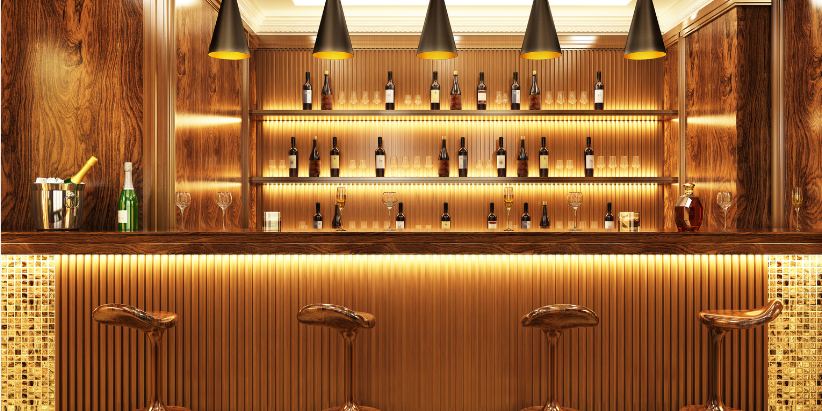
Copper bar tops are rare for a reason, they're expensive and they dent if you're not careful, but nothing else creates the same instant wow factor. Copper is naturally antimicrobial and develops a living patina over time, shifting from bright and polished to a warm, aged bronze tone that a lot of people love. It pairs especially well with a speakeasy or vintage-inspired bar design. If budget allows and you want a bar top that's genuinely one of a kind, this is the splurge material.
Thinking about a wet bar & kitchenette project of your own?
Get a Free EstimateEdge Profiles and Details That Change the Whole Look
The material gets most of the attention, but the edge profile and a few finishing details make a bigger visual difference than people expect. A few options worth considering:
- Waterfall edges, where the countertop wraps down the front panel, create a sleek, high-end look and work beautifully in quartz or granite.
- Mitered edges make the countertop appear thicker than it actually is, a popular trick to get a substantial-looking 3-inch edge without paying for 3-inch-thick slab.
- Backlit edges with a thin LED strip under the overhang add ambiance for evening entertaining.
- Integrated drainboards cut directly into stone near the sink area keep water from pooling on the surface.
How to Choose for Your Space
Start with how the bar will actually get used. If it's a high-traffic family space where drinks (and the occasional spilled juice box) happen daily, quartz is almost always the right call because it forgives mistakes. If the bar is a dedicated entertaining space where you'll be more careful and you love the look of real stone, granite earns its sealing requirement. If you're building a rustic or vintage aesthetic and the bar won't see heavy water exposure, butcher block or copper can be the signature piece that makes the whole room.
Whatever you choose, pair it with good lighting. Under-cabinet LED strips and a few pendant lights over the bar will show off any of these materials far better than overhead can lighting alone, and it's one of the cheapest upgrades relative to the impact it has.
FAQs
Do I need a different countertop for a wet bar versus a dry bar?
Not necessarily, but it does shift the math. A wet bar has a sink and running water nearby, so materials that handle standing water well, like quartz or sealed granite, make more sense. A dry bar has no plumbing, which opens the door to butcher block or other materials that are more water-sensitive since spills get wiped up rather than sitting next to a faucet.
Is quartz really maintenance-free?
Essentially, yes. You don't need to seal it, and routine cleaning with mild soap and water keeps it looking new. The only real caution is avoiding direct, sustained heat and harsh chemical cleaners like oven cleaner, which can dull the resin finish over time.
What's the most budget-friendly option that still looks high-end?
A mid-range quartz slab with a standard eased edge gets you 90% of the premium look for well under the cost of exotic granite, concrete, or copper. If budget is tight, that's where we point most clients.
Can I mix materials, like quartz on the bar top and wood on the shelves?
Absolutely, and it's one of our favorite design moves. A quartz or granite work surface paired with open wood shelving or a reclaimed wood accent wall behind the bar gives you durability where it matters and warmth where it doesn't take daily abuse.
Thinking about a wet bar & kitchenette project of your own?
Get a Free EstimateFinal Thoughts
There isn't a wrong material here, there's a material that matches how hard your bar actually gets used. Quartz remains our most common recommendation because it holds up to real life with almost no upkeep, but if you want the character of natural stone, reclaimed wood, or a true showpiece slab, any of these materials can anchor a bar you'll be proud to show off for years. If you're planning a wet bar build in a Utah basement and want a straight answer on what will hold up in your specific space, reach out to Pro-Worx for a free consultation.
Ready to Start Your Wet Bar & Kitchenette Project?
Get a free consultation and estimate from Utah's trusted home renovation experts.

Bryant Bitner
Founder & Lead Project Manager, Pro-Worx Construction
Bryant leads Pro-Worx Construction and has helped hundreds of Utah families plan and build renovations they actually use, from basement finishes to full home remodels. He focuses on honest scoping, code compliance, and clear numbers from the first conversation.