In This Article
Two Great Materials, Two Different Philosophies
Granite and quartz dominate the countertop conversation for good reason, both are durable, both look fantastic, and both come in enough colors and patterns to suit nearly any kitchen style. We get asked which one to choose on almost every kitchen project, and the honest answer is that there's no universally "better" material. There's a material that fits your lifestyle, your maintenance tolerance, and your aesthetic preference, and figuring out which one that is just takes understanding how they're actually different.
Here's the short version before we get into the details: granite is a natural stone with real variation and character, but it needs occasional sealing and a bit more care. Quartz is an engineered material that's nearly maintenance-free and extremely consistent, but it doesn't have the one-of-a-kind depth that natural stone offers.
What Granite Actually Is
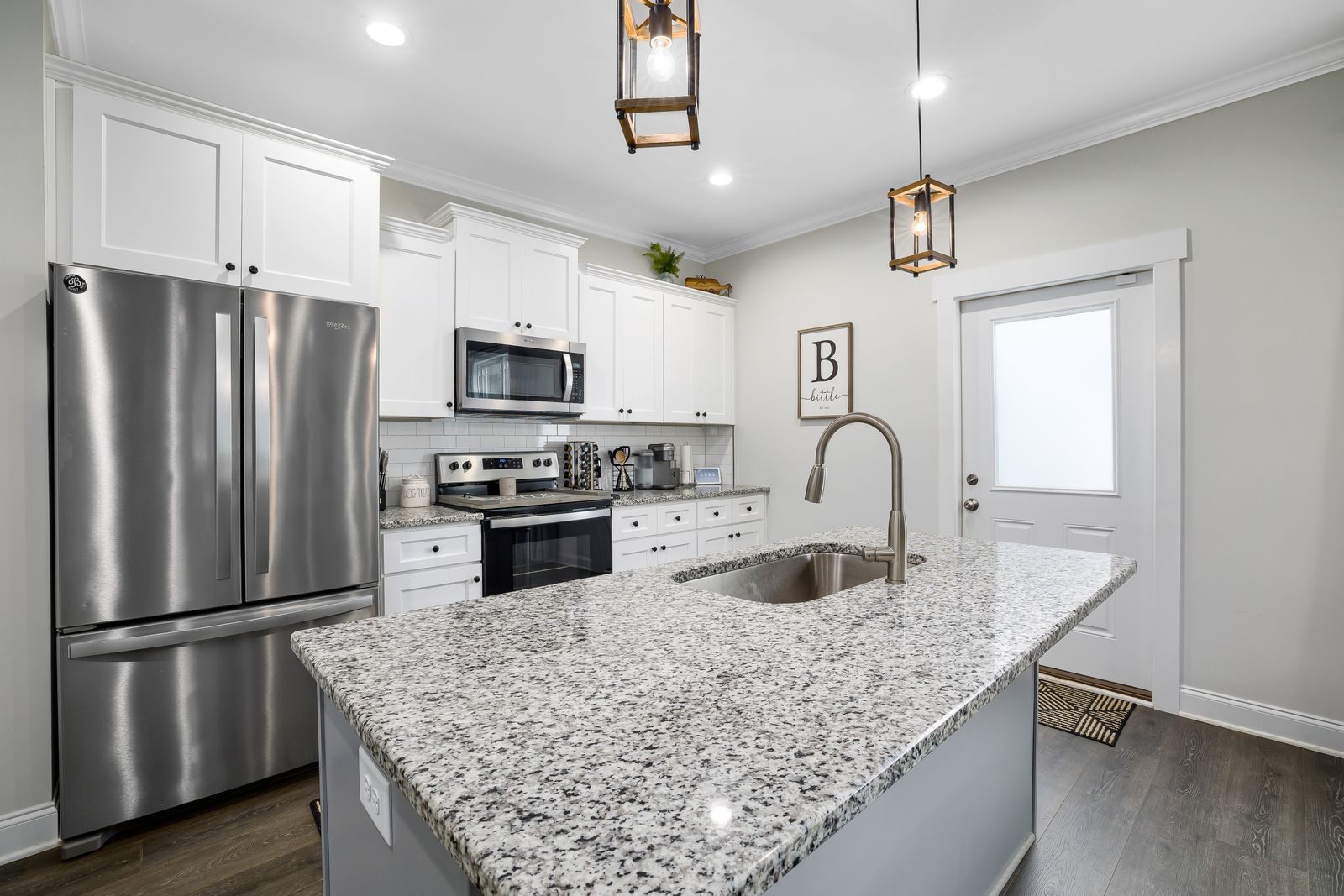
Granite is quarried natural stone, which means every single slab is genuinely unique, no two pieces of granite anywhere in the world are identical. That natural variation is a huge part of its appeal, the depth, movement, and mineral flecking in a good granite slab is something manufactured materials still can't fully replicate.
Granite is also impressively heat resistant, you can set a hot pan straight from the stove onto it without worrying about damage, which is not something we'd recommend doing on most quartz. It's an extremely hard material overall. The trade-off is porosity: granite has tiny pores that can absorb liquids if the surface isn't sealed, which means it needs sealing roughly once a year to stay stain-resistant. Skip that maintenance, and acidic substances like lemon juice, vinegar, or red wine can etch or stain an unsealed granite surface.
What Quartz Actually Is
Quartz countertops are engineered, not quarried. They're made from roughly 93% crushed natural quartz bound together with resin, which is why the material is sometimes called "engineered stone." Because it's manufactured rather than cut straight from the earth, the color and pattern stay highly consistent across a slab and from slab to slab, which is either a strong pro or a mild con depending on whether you love the unpredictability of natural stone or prefer knowing exactly what you're getting.
Quartz is non-porous straight out of the factory, which means it never needs sealing and resists staining better than granite in day-to-day use. The trade-offs run the other direction from granite's: quartz isn't as heat tolerant (a hot pan set directly on it can cause thermal shock and discoloration over time), and prolonged, direct sunlight exposure can cause some quartz colors to fade, which is why we're cautious about recommending it for outdoor kitchens or spaces with intense, unfiltered sun exposure.
Thinking about a kitchen remodeling project of your own?
Get a Free EstimateCost in the Utah Market
Pricing for both materials covers a wide range depending on the specific slab, edge profile, and fabrication complexity, but here's roughly where things land across the projects we quote.
| Material | Mid-Range Cost Installed | Premium Cost Installed |
|---|---|---|
| Granite | $50 – $80 per sq ft | $100 – $150+ per sq ft (exotic slabs) |
| Quartz | $65 – $100 per sq ft | $110 – $150+ per sq ft (premium brands like Cambria) |
Labor costs run roughly similar for both materials since fabrication and installation complexity is comparable. The real cost driver on either material is the specific slab you fall in love with, a common granite color and a premium quartz pattern can land at nearly the same price point, while an exotic granite or a top-tier quartz brand can both run well past $120 a square foot.
Head-to-Head: The Practical Differences
Aesthetics
If you're drawn to the natural, organic look, unique veining, mineral flecks, and movement that genuinely varies slab to slab, granite is simply unmatched in that department. If you prefer a clean, highly consistent aesthetic, particularly marble-look patterns with reliable veining, quartz delivers that same look on every single slab you order, which matters if you're trying to match an island to perimeter counters precisely.
Durability
Both materials are extremely durable and will outlast the rest of your kitchen's finishes if properly maintained. Granite's crystalline structure makes it slightly more prone to chipping at thin edges or corners under a hard impact. Quartz's resin binder gives it a bit more flexibility and impact resistance in those same situations, though neither material should be treated as indestructible.
Maintenance
This is where the two materials diverge most. Granite needs a roughly 20-minute annual sealing routine (and a sealant test is simple: a few drops of water should bead up rather than soak in if the seal is still good). Quartz needs essentially nothing beyond normal cleaning, no sealing, ever. If low-maintenance is a top priority, this one difference often settles the decision on its own.
Our Honest Recommendation
For busy family kitchens where low maintenance and durability under daily chaos matter most, quartz is the practical winner for most households. It's nearly worry-free, which counts for a lot when you've got kids doing homework at the counter and dinner happening every night.
For homeowners who love the one-of-a-kind character of real stone and don't mind the once-a-year sealing routine, granite offers a depth and natural beauty that manufactured materials still can't fully replicate. There's no wrong answer here, only the one that matches how you actually live in your kitchen.
Quick Decision Guide
- Want zero maintenance and consistent pattern matching across every slab? Quartz.
- Want one-of-a-kind natural variation and don't mind annual sealing? Granite.
- Regularly set hot pans directly on the counter? Granite handles that better.
- Have a sunny kitchen with direct, intense light on the counters most of the day? Granite is the safer bet against fading.
- Prioritizing budget flexibility at the mid-range tier? Granite generally starts a bit lower per square foot.
Thinking about a kitchen remodeling project of your own?
Get a Free EstimateFAQs
Can quartz really not handle a hot pan at all?
It can handle brief, incidental contact fine, but repeated direct contact with very hot cookware can cause thermal shock, which shows up as discoloration or, in rare cases, cracking. We recommend a trivet or hot pad as a habit with quartz, the same way you'd want to protect any countertop surface from thermal stress.
Does unsealed granite stain immediately, or is it more gradual?
It depends on the specific stone's porosity and what's spilled. A glass of red wine left sitting overnight on unsealed granite can leave a visible stain, while a quick wipe-up of the same spill usually causes no lasting damage. Annual sealing is cheap insurance against both scenarios.
Is quartzite the same thing as quartz?
No, and this trips people up constantly. Quartzite is a natural stone (metamorphosed sandstone), closer in behavior to granite, including needing periodic sealing. Quartz is the engineered, resin-bound material described in this post. The names are confusingly similar but the materials behave quite differently.
Which material holds its resale value better?
Both are considered premium countertop materials by appraisers and buyers alike, and neither carries a meaningful resale advantage over the other in most Utah markets. What matters more for resale is that the countertop looks updated and well-maintained, not which of the two you chose.
Final Thoughts
Granite and quartz are both excellent choices, and the "right" one comes down to how you actually cook, clean, and live in your kitchen rather than which material is objectively superior. If you're still torn after weighing maintenance and aesthetics, bring us your Pinterest board and your daily routine, we'll help you land on the material that fits both.
Ready to Start Your Kitchen Remodeling Project?
Get a free consultation and estimate from Utah's trusted home renovation experts.

Bryant Bitner
Founder & Lead Project Manager, Pro-Worx Construction
Bryant leads Pro-Worx Construction and has helped hundreds of Utah families plan and build renovations they actually use, from basement finishes to full home remodels. He focuses on honest scoping, code compliance, and clear numbers from the first conversation.