In This Article
Dropping a loaded barbell in a basement at 6 AM is an efficient way to wake up the entire house, and the neighbors too if you're close enough together. If your home gym involves heavy lifting, Olympic movements, or loud cardio equipment, soundproofing isn't a nice-to-have, it's what keeps the rest of the household on your side.
A lot of Utah tract homes from the 90s and 2000s were framed with floor joists spaced to code minimum and no acoustic planning at all, since nobody was thinking about a future home gym when the house was built. That's not a dealbreaker, it just means the soundproofing has to be added deliberately rather than relying on anything already in the structure.
Why Gym Noise Is Different From Normal Household Noise
A dropped weight isn't like a TV playing too loud. It's impact noise, a sudden, low-frequency thud that travels through the structure of the house itself, the floor joists, the framing, rather than just through the air. That's why a gym can sound tolerable standing right next to it and still boom through the ceiling two floors up. Soundproofing a home gym means treating both the impact noise traveling through the structure and the airborne noise traveling through walls and doors, and they need different fixes.
The Flooring Foundation
Start at the floor, since it's doing the most work. The right approach is layered: a sound-damping underlayment, mass-loaded vinyl or dense cork, placed beneath ¾-inch rubber stall mats. For deadlifting specifically, build a dedicated lifting platform using two layers of plywood with a center section of rubber matting under the bar path. That layered platform absorbs a huge amount of impact energy before it ever reaches the structural floor and the joists below.
Wall Treatment
If the gym shares a wall with a living space, a bedroom, a home office, add acoustic insulation, mineral wool or Rockwool, between the studs, then a layer of mass-loaded vinyl behind the drywall. For noticeably better results, use resilient channel to physically decouple the drywall from the studs. That decoupling breaks the direct vibration path between the two rooms, which matters more than people expect, since even great insulation can't fully stop sound that's traveling directly through a rigid stud connection.
Thinking about a home gym project of your own?
Get a Free EstimateCeiling Isolation
The ceiling is usually the biggest problem, since impact noise traveling straight up is what disturbs the floor above most. Resilient channel paired with double-layer drywall, using Green Glue damping compound between the two layers, is the gold standard fix and what we build into new gym rooms from the start.
If You Can't Open the Ceiling
Not every project allows for tearing into an existing finished ceiling. If that's your situation, acoustic ceiling tiles or a suspended ceiling system still provide meaningful noise reduction, just not quite to the level of a full resilient channel and Green Glue rebuild. It's a reasonable middle ground for a retrofit.
Equipment Isolation
Beyond the structural work, place anti-vibration pads under anything with a motor, treadmills, rowing machines, any cardio equipment. These rubber or foam pads absorb the operating vibration at the source and are genuinely one of the best value fixes in this whole list, most cost under $50 per set and the difference is immediately noticeable.
Door Seals
Sound finds gaps, and a door is usually the biggest gap in the room. Swap a hollow-core door for a solid-core one, hollow-core doors essentially transmit sound as if they weren't there, add weatherstripping around the frame, and install an automatic door bottom seal. This one upgrade alone can meaningfully cut sound leakage out of the room.
Thinking about a home gym project of your own?
Get a Free EstimateSoundproofing Cost Breakdown
| Treatment | Typical Cost | Primary Benefit |
|---|---|---|
| Rubber flooring + underlayment | $800 – $2,500 | Reduces impact noise from dropped weights |
| Dedicated lifting platform | $300 – $800 | Isolates the heaviest impact point (the bar path) |
| Wall insulation (mineral wool) | $1,500 – $3,500 | Reduces airborne noise through shared walls |
| Resilient channel + double drywall + Green Glue (ceiling) | $3,000 – $7,000 | The single biggest fix for noise traveling upstairs |
| Anti-vibration equipment pads | $20 – $100 | Cuts motor and operating vibration at the source |
| Solid-core door + seals | $250 – $500 | Stops airborne sound leaking through the doorway |
Full ceiling and wall treatment, done as part of a complete basement gym build, typically runs $6,000 to $12,000 on top of the general build-out. Done as isolated retrofits to an existing finished room, expect the higher end of that range or more, since opening up finished drywall costs extra on both ends of the job.
Don't Forget the Garage Door
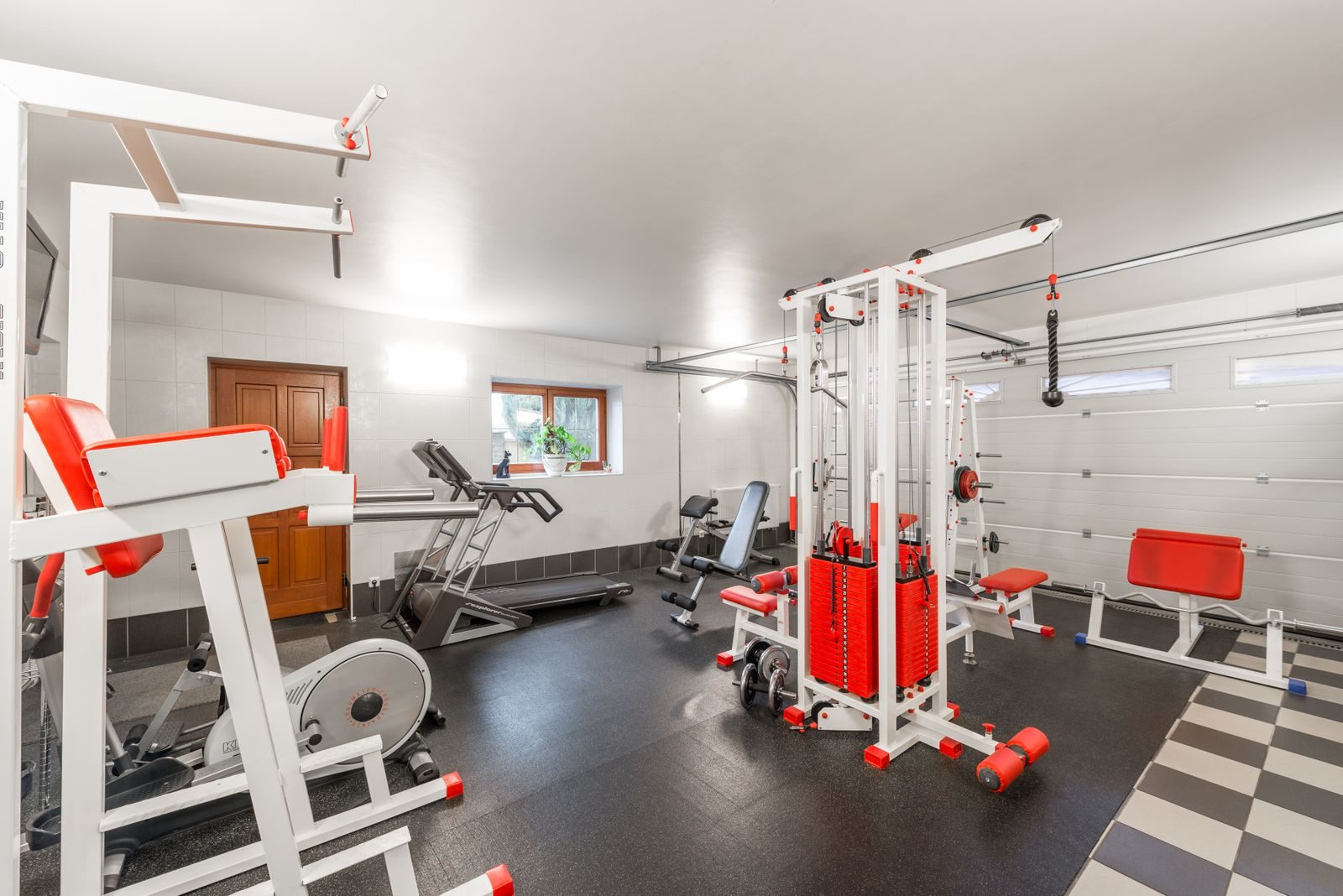
If the gym is in a garage rather than a basement, the garage door itself is often the weakest link acoustically, standard panel doors are hollow and reflect sound right back into the room, plus they transmit noise outward to the street and neighboring yards. An insulated garage door panel kit, or simply hanging mass-loaded vinyl on the inside of the existing door, closes that gap for a few hundred dollars.
Building It In From the Start vs. Retrofitting
If you're finishing a basement or converting a garage and a gym is part of the plan, build the soundproofing in from day one. Running resilient channel, mass-loaded vinyl, and Green Glue into a ceiling that's already open costs a fraction of what it costs to tear out finished drywall later and redo it. We treat soundproofing as part of the construction plan, not an afterthought, on every gym build we take on, specifically because retrofitting it afterward is so much more disruptive and expensive.
FAQs
What's the single most effective soundproofing upgrade if I can only do one thing?
The ceiling, specifically resilient channel with double drywall and Green Glue between layers. Impact noise traveling up to the floor above is almost always the biggest complaint from the rest of the household, and that's the fix that addresses it directly.
Will rubber flooring alone be enough?
It helps a lot with impact noise at the source, but it won't fully solve sound traveling through walls to an adjacent room or up through the ceiling to the floor above. Think of flooring as step one, not the whole solution, for a gym with any real heavy lifting.
Can I soundproof a garage gym the same way as a basement?
Mostly yes, though garages often have less wall and ceiling finish to start with, which can actually make it easier and cheaper to build soundproofing in correctly the first time, since you're not tearing out existing drywall first.
Does soundproofing also help with echo and sound quality inside the gym itself?
Some of it does. Wall and ceiling insulation reduces reverb inside the room in addition to blocking transmission outward, which tends to make music and training playlists sound noticeably better too.
Thinking about a home gym project of your own?
Get a Free EstimateFinal Thoughts
Soundproofing a serious home gym is a construction detail, not a garage sale find, and it pays off every single time you drop a bar without triggering a group text from upstairs. Build it into the plan early, prioritize the ceiling and flooring first, and the rest of the house stays happy while you train as hard as you want.
Ready to Start Your Home Gym Project?
Get a free consultation and estimate from Utah's trusted home renovation experts.

Bryant Bitner
Founder & Lead Project Manager, Pro-Worx Construction
Bryant leads Pro-Worx Construction and has helped hundreds of Utah families plan and build renovations they actually use, from basement finishes to full home remodels. He focuses on honest scoping, code compliance, and clear numbers from the first conversation.