In This Article
- 01What a Gym Membership Actually Costs Over Time
- 02What It Actually Costs to Build a Home Gym
- 03The Break-Even Point
- 04Time Savings Nobody Puts in the Budget
- 05Consistency Is the Real ROI
- 06Privacy and Comfort
- 07Does a Home Gym Add Resale Value?
- 08The Hybrid Option: Keep a Cheap Membership Too
- 09Who Shouldn't Build a Home Gym Right Now
- 10FAQs
- 11Final Thoughts
We get asked to price out home gym conversions constantly, and almost every client opens with some version of the same question: is this actually cheaper than just paying for a membership? We've run the numbers enough times now to give you a straight answer, and it's not as close as you'd think.
What a Gym Membership Actually Costs Over Time
A standard gym membership in Utah runs roughly $40 to $80 per month per person. That sounds manageable until you multiply it by a household and stretch it across a decade.
| Household | Monthly | Annual | 10-Year Total |
|---|---|---|---|
| Single person | $40 – $80 | $480 – $960 | $4,800 – $9,600 |
| Couple | $80 – $160 | $960 – $1,920 | $9,600 – $19,200 |
| Family of four | $160 – $320 | $1,920 – $3,840 | $19,200 – $38,400 |
And that's before counting the membership you forgot to cancel last January, the gas and time spent driving there and back, or the add-on fees for classes and personal training that most gyms tack on once you're a few months in.
What It Actually Costs to Build a Home Gym
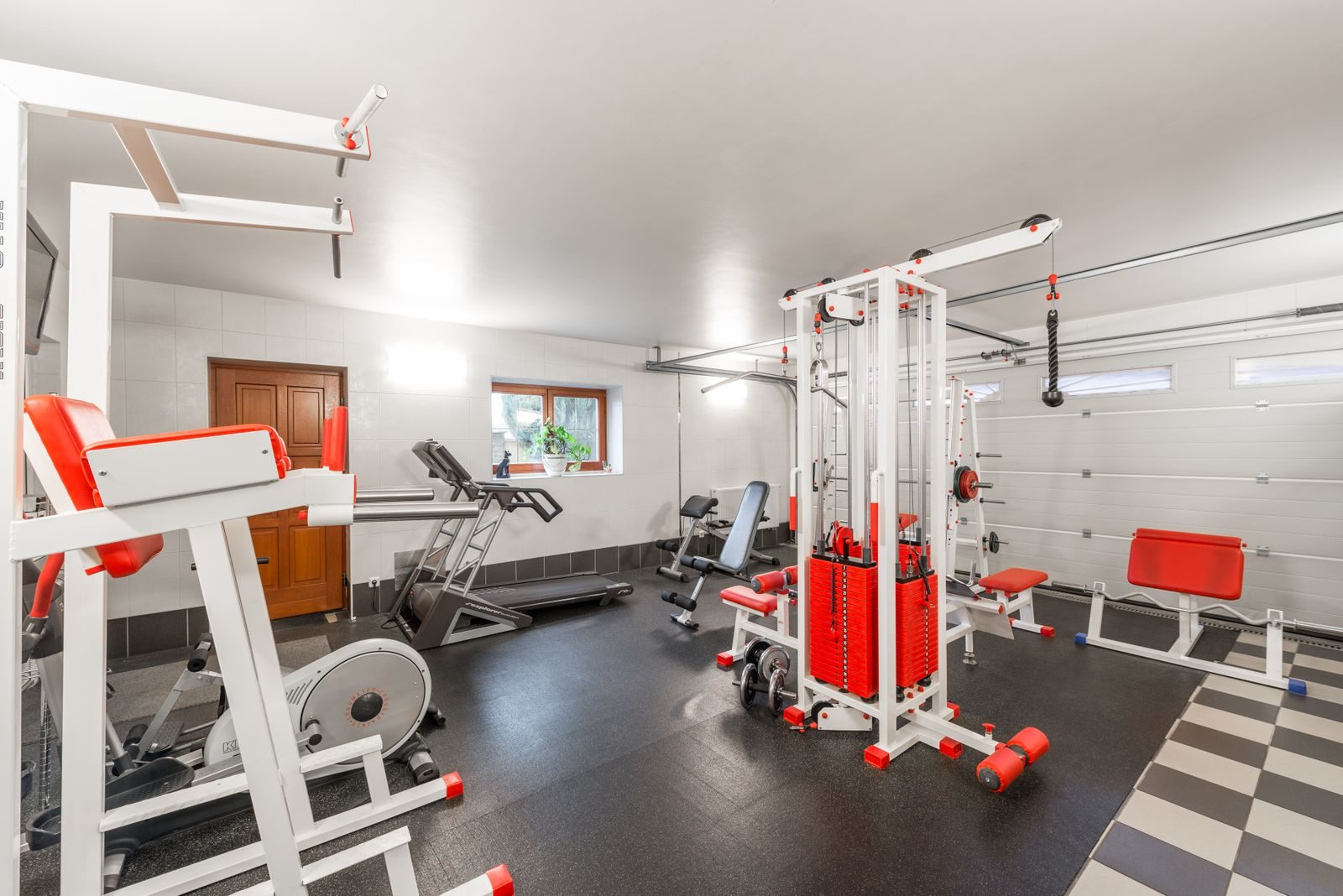
A real home gym, not a treadmill shoved in a corner, breaks into two costs: the space itself (flooring, mirrors, lighting, ventilation, electrical for equipment) and the equipment that goes in it.
| Tier | Space Build-Out | Equipment | Total |
|---|---|---|---|
| Basic (garage or basement corner) | $3,000 – $6,000 | $1,500 – $3,000 | $4,500 – $9,000 |
| Standard (dedicated room, rubber flooring, mirrors) | $8,000 – $15,000 | $3,000 – $6,000 | $11,000 – $21,000 |
| Full build (HVAC, lighting, soundproofing, power rack bay) | $15,000 – $25,000 | $8,000 – $15,000 | $23,000 – $40,000 |
The Break-Even Point
Line up those two tables and the math is pretty clear. A standard-tier home gym for a family that would otherwise be paying $160 to $320 a month for memberships typically pays for itself somewhere between 3 and 6 years, depending on how many people in the house are actually using it. After that, every workout is free for the rest of the time you own the home.
For a single person with a more basic build, the break-even point can come even faster, sometimes under 3 years, since the build cost is lower relative to even a single membership.
Thinking about a home gym project of your own?
Get a Free EstimateTime Savings Nobody Puts in the Budget
Factor in the drive to the gym, parking, changing, waiting for equipment, and the drive home, and a typical gym trip eats well over 30 minutes beyond the actual workout time. For someone training 5 days a week, that's hours every week handed back once the gym is 30 feet from your bedroom instead of 15 minutes across town.
Consistency Is the Real ROI
The dollars-and-cents math is compelling, but the bigger win we hear about from clients a year later is consistency. When the gym is downstairs instead of across town, the usual excuses, bad weather, a crowded parking lot, not wanting to pack a gym bag, just disappear. People who build home gyms tend to train more often simply because the friction of getting started drops to almost nothing.
Privacy and Comfort
No waiting for the squat rack. No fluorescent lighting and shared locker rooms. No one watching your form on a lift you're still working on. You control the music, the temperature, and the hours, which matters a lot if your schedule has you training at 5 AM before work or 10 PM after the kids are in bed, hours most commercial gyms either aren't open or feel uncomfortably empty.
Thinking about a home gym project of your own?
Get a Free EstimateDoes a Home Gym Add Resale Value?
Not dollar for dollar, the same way a basement bathroom or an extra bedroom does. But in Utah's family-oriented housing market, where health and outdoor activity are deeply woven into the culture, a finished and well-designed home gym space is a genuine selling point, especially if it's built as a flexible room that could just as easily become a playroom, office, or guest space for a buyer who doesn't lift weights.
The Hybrid Option: Keep a Cheap Membership Too
A lot of our clients don't go all-or-nothing. They build a solid strength and cardio setup at home for the daily lifting and running, then keep a basic, low-cost membership, sometimes $10 to $20 a month at a no-frills gym, for the specific things a home setup can't replicate well: a lap pool, a climbing wall, a group class they genuinely enjoy, or just a change of scenery once a week. You still capture most of the savings and nearly all of the convenience, while keeping access to the handful of things a home gym genuinely can't do.
Who Shouldn't Build a Home Gym Right Now
- You're planning to move within the next 1 to 2 years, before the investment has a chance to pay off.
- You're renting and can't make permanent changes to the space.
- You genuinely rely on the social or class-based energy of a commercial gym to stay motivated.
- You don't have at least 100 square feet of usable space, basement, garage, or bonus room, to dedicate to it.
Thinking about a home gym project of your own?
Get a Free EstimateFAQs
How much space do I actually need for a home gym?
You can get a genuinely useful workout in as little as 100 square feet. A dedicated room in the 150 to 250 square foot range gives you comfortable room for a power rack, a bench, and a bit of cardio without feeling cramped.
Is it cheaper to buy used equipment?
Often, yes, especially for barbells, plates, and benches, which hold up well used and rarely fail mechanically. We'd be more cautious buying used cardio equipment with motors and electronics, where you can't always tell how much life is left.
Do I need a permit to convert a basement or garage into a gym?
If you're only adding equipment and flooring with no electrical, plumbing, or structural changes, typically no. If you're adding a dedicated HVAC mini-split, new electrical circuits, or doing any wall reconfiguration, you'll want a permit, and we handle that process for every build we take on.
What's the single biggest mistake people make when budgeting for a home gym?
Spending the entire budget on equipment and skipping the space itself, specifically flooring and ventilation. A power rack sitting on bare concrete with no airflow gets uncomfortable fast, and a few thousand dollars in flooring and a mini-split do more for how often you actually use the room than another piece of equipment would.
Final Thoughts
If you're committed to training consistently and you plan to stay in your home for at least 3 years, a home gym is one of the more straightforward financial wins in home renovation. The upfront number looks bigger than a monthly membership fee, but it's a fixed cost against an expense that otherwise never ends, and it comes with hours of your week back.
Ready to Start Your Home Gym Project?
Get a free consultation and estimate from Utah's trusted home renovation experts.

Bryant Bitner
Founder & Lead Project Manager, Pro-Worx Construction
Bryant leads Pro-Worx Construction and has helped hundreds of Utah families plan and build renovations they actually use, from basement finishes to full home remodels. He focuses on honest scoping, code compliance, and clear numbers from the first conversation.