In This Article
- 01Why Video Calls Expose Every Weak Point in Your Office
- 02Start With the Door
- 03Wall Insulation for Shared Walls
- 04Acoustic Panels and First Reflection Points
- 05Soft Furnishings You Already Have (or Should)
- 06White Noise and Masking Sound
- 07What to Build In If You're Finishing the Room From Scratch
- 08FAQs
- 09Final Thoughts
Why Video Calls Expose Every Weak Point in Your Office
Nothing undercuts a professional moment faster than a dog losing its mind at the mail carrier, kids running through the background, or the dishwasher kicking into its loudest cycle right as you're mid-sentence on a client call. Soundproofing a home office isn't about building a recording studio, it's about getting rid of the distractions that make you sound, and feel, less professional than you are.
Start With the Door
Most interior doors in a typical home are hollow-core, and hollow-core doors transmit sound almost as if they weren't there at all. Swapping to a solid-core door is the single highest-impact change you can make, typically $150 to $300 for the door itself, and it cuts noise transfer dramatically on its own. Pair it with weatherstripping around the frame and a door sweep or automatic door bottom at the base for a much tighter seal, sound finds its way through gaps just as easily as air does.
Wall Insulation for Shared Walls
If your office shares a wall with a noisy part of the house, a kitchen, a playroom, a media room, adding insulation inside that wall makes a real difference. Mineral wool (often sold as Rockwool) outperforms standard fiberglass batts for sound dampening specifically. If the wall is already finished and you don't want to open it up, blown-in insulation can be added through small access holes without a full demo and rebuild, a good option if you're soundproofing an existing room rather than building a new one.
Thinking about a home office project of your own?
Get a Free EstimateAcoustic Panels and First Reflection Points
Fabric-wrapped acoustic panels reduce echo and reverb inside the room, which directly improves how clear and professional you sound on calls, since your microphone is picking up both your voice and the room's reflections of it. Place panels at the first reflection points, directly to the sides of your desk and on the wall behind your monitor where sound bounces back toward your microphone. DIY versions using mineral wool and fabric can be built for well under $50 a panel if you're comfortable with basic tools.
Soft Furnishings You Already Have (or Should)
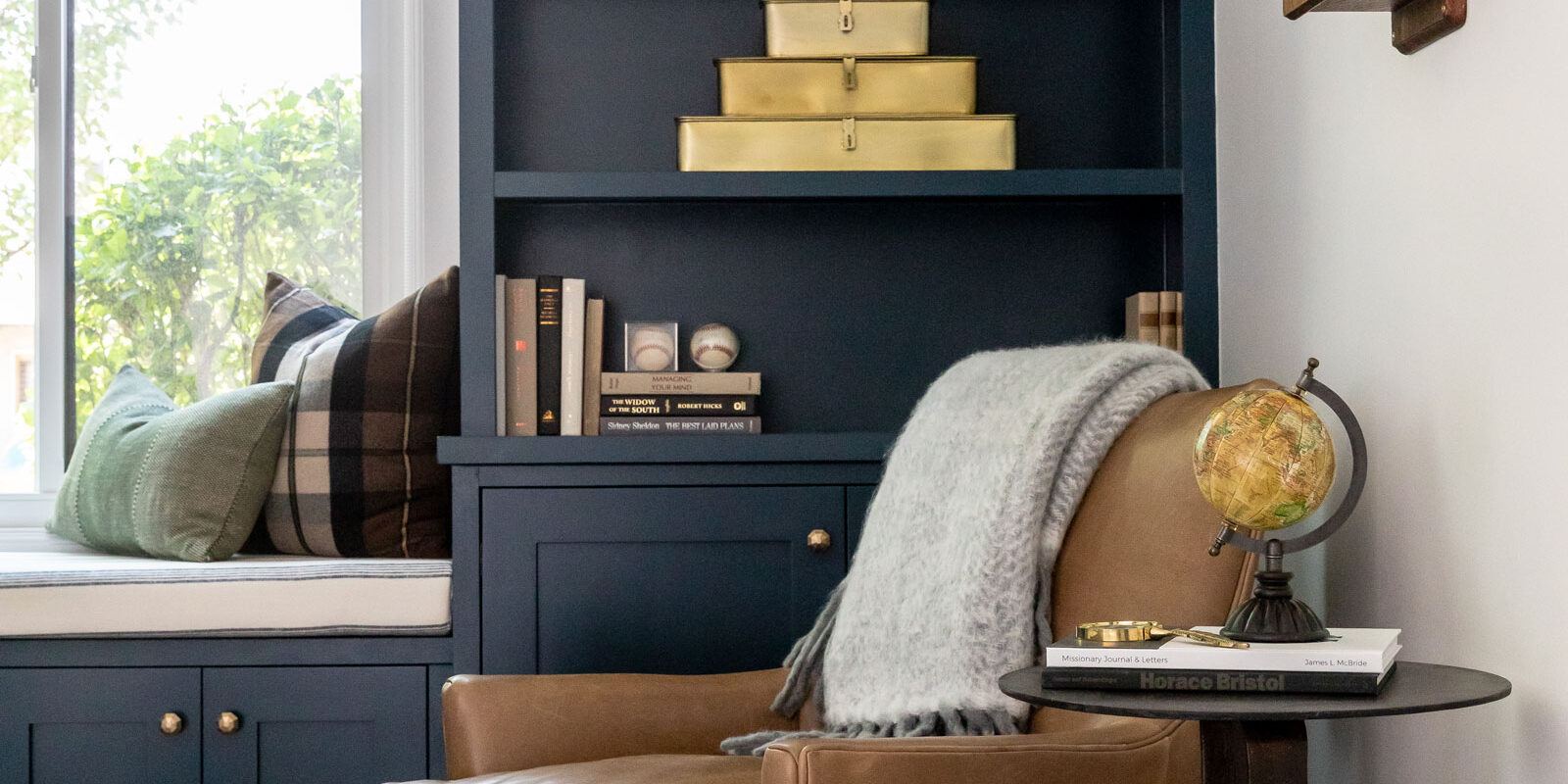
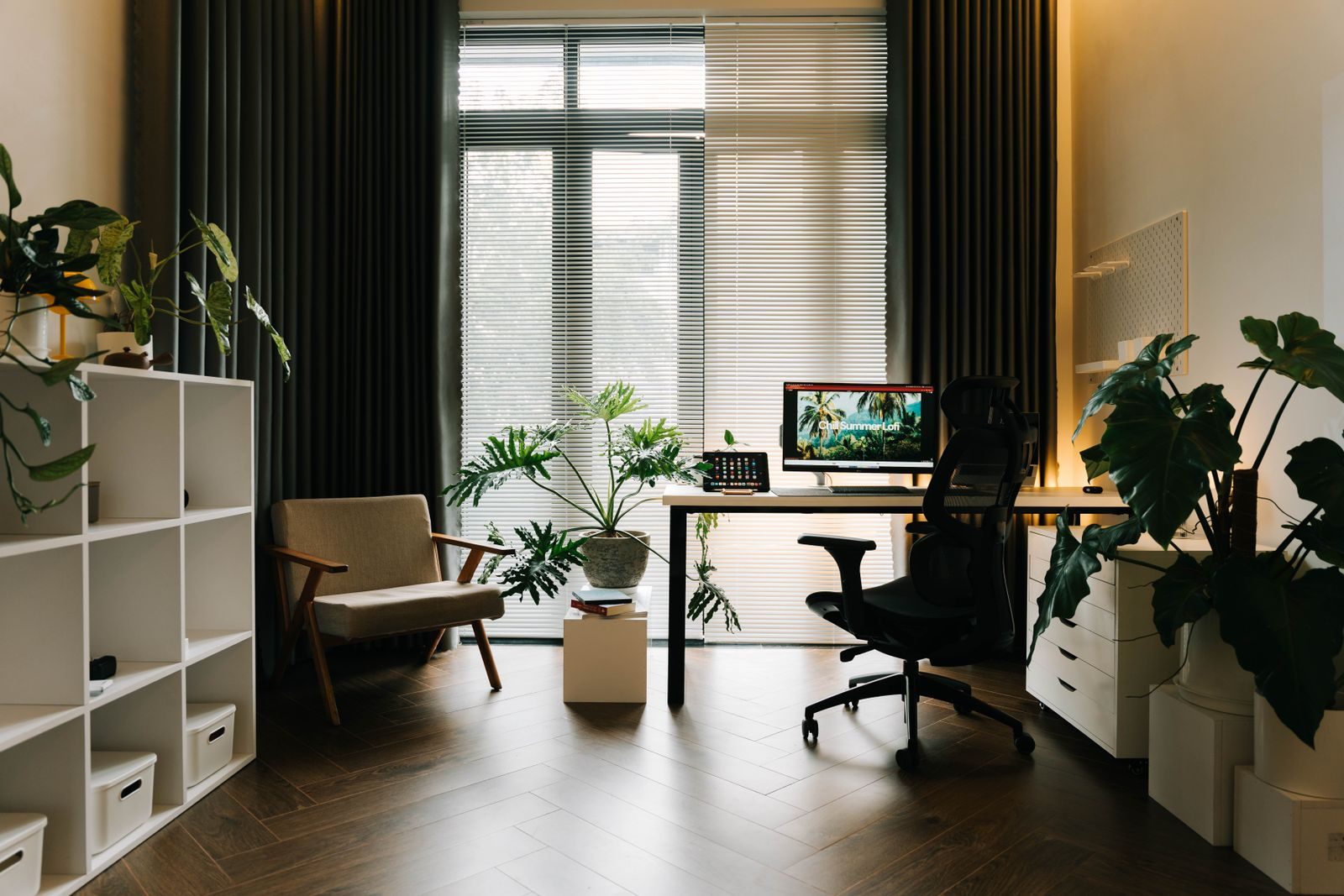
Don't underestimate ordinary furniture. A thick area rug, an upholstered chair, curtains, and a bookshelf stocked with actual books all absorb sound and cut down reverb, often more than people expect from items that aren't marketed as acoustic products at all. A room with hard flooring, bare walls, and minimal furniture is going to sound hollow and echoey on calls no matter how good your microphone is, because the room itself is working against you.
White Noise and Masking Sound
A white noise machine or app running just outside your office door masks sound in both directions, keeping household noise from bleeding into your calls and keeping your side of the conversation private from the rest of the family. It's a low-cost fix, often under $30, that delivers results out of proportion to its price.
Thinking about a home office project of your own?
Get a Free EstimateWhat to Build In If You're Finishing the Room From Scratch
If you're framing or remodeling the office rather than retrofitting it, you have options that aren't available once the walls are closed up. Resilient channel decouples drywall from the studs and meaningfully reduces vibration transfer through shared walls. Double-layer drywall with a damping compound like Green Glue between the layers goes a step further for walls adjacent to genuinely loud spaces, like a basement home gym or theater room. And if the office shares a ceiling with a floor above it, the same resilient-channel-and-damping approach applies there too. These are construction-stage decisions, the kind of thing worth planning into a basement office build rather than trying to retrofit later.
| Fix | Approx. Cost | Best Suited For |
|---|---|---|
| Solid-core door + weatherstripping | $150 - $350 | Every home office, quickest win available |
| White noise machine or app | $20 - $50 | Masking household noise in both directions |
| DIY acoustic panels (a few) | $100 - $250 total | Reducing echo and improving mic clarity |
| Blown-in wall insulation (existing wall) | $1,000 - $2,500 | Shared walls with consistently loud rooms |
| Resilient channel + double drywall (new construction) | $2 - $5 per sq ft of wall | New-build or gut-remodel offices next to noisy spaces |
FAQs
What's the single cheapest fix with the biggest impact?
Swapping a hollow-core door for a solid-core one, with weatherstripping added around the frame. It's a contained cost, a straightforward swap, and it addresses the most common path sound takes into and out of a home office.
Do I need to soundproof the ceiling too?
Only if the office shares a ceiling with a consistently loud space above or below it, like a playroom, media room, or home gym. For most offices, the door and the shared walls matter far more than the ceiling.
Can white noise actually keep my conversations private?
It helps meaningfully, especially layered on top of a solid door and some wall treatment, but it's not a substitute for an actual sealed, insulated room if full privacy is a hard requirement for your work, such as handling sensitive client information.
Is it worth soundproofing if I'm just retrofitting an existing room?
Yes, most of the fixes in this guide, the door, panels, blown-in insulation, soft furnishings, work perfectly well as retrofits without opening up the whole room. You just lose access to a couple of the more aggressive new-construction-only options, like resilient channel.
Final Thoughts
A solid door, a bit of wall treatment, and a handful of well-placed acoustic panels take a home office from amateur to professional without turning into a major construction project. If you're planning a new office build and want those construction-stage options, resilient channel, proper wall insulation, a ceiling assembly that actually blocks sound, built in from day one, reach out to Pro-Worx and we'll make sure it's part of the plan before drywall goes up, not something you're wishing you'd done afterward.
Ready to Start Your Home Office Project?
Get a free consultation and estimate from Utah's trusted home renovation experts.

Bryant Bitner
Founder & Lead Project Manager, Pro-Worx Construction
Bryant leads Pro-Worx Construction and has helped hundreds of Utah families plan and build renovations they actually use, from basement finishes to full home remodels. He focuses on honest scoping, code compliance, and clear numbers from the first conversation.