In This Article
Designing a Home Office That Actually Works
The kitchen table was a fine stopgap for a few weeks back when remote work first became common, but years in, it's clear that a purpose-built home office isn't a luxury, it's basic infrastructure for doing your job well. A well-designed workspace affects your posture, your focus, how you come across on video calls, and honestly, your mood by 3 p.m. on a Tuesday. Here's how we approach building one.
Desk Height and Ergonomics
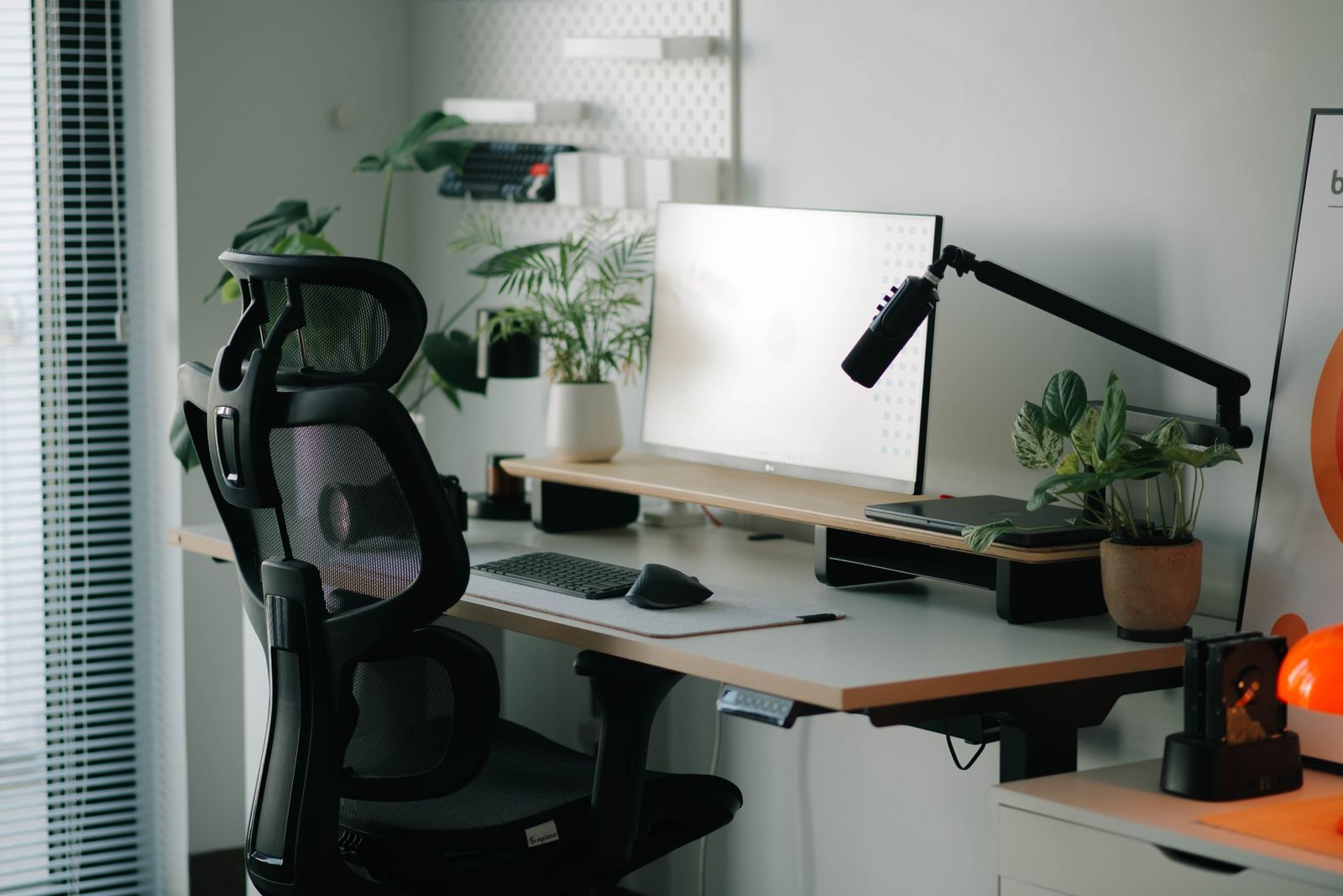
Your desk surface should sit around 28 to 30 inches for seated work, which is standard desk height, but it's worth confirming against your own chair and arm length rather than assuming. A sit-stand desk that adjusts from roughly 28 to 48 inches is worth the investment for most people. Standing for even 2 to 3 hours a day noticeably reduces lower back stiffness and tends to improve afternoon energy levels. Position your monitor at arm's length with the top of the screen at or just slightly below eye level, this single adjustment does more to prevent neck strain than almost anything else you can change.
| Element | Target Range | Why It Matters |
|---|---|---|
| Desk height (seated) | 28 - 30 in | Keeps forearms roughly parallel to the floor while typing |
| Monitor distance | 20 - 28 in from eyes | Reduces eye strain over long work sessions |
| Monitor top edge height | At or slightly below eye level | Prevents forward neck craning |
| Standing time (sit-stand desk) | 2 - 3 hrs per day | Reduces lower back fatigue and stiffness |
| Chair seat height | Feet flat, knees at ~90 degrees | Supports proper hip and lower back alignment |
Lighting for Work and Video Calls
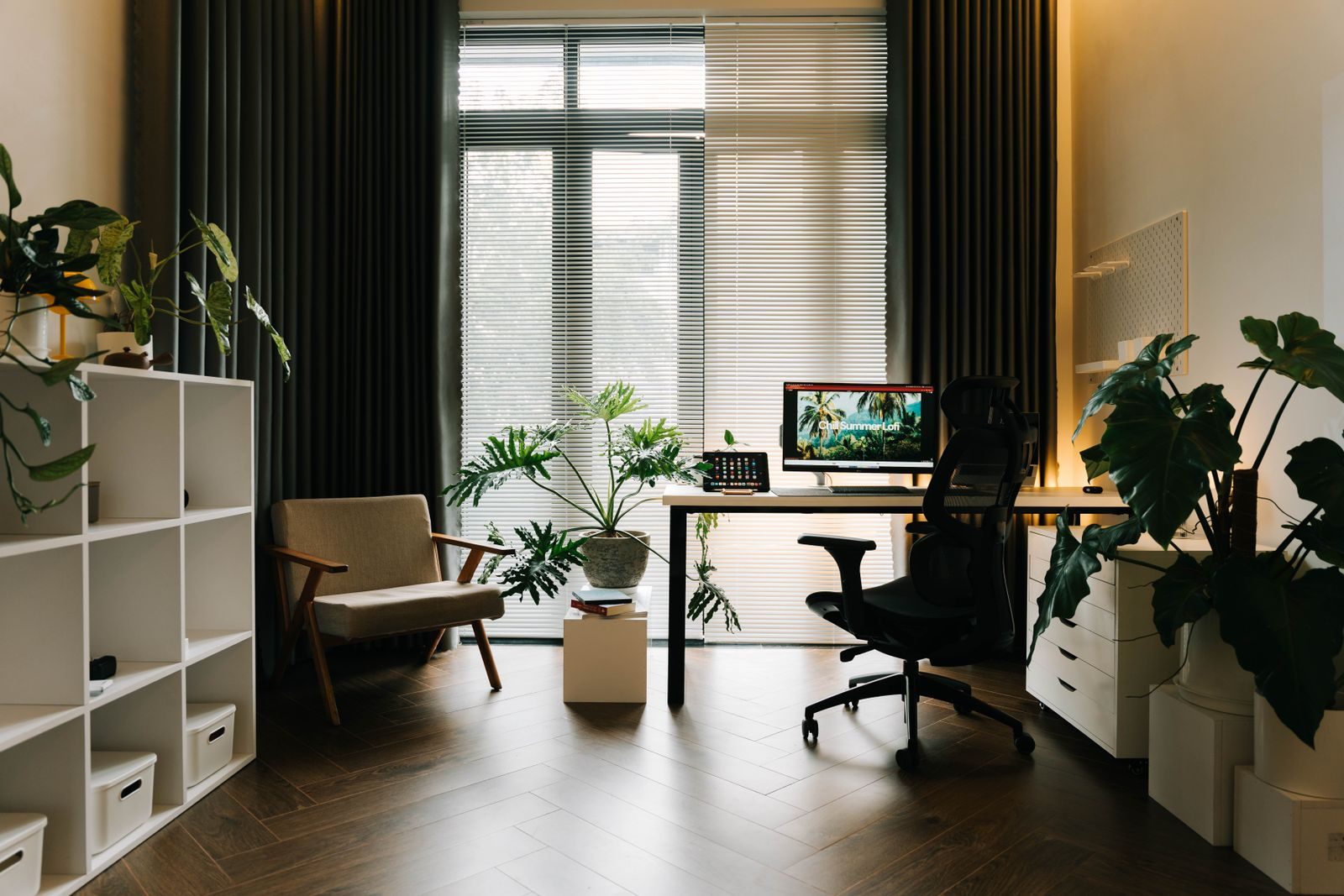
Natural light is great for mood and alertness, but it's a liability on video calls if it's behind you, since your camera will expose for the window and turn you into a silhouette. Position your desk so light comes from the side rather than from directly behind or in front of you. For overhead fixtures, tunable LED lighting that shifts from warmer tones in the morning to cooler tones midday can help regulate your energy through the day. A dedicated desk lamp for task lighting rounds things out, especially during Utah's shorter winter daylight hours.
Thinking about a home office project of your own?
Get a Free EstimateAcoustic Comfort and Concentration
Open floor plans are genuinely rough on concentration. A proper home office benefits from a solid-core door (hollow-core doors do almost nothing to block sound), some acoustic insulation in the shared walls, and at minimum a thick area rug and a bookshelf to break up hard, reflective surfaces that cause echo. A small acoustic panel placed behind your monitor, where your microphone is picking up the most reflected sound, makes a surprisingly noticeable difference in how clear you sound on calls.
Power, Data, and Connectivity
Run dedicated electrical circuits with enough outlets at desk height for your monitors, dock, and peripherals, and consider built-in USB-A and USB-C outlets right in the wall so you're not hunting for a brick every time you plug in. For networking, a hardwired Ethernet connection is worth prioritizing over relying on Wi-Fi alone. Wi-Fi is a convenience; for video calls that actually matter, a wired connection is the more dependable tool. We run Cat6A cable to every dedicated office we build, so the office is ready for whatever bandwidth demands show up over the next decade.
Storage and Organization
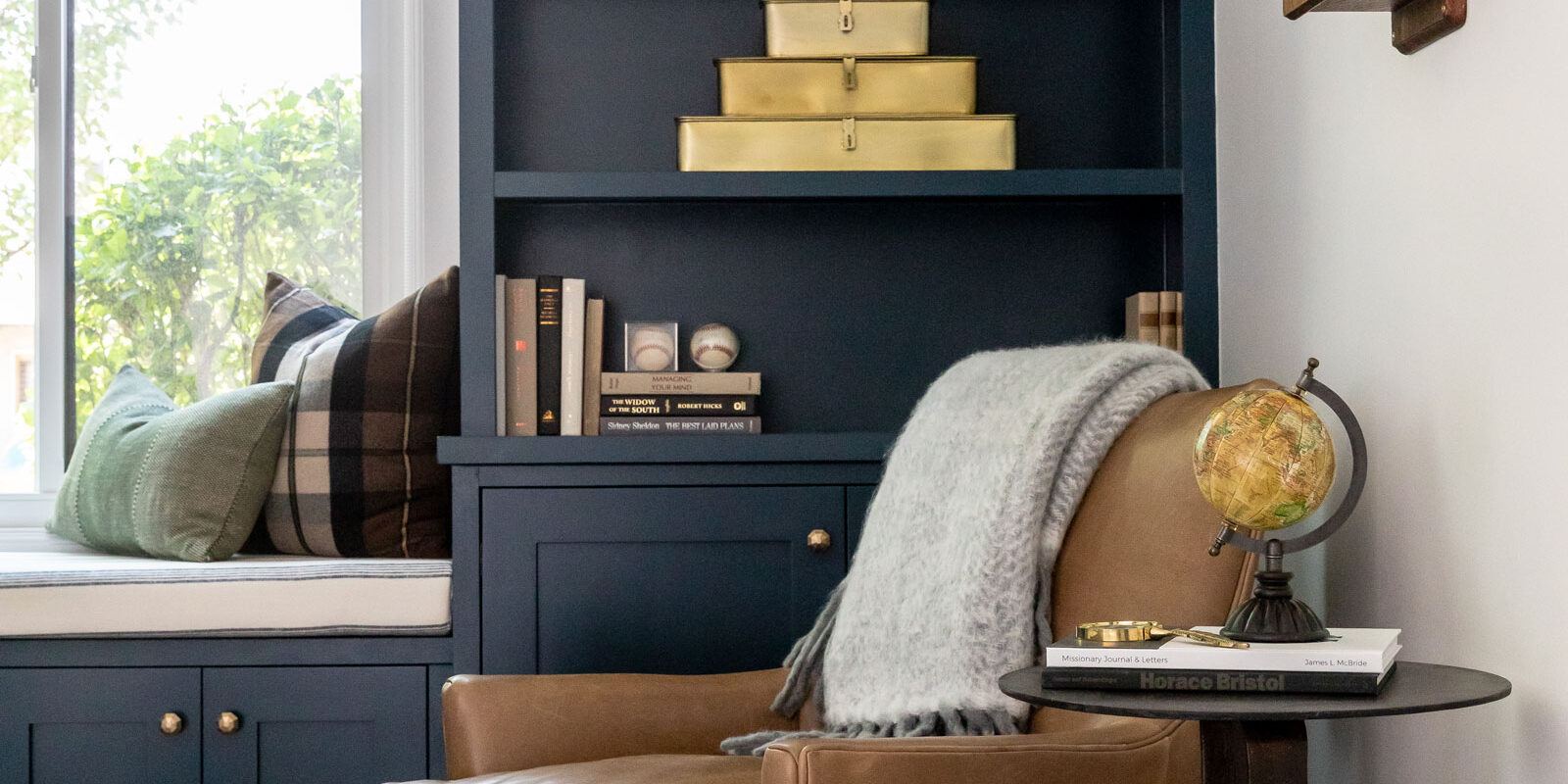
Built-in cabinetry and shelving keep an office looking clean and professional instead of cluttered. A mix of closed cabinets, for hiding the stuff you don't want on camera, and open shelves, for books and personal items that actually look good on camera, gives you a polished, lived-in background without looking staged.
Thinking about a home office project of your own?
Get a Free EstimateYour Video Call Background
Whatever's behind you on a call is effectively your professional brand now. Design that wall on purpose: floating shelves, a bit of artwork, and soft backlighting read as intentional and put together. Avoid sitting with a bright window directly behind you for the reason mentioned above, and avoid a totally blank wall too, it photographs as flat and a little sterile on camera.
Building This Into a Basement or Spare Room
A lot of our Utah clients end up carving a home office out of basement square footage, and that's a smart use of the space as long as a few things get planned up front. If the room is going to be a legal, code-compliant office with a door, confirm egress and ventilation requirements with your local building department, especially if there's any chance the room could later serve as a bedroom. Insulate the walls for both temperature and sound, basements run cooler and echo more than above-grade rooms. And if you're already opening walls for electrical, that's the moment to add the Ethernet runs and extra outlets mentioned above, since it's dramatically cheaper to wire while the studs are exposed than to retrofit later.
- Solid-core door with weatherstripping for sound and privacy
- Sit-stand desk, or at minimum a desk at correct seated height
- Monitor arm or riser to get screens to proper eye height
- Dedicated electrical circuit with desk-height outlets, including USB-C
- Hardwired Ethernet drop at the desk
- Side lighting plus a tunable overhead fixture and a task lamp
- At least one acoustic panel or soft surface behind the desk
FAQs
Do I need a sit-stand desk, or is a regular desk fine?
A regular desk at the correct height is perfectly fine if you're disciplined about taking standing or walking breaks elsewhere. A sit-stand desk simply removes the friction of remembering to do that, which is why so many people who try one end up using the standing position more than they expected to.
What's the single highest-impact upgrade for video call quality?
Lighting from the side, paired with a wired Ethernet connection. Those two changes alone solve the two most common video call complaints: looking washed out or shadowed, and audio or video that stutters at the worst possible moment.
Can I convert an existing basement bedroom into a home office?
Yes, and it's a common, straightforward conversion. Since the room likely already meets egress and ceiling height requirements as a bedroom, you're mainly adding electrical, networking, and finish work rather than solving code issues from scratch.
How much should I budget for a full home office build-out?
It depends heavily on scope, a simple office with a desk, lighting, and basic electrical work can land in the low thousands, while a full built-in cabinetry package with custom millwork and a wired network closet can run considerably more. Get a walkthrough and a written scope before assuming a number either way.
Thinking about a home office project of your own?
Get a Free EstimateFinal Thoughts
A well-designed home office pays for itself in productivity within the first year, often faster. It's not just about comfort, it's about being able to perform at your best every single day instead of fighting your workspace to get there. If you're ready to turn a spare room or basement corner into a real office, reach out to Pro-Worx and we'll help you plan it properly from the studs out.
Ready to Start Your Home Office Project?
Get a free consultation and estimate from Utah's trusted home renovation experts.

Bryant Bitner
Founder & Lead Project Manager, Pro-Worx Construction
Bryant leads Pro-Worx Construction and has helped hundreds of Utah families plan and build renovations they actually use, from basement finishes to full home remodels. He focuses on honest scoping, code compliance, and clear numbers from the first conversation.