

Overview
In 2026, Utah homeowners are finishing more basements than ever, turning them into family rooms, home theaters, and rental suites. But one question keeps coming up: Can you put hardwood floors in a Utah basement? This complete guide from Pro Worx Construction gives you the honest answer with real local costs, the latest research, and practical advice so you avoid expensive mistakes before spending a dime.
From moisture risks in Salt Lake County clay soils to current pricing in Sandy, Lehi, Bluffdale, and beyond, you will discover why solid hardwood often becomes a regret while smarter waterproof options deliver beauty that lasts. We share real Utah stories, cost breakdowns, and exactly what works for our Wasatch Front climate.
Table Of Contents
- Why Utah Homeowners Keep Asking About Hardwood in Basements
- Key Facts You Need to Know Before Choosing Basement Flooring
- The Moisture Challenges That Make Hardwood Risky in Utah
- 2026 Cost Comparison and Your Smart Flooring Checklist
- Real Stories: Wins, Regrets, and What Actually Lasts
- Your Final 2026 Guide to Basement Flooring Decisions
- Frequently Asked Questions
You walk into your unfinished basement in Riverton or Herriman and imagine warm, beautiful hardwood floors that match the main level. Then someone warns you about moisture and suddenly you are second guessing everything. In 2026 Utah families are asking one big question.
Can you really install hardwood floors in a Utah basement and should you?
This guide cuts through the noise with real local experience from over 1,100 basement projects. We share the latest research, honest costs, and practical alternatives that look just as good without the headaches.
At Pro Worx Construction we have seen it all. The gorgeous installs that held up and the ones that did not. You will walk away knowing exactly what to choose so your basement stays beautiful for decades while protecting your investment.
Why Utah Homeowners Keep Asking About Hardwood in Basements in 2026
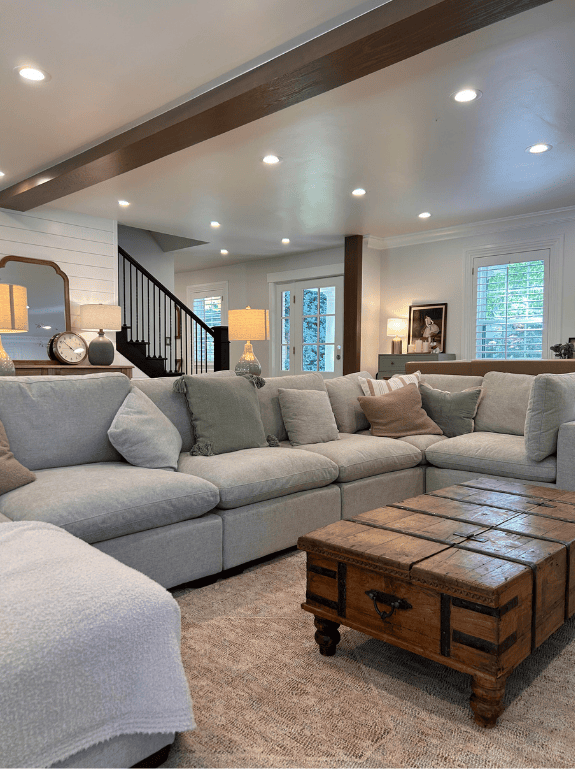
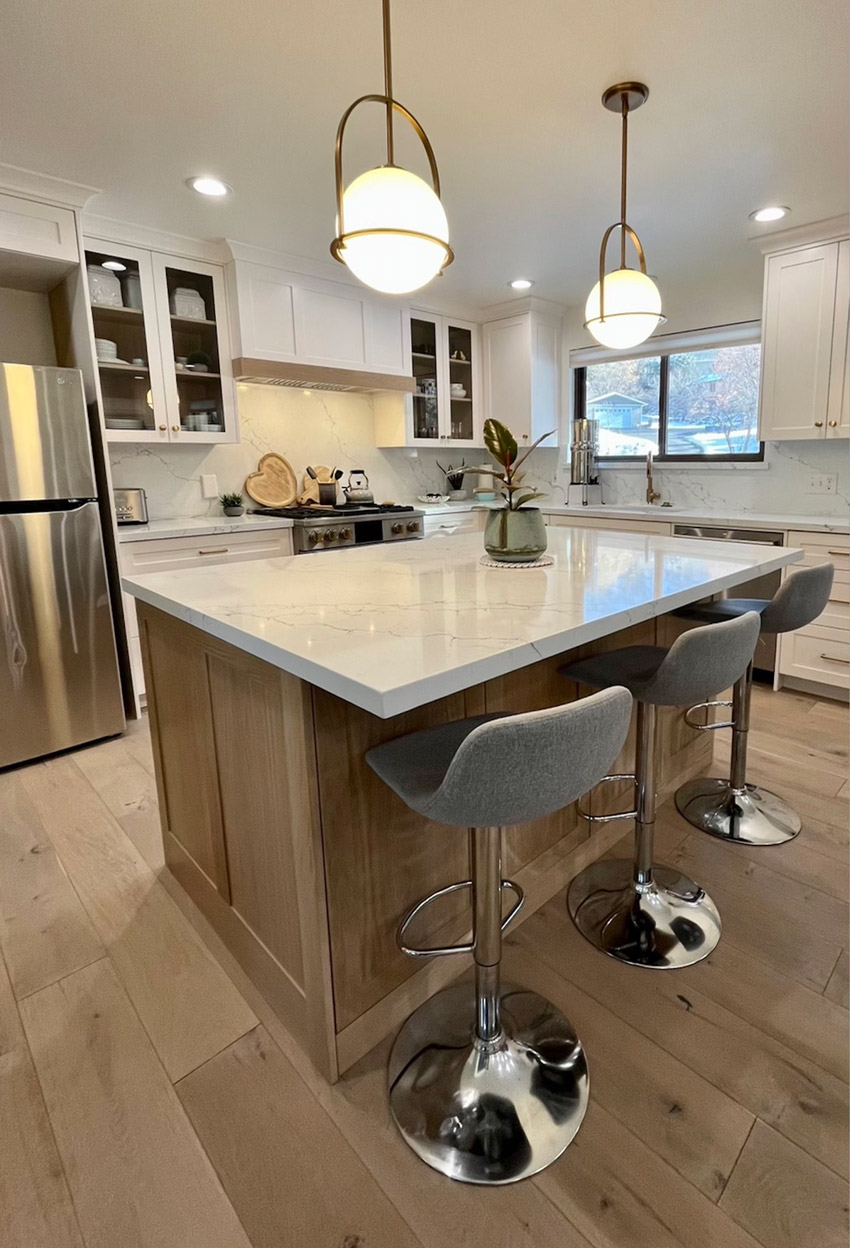
Basements have become premium living space across the Wasatch Front. Families want them to feel like an extension of the home, not a cave. Hardwood looks timeless and warm but our unique climate creates real risks. Snowmelt, clay soils, and temperature swings mean moisture is always a factor even in newer homes.
Local trends show homeowners choosing durable waterproof flooring that still delivers that high end look. Well chosen basement floors boost home value and ROI while poorly chosen ones lead to repairs that wipe out any gains. The right decision now saves thousands later.
Think of it like buying winter tires in Utah. You can drive on regular ones but when the snow hits you will wish you had made the smarter choice.
How the Right Flooring Choice Delivers Peace of Mind
Smart flooring decisions turn a basement into a space your family actually uses instead of worries about. Trends in 2026 favor options that handle spills, humidity, and daily life while looking like real hardwood.
Key Facts You Need to Know Before Choosing Basement Flooring
Here are the practical realities every Utah homeowner should understand before making a decision.
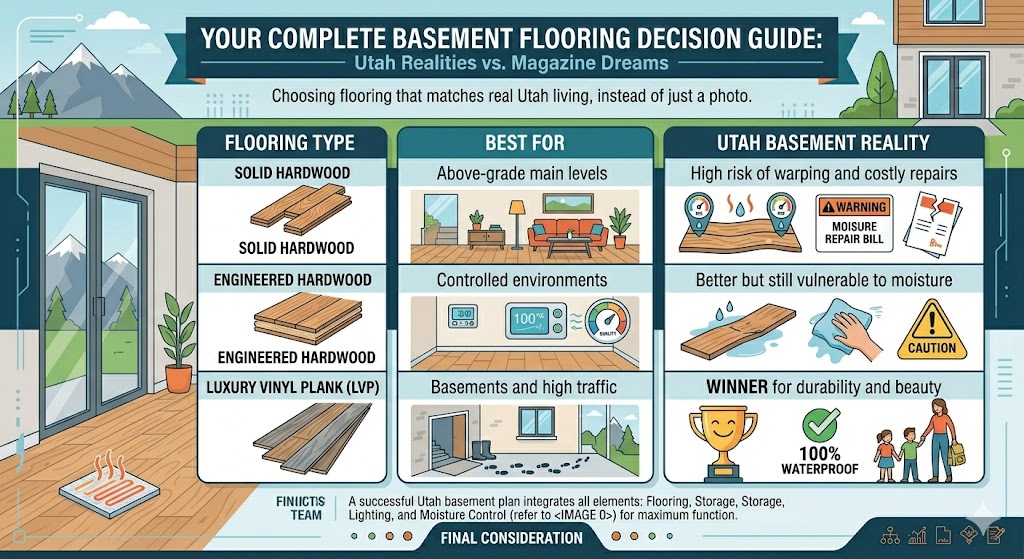
- Solid hardwood expands and contracts with moisture making it risky below grade. Even with perfect prep it can cup or gap in our climate.
- Engineered hardwood offers better stability but still needs strict moisture control. A real wood top layer over plywood helps but is not foolproof.
- Luxury vinyl plank gives the hardwood look with 100 percent waterproof performance. Spills, tracked in snow, and humidity do not bother it.
- Proper testing and vapor barriers are non negotiable for any wood option. Calcium chloride tests and dehumidifiers become part of daily life.
- Local building pros recommend non wood or advanced engineered products for most Utah basements. The data backs it up.
These facts help you choose flooring that matches real Utah living instead of magazine dreams.
| Flooring Type | Best For | Utah Basement Reality |
|---|---|---|
| Solid Hardwood | Above grade main levels | High risk of warping and costly repairs |
| Engineered Hardwood | Controlled environments | Better but still vulnerable to moisture |
| Luxury Vinyl Plank | Basements and high traffic | Winner for durability and beauty |
👆 Swipe left/right on mobile to see all columns
The Moisture Challenges That Make Hardwood Risky in Utah
Our clay soils hold water. Snowmelt seeps. Concrete slabs release vapor. Even dry feeling basements can hit humidity spikes that destroy wood floors.
- Winter dry air shrinks boards creating gaps and squeaks.
- Spring runoff and summer storms introduce hidden moisture.
- Condensation on cold walls meets warm floors leading to cupping.
- Without constant dehumidification wood floors struggle.
- Repair costs quickly exceed the original premium price.
One homeowner in Orem installed beautiful oak only to find it cupped after one wet spring. The fix cost more than the original floor.
Fact: National Wood Flooring Association guidelines recommend 30 to 50 percent humidity. Utah basements often fall outside that range without extra equipment.
2026 Cost Comparison and Your Smart Flooring Checklist
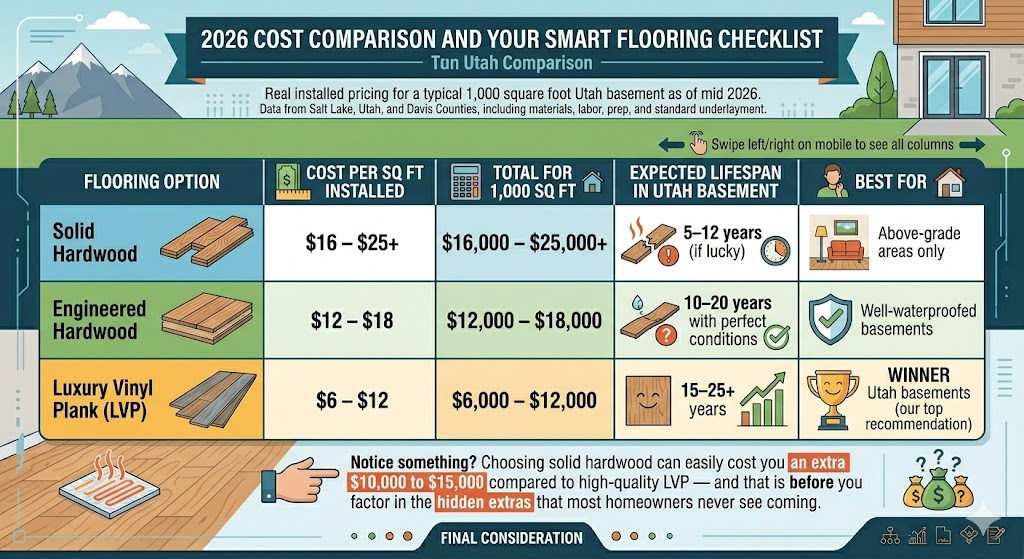
Real installed pricing for a typical 1,000 square foot Utah basement as of mid 2026. These numbers come straight from recent projects across Salt Lake, Utah, and Davis Counties and include materials, labor, subfloor prep, and standard underlayment.
| Flooring Option | Cost per Sq Ft Installed | Total for 1,000 Sq Ft | Expected Lifespan in Utah Basement | Best For |
|---|---|---|---|---|
| Solid Hardwood | $16 – $25+ | $16,000 – $25,000+ | 5–12 years (if lucky) | Above-grade areas only |
| Engineered Hardwood | $12 – $18 | $12,000 – $18,000 | 10–20 years with perfect conditions | Well-waterproofed basements |
| Luxury Vinyl Plank (LVP) | $6 – $12 | $6,000 – $12,000 | 15–25+ years | Utah basements (our top recommendation) |
👆 Swipe left/right on mobile to see all columns
Notice something? Choosing solid hardwood can easily cost you an extra $10,000 to $15,000 compared to high-quality LVP — and that is before you factor in the hidden extras that most homeowners never see coming.
Hidden Costs That Add Up Fast in Utah Basements
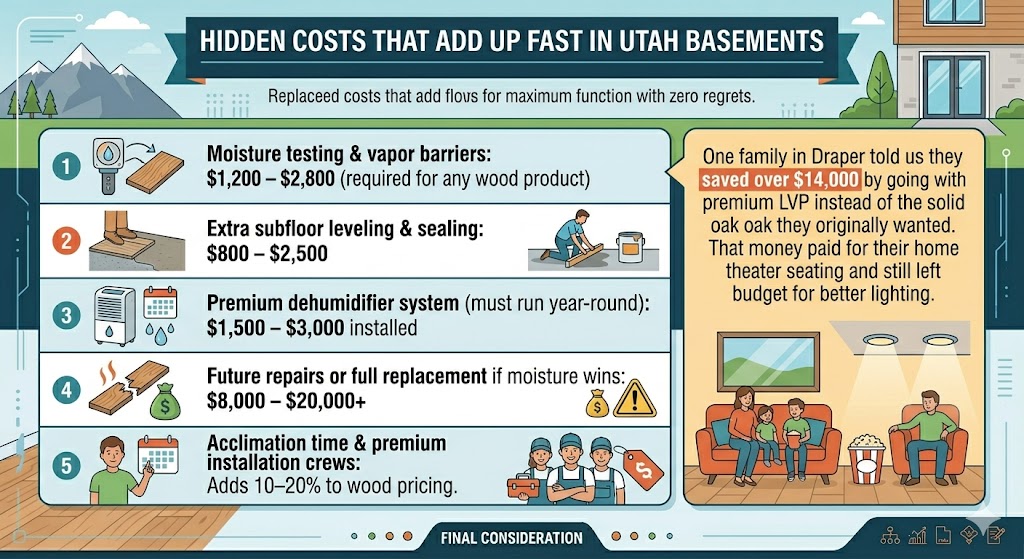
- Moisture testing & vapor barriers: $1,200 – $2,800 (required for any wood product)
- Extra subfloor leveling & sealing: $800 – $2,500
- Premium dehumidifier system (must run year-round): $1,500 – $3,000 installed
- Future repairs or full replacement if moisture wins: $8,000 – $20,000+
- Acclimation time & premium installation crews: Adds 10–20% to wood pricing
One family in Draper told us they saved over $14,000 by going with premium LVP instead of the solid oak they originally wanted. That money paid for their home theater seating and still left budget for better lighting.
Your 2026 Smart Basement Flooring Checklist
Print this or screenshot it. Run through every item before you sign anything.
- Has the basement had a professional calcium chloride moisture test in the last 30 days? (Results must be under 3 lbs per 1,000 sq ft / 24 hrs)
- Is a full vapor barrier and perimeter sealing included in the quote?
- Will a whole-house or dedicated basement dehumidifier be installed and sized correctly for Utah’s climate?
- Are expansion gaps and proper acclimation time written into the contract for any wood products?
- Does the flooring have at least a 20-year residential warranty that covers moisture-related issues?
- Are samples being left in the basement for 2 full weeks to test real conditions?
- Have you compared total 10-year cost (initial + maintenance + possible replacement)?
- Is the installer experienced with below-grade Utah basements (ask for 5+ local references)?
 Pro Tip from Pro Worx: If your contractor pushes solid hardwood without a detailed moisture mitigation plan, walk away. We have seen too many beautiful floors turn into expensive headaches because someone skipped the boring (but critical) prep work.
Spend Smart — Not Twice
The cheapest floor is the one you only buy once. For most Utah basements, premium waterproof LVP gives you the hardwood look you love at half the upfront cost and zero of the long-term stress.
Real Stories: Wins, Regrets, and What Actually Lasts
At Pro Worx Construction we’ve finished over 1,100 basements across the Wasatch Front. Some floors became family legends. Others became expensive lessons. Here are the real stories our clients have lived through — names changed, but every detail is true.
The Pipe Burst That Proved LVP Is a Hero
The Thompson family in Draper finished their 1,200 sq ft basement in early 2024. They chose premium waterproof LVP in a wide-plank oak look.
Two winters later, a frozen pipe burst upstairs. Water flooded the basement. Everything else was ruined… but the LVP mopped up and looked brand new. Saved them $9,800.
“We tell everyone — get the LVP. It’s the one thing that didn’t betray us.” – Sarah Thompson
Five Years and Still Perfect in Sandy
The Martinez family Park City chose engineered hardwood with our most aggressive waterproofing package. Five years later and after multiple wet springs, snowmelt, and two kids with muddy soccer cleats, the floors still look flawless.
“Worth every extra dollar on the prep.” – Miguel Martinez
The Beautiful Oak That Turned Into Tacos
A family in Alpine installed solid oak themselves to save money. After one wet spring the boards cupped like taco shells, gaps appeared, and mold started growing underneath. Total loss: $18,400.
Twice-Replaced Hardwood in Provo
A couple in South Jordan replaced their solid hardwood twice in just 8 years due to seasonal moisture swings. Total spent: over $31,000. They finally switched to premium LVP on the third try and say they’re done worrying.
What We’ve Learned After 1,100+ Basements
Hardwood looks amazing on day one, but in Utah basements the question isn’t if it will fail — it’s when. The smartest families choose floors that survive real Utah life: snowmelt, clay soil, pipe bursts, kids, and pets.
Your Final 2026 Guide to Basement Flooring Decisions
Hardwood can work in perfect conditions with massive preparation. Most Utah basements do better with smarter waterproof choices that still look incredible.
Pro Worx recommends solutions that match real life instead of Pinterest perfection.
Frequently Asked Questions About Hardwood in Utah Basements
Can you put hardwood in a Utah basement at all?
Technically yes but we usually advise against solid hardwood. Engineered hardwood can work with perfect conditions and aggressive moisture protection, but it’s still risky compared to waterproof options.
How much more does hardwood cost than LVP?
Usually double or more. Expect $12,000 to $25,000+ for hardwood versus $6,000 to $12,000 for high-quality LVP in a typical 1,000 sq ft Utah basement (installed).
What if my basement feels completely dry?
Test it professionally. Concrete slabs still release vapor even when the air feels dry. We’ve seen many “dry” basements in Sandy and Lehi fail moisture tests.
Does LVP really look like real hardwood now?
Yes. 2026 premium LVP styles have incredible embossed texture, realistic grain patterns, and wide planks that most people cannot tell apart from real wood.
How much does proper waterproofing add to the project?
Typically $3,000 to $8,000 but it protects your entire investment. This includes vapor barriers, perimeter sealing, and subfloor prep.
Is engineered hardwood safer than solid hardwood in a basement?
Yes — engineered is more stable because of its plywood core. However, it still has a real wood top layer that can be damaged by moisture. It’s better than solid but not as worry-free as waterproof LVP.
Do I need a dehumidifier if I install LVP?
Not usually. One of the biggest advantages of LVP is it performs well even with humidity fluctuations. We still recommend keeping your basement under 55% humidity for overall comfort and mold prevention.
How long will LVP last in a Utah basement?
Premium LVP typically lasts 15–25+ years in Utah basements with normal use. Many of our clients are still happy with floors installed 8–10 years ago.
Can I install flooring directly over concrete?
Yes, but proper prep is critical. We always test moisture levels, apply a vapor barrier if needed, and level the slab. Skipping this step is the #1 reason floors fail.
Will choosing LVP hurt my home’s resale value?
No. In Utah’s market, buyers strongly prefer durable, low-maintenance basement floors. A beautiful, problem-free LVP floor often increases perceived value more than a risky hardwood install.
Pro Worx Construction • proworxconstruction.com • Serving the entire Wasatch Front
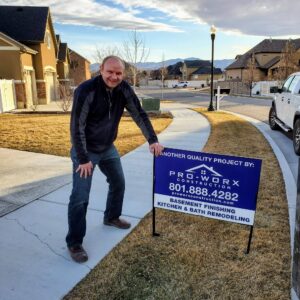
Bryant Bitner
Founder & Lead Project Manager, Pro-Worx Construction
Bryant is the driving force behind Pro-Worx Construction, Northern Utah’s premier specialist in custom basement finishing and luxury remodeling. With over 15 years of hands-on experience in the construction industry, Bryant has built a reputation for transforming challenging spaces—particularly daylight basements on sloped lots—into high-value living areas.
Known for his meticulous attention to detail and “client-first” communication style, Bryant oversees every project from the initial framing to the final custom finish. His goal isn’t just to add square footage; it’s to increase a homeowner’s quality of life through thoughtful design and structural integrity.
When he isn’t on-site in Salt Lake City or Ogden, Bryant is likely exploring the latest in sustainable building materials or refining the streamlined project management workflows that keep Pro-Worx projects on time and on budget.