
Overview
This guide covers basement accent wall ideas that add character without spending a fortune. You’ll find realistic cost ranges, popular styles, DIY options, design tips, and real stories from Utah families. Whether you want something simple with paint or a bit more texture with wood or stone, this article gives practical ideas that work in real basements on a reasonable budget.
Table of Contents
- Why Accent Walls Work So Well in Basements
- How Much Do Basement Accent Walls Cost?
- Painted Accent Wall Ideas That Make a Big Impact
- Wood Slat and Stone Veneer Accent Walls
- Budget-Friendly Accent Wall Options
- Design Tips for Basement Accent Walls
- Common Mistakes With Basement Accent Walls
- What to Think About Before You Start
- Frequently Asked Questions
Basements can sometimes feel a bit plain or cold, especially when the walls are all the same color and texture. An accent wall is one of the easiest and most affordable ways to add personality and warmth without tearing everything apart or spending a fortune.
Whether you go with a bold paint color, wood slats, stone veneer, or something more budget-friendly, the right accent wall can completely change how a basement feels. This guide covers ideas that actually work in Utah homes, with realistic pricing and persectives from families who have already tried them.
Why Accent Walls Work So Well in Basements
Basements often have large, flat walls that can feel a bit plain or even institutional. When every wall looks the same, the space can feel unfinished or boring, no matter how nice the furniture is. An accent wall is one of the simplest ways to break up that monotony and give the basement more personality.
Breaking Up Large, Flat Walls
Many basements have long, uninterrupted walls that can feel overwhelming or cold. An accent wall helps by creating a visual focal point. It draws the eye and makes the space feel more intentional and designed rather than just functional.
- It adds visual interest without needing to fill the wall with furniture or decor.
- It can make a large basement feel more balanced and cozy.
- It works especially well in spaces that have a lot of open wall space but limited natural light.
Adding Character and Warmth
Basements can sometimes feel a little cold or impersonal. An accent wall is an easy way to bring in warmth, texture, or color that makes the space feel more inviting. Whether you choose a bold paint color, wood slats, or stone, the right accent wall can completely shift the mood of the room.
- It helps the basement feel more like an extension of your home rather than just extra square footage.
- It gives you a chance to show a bit of personality without committing to an entire room makeover.
- Even a simple change can make the space feel more lived-in and welcoming.
Defining Spaces Without Building Walls
Many basements are open-concept, which is great for flexibility but can sometimes feel undefined. An accent wall is a simple way to create visual separation between different areas, such as a seating zone, reading corner, or game area.
- It helps zone the space without the cost or commitment of building actual walls.
- It makes the basement feel more organized and purposeful.
- It works especially well when you want to keep the space open but still give it structure.
| Aspect | Plain Basement Wall | Accent Wall |
|---|---|---|
| Visual Interest | Often feels flat and repetitive | Adds focus and personality |
| Room Definition | Can feel undefined in open spaces | Helps create zones without physical walls |
| Perceived Warmth | Can feel cold or institutional | Adds warmth and character |
| Flexibility | No visual change | Easy to update or change later |
| Cost vs Impact | No added value | High visual impact for relatively low cost |
A Low-Risk Way to Refresh Your Basement
One of the biggest advantages of an accent wall is that it is relatively low-risk. If you get tired of it in a few years, most options are much easier and cheaper to change than redoing an entire room or doing a full renovation.
- Painted accent walls can be repainted whenever you want a new look.
- Peel and stick wallpaper can often be removed without damaging the wall underneath.
- Even wood slat or stone veneer walls are generally easier to update than built-in cabinetry or major structural changes.
For families on a budget, this makes accent walls a smart and practical way to refresh a basement without committing to a full renovation. You get noticeable improvement with less risk and lower cost.
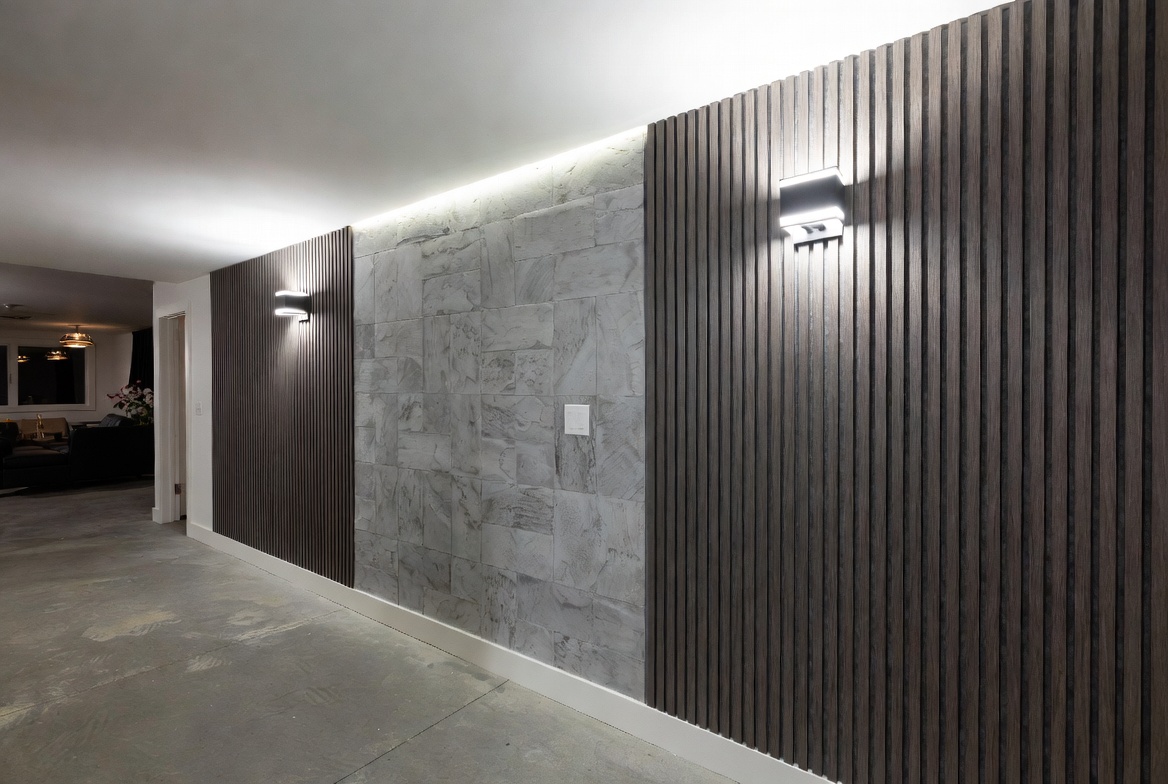
How Much Do Basement Accent Walls Cost?
One of the best things about accent walls is that you can create a noticeable change without spending a lot of money. Costs vary depending on the material you choose and whether you do the work yourself or hire someone to help.
Here’s a realistic breakdown of what most Utah homeowners are spending in 2026, along with what typically affects the price.
What Influences the Cost?
Several factors determine how much you will spend on a basement accent wall:
- Material choice — Paint is the cheapest option. Wood slats, stone veneer, and custom millwork cost more.
- DIY vs professional installation — Doing it yourself saves significantly on labor, but some materials (like stone veneer) are harder to install correctly.
- Wall size and condition — Larger walls or walls that need prep work (patching, smoothing, or priming) will cost more.
- Design complexity — Simple solid colors or basic slat walls are more affordable than geometric patterns, board and batten, or detailed stone layouts.
- Lighting additions — Adding sconces, LED strips, or backlighting increases the total cost.
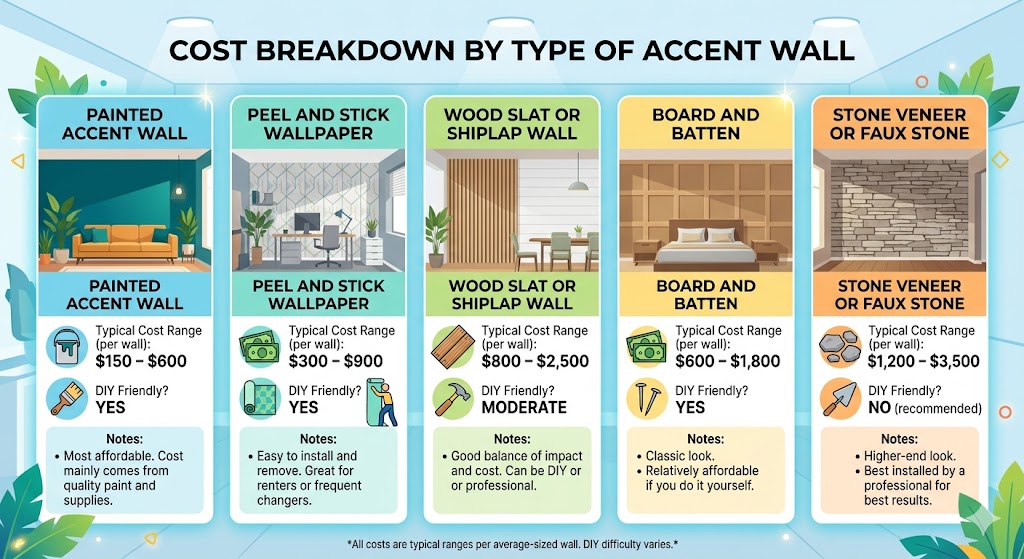
Cost Breakdown by Type of Accent Wall
| Type of Accent Wall | Typical Cost Range (per wall) | DIY Friendly? | Notes |
|---|---|---|---|
| Painted Accent Wall | $150 – $600 | Yes | Most affordable. Cost mainly comes from quality paint and supplies. |
| Peel and Stick Wallpaper | $300 – $900 | Yes | Easy to install and remove. Great for renters or frequent changers. |
| Wood Slat or Shiplap Wall | $800 – $2,500 | Moderate | Good balance of impact and cost. Can be DIY or professional. |
| Board and Batten | $600 – $1,800 | Yes | Classic look. Relatively affordable if you do it yourself. |
| Stone Veneer or Faux Stone | $1,200 – $3,500 | No (recommended) | Higher-end look. Best installed by a professional for best results. |
DIY vs Hiring Help
Doing the work yourself can save a lot of money, but it is not always the best choice for every material.
- Paint and peel & stick wallpaper — Very DIY friendly. Most people can get good results with basic tools and patience.
- Wood slat and board and batten — Good DIY projects if you are comfortable with basic carpentry. Many homeowners successfully do these themselves.
- Stone veneer — Usually better left to professionals. Proper installation makes a big difference in how it looks and holds up over time.
Experience of a Mapleton Family
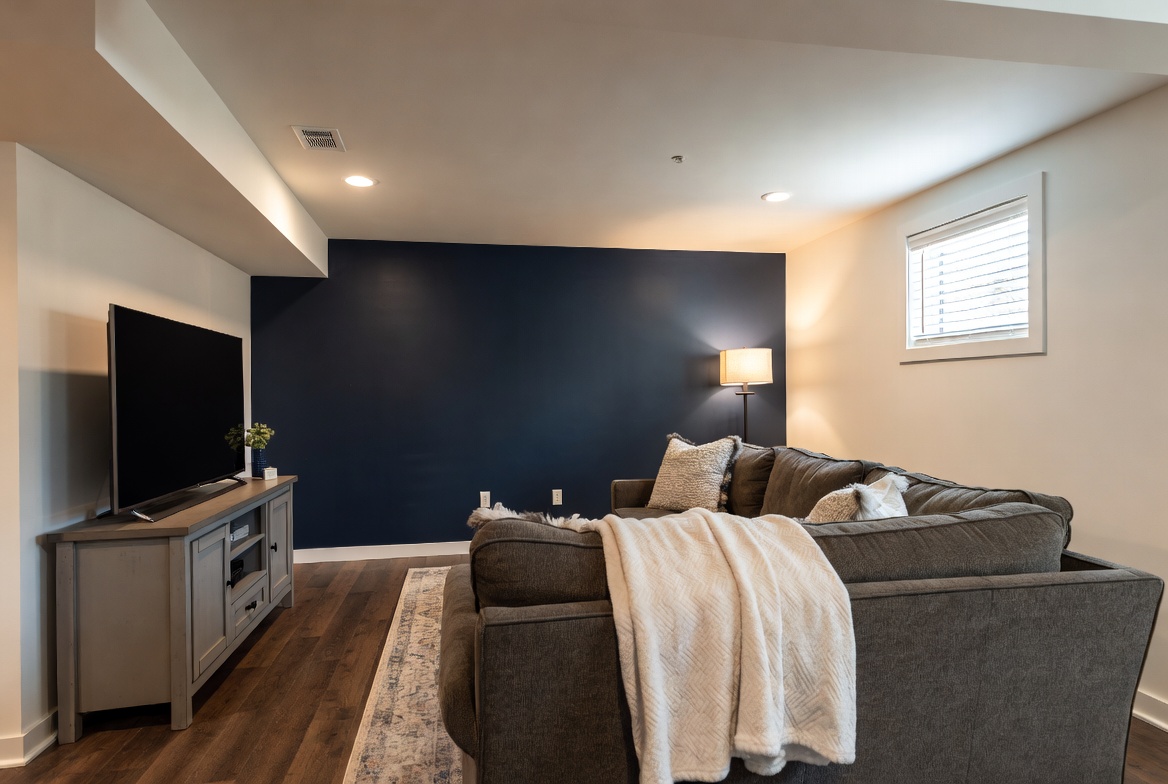
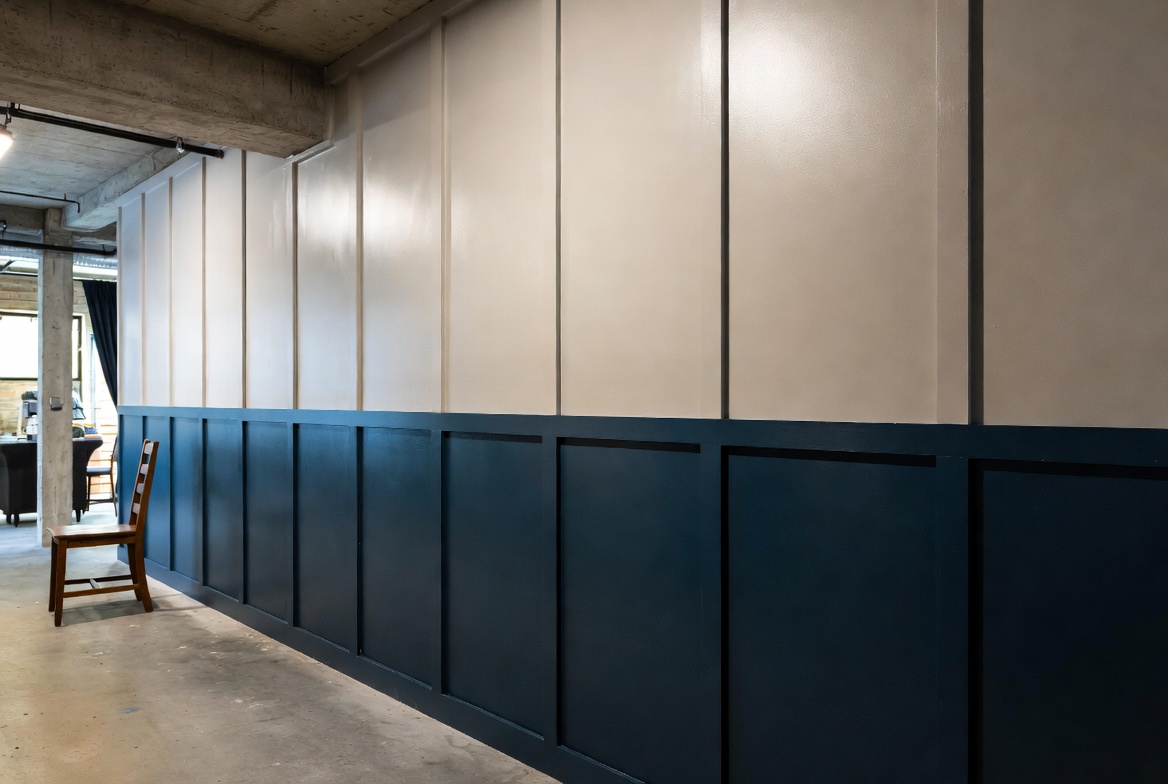
A family in Mapleton wanted to make their basement feel less like a basic rec room. They painted one long wall a deep navy blue for under four hundred dollars, including supplies. The change was dramatic. Their kids started using the space more often, and the parents said it finally felt like a real living area instead of just extra square footage. They were surprised how much difference one wall made for such a small investment and said they would do it again without hesitation.
Is It Worth Spending More?
It depends on the look you want and how long you plan to keep it. A simple painted accent wall can deliver excellent results for very little money. If you want more texture and depth, spending more on wood slats or stone veneer often feels worth it because the impact is greater and the finish feels more custom.
For most families, starting with paint or peel and stick wallpaper is a smart way to test the waters. You can always upgrade to a more substantial material later if you decide you want something with more presence.
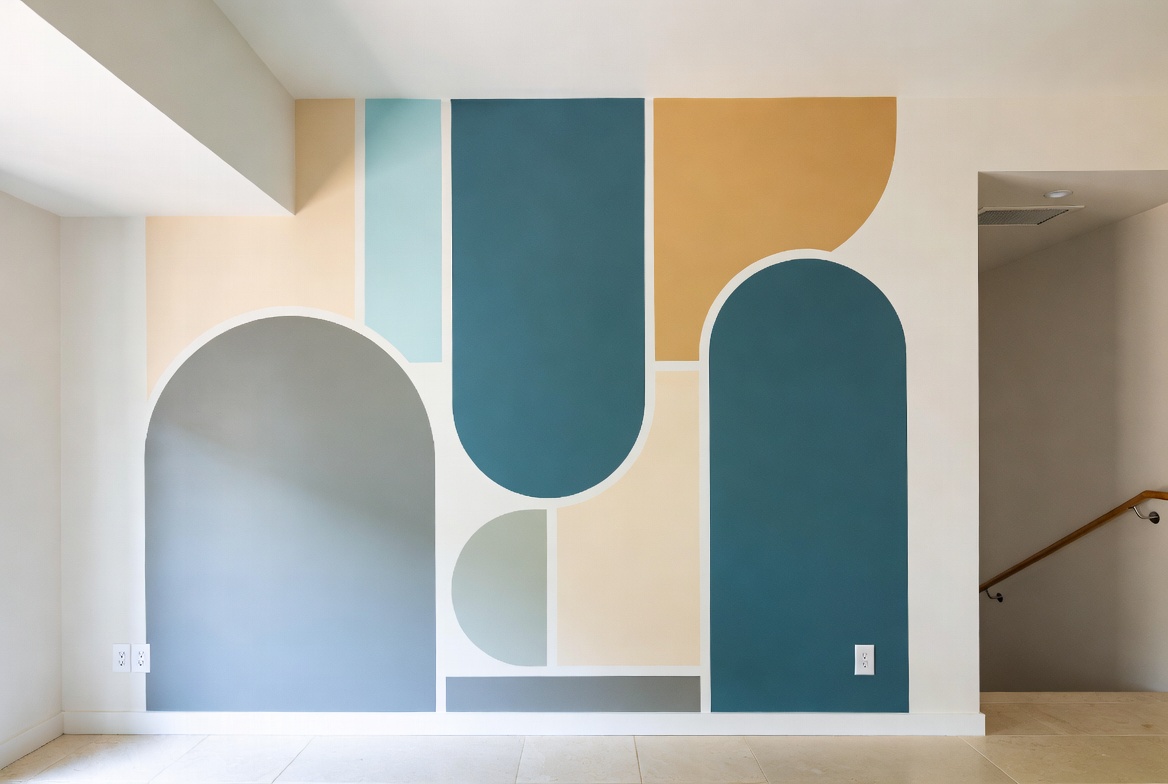
Painted Accent Wall Ideas That Make a Big Impact
Paint remains one of the easiest, fastest, and most affordable ways to create an accent wall in a basement. You don’t need special skills to get good results, and if you ever get tired of it, repainting is relatively simple and inexpensive compared to other materials.
Here are some of the most effective painted accent wall approaches for basements.
Bold, Rich Colors
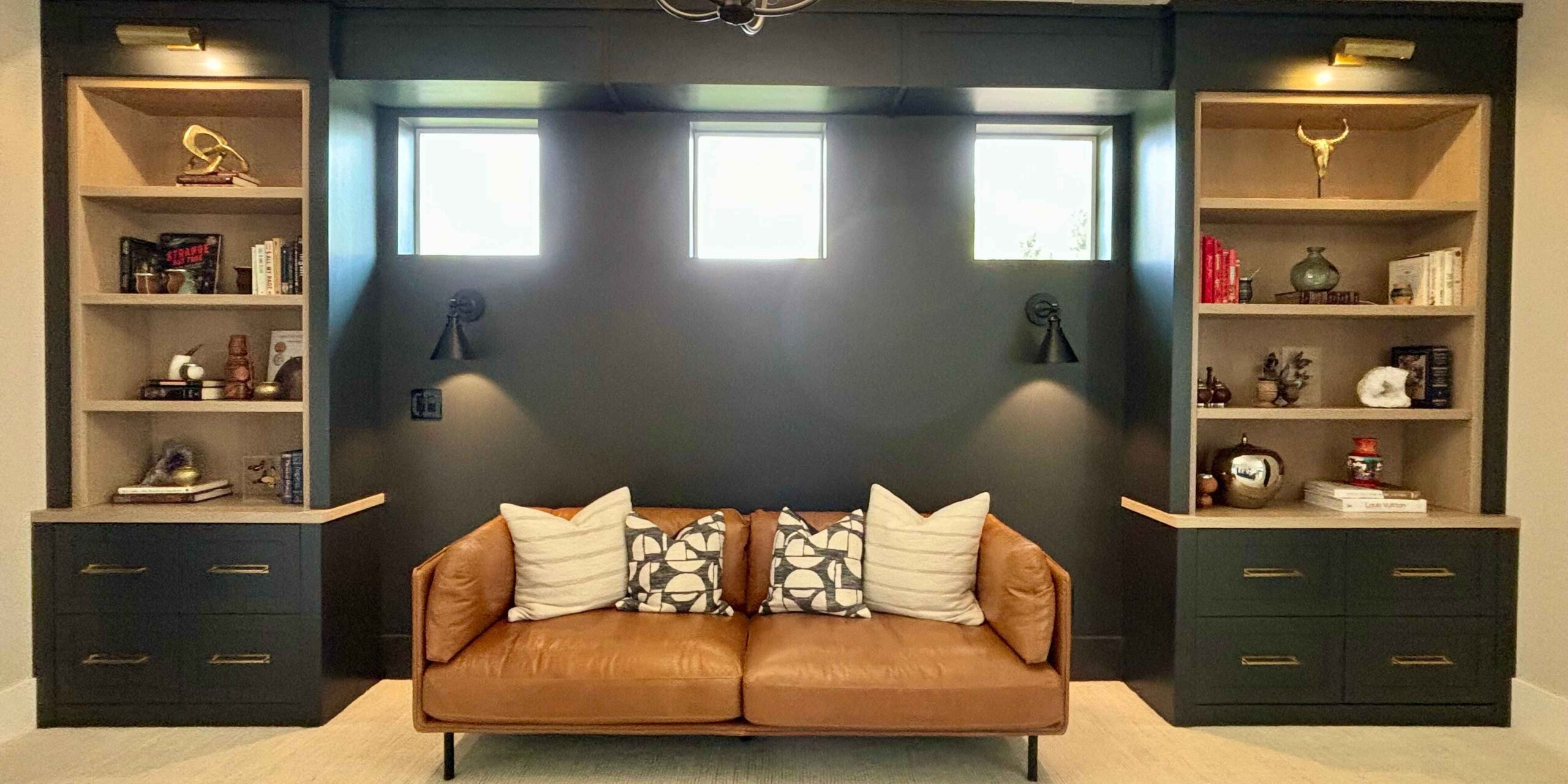
One of the simplest ways to make a big impact is to paint a single wall in a deep, saturated color. Colors like navy blue, forest green, charcoal gray, warm terracotta, or deep burgundy can completely change the mood of a basement.
- These colors work especially well in basements that already have decent lighting or windows.
- They create a cozy, intimate feeling that can make large basements feel more grounded.
- Dark colors tend to recede visually, which can make a wall feel like a feature rather than a flat surface.
- Pairing a bold wall with lighter furniture and decor helps balance the space so it doesn’t feel too heavy.
Two-Tone or Half Walls
Painting the bottom portion of a wall one color and the top another creates a classic, structured look. This style often works well when combined with a chair rail or when the basement already has wainscoting or board and batten.
- A common approach is to paint the bottom third or half in a deeper color and the top in a lighter neutral.
- This technique can make ceilings feel higher and adds visual interest without overwhelming the space.
- It works especially well in basements that have existing trim or paneling you want to highlight.
- Two-tone walls are relatively easy to paint and give a more custom, finished appearance.
Geometric or Patterned Paint
If you want something more creative than a solid color, consider painting simple geometric shapes, stripes, or subtle patterns. This approach takes more time and careful planning but can look very custom without costing much more than regular paint.
- Simple shapes like triangles, diamonds, or arches can add personality while still feeling modern.
- Horizontal or vertical stripes can make a wall feel wider or taller depending on the direction.
- Subtle tonal patterns (using two similar shades) add texture without being too loud.
- These designs work best when the rest of the room stays relatively simple so the wall remains the focus.
Tips for Choosing and Applying Paint
A few practical considerations can help your painted accent wall turn out well:
- Test samples first — Basement lighting can make colors look very different than they appear in the store. Paint large samples directly on the wall and observe them at different times of day.
- Choose the right finish — Satin or eggshell finishes are usually easier to clean than flat paint and still look soft in basements.
- Prep the wall properly — Clean the surface well and use primer if needed. Good prep work makes a noticeable difference in the final result.
- Consider the rest of the room — A bold accent wall works best when the surrounding walls, furniture, and decor don’t compete with it too much.
Quick tip: If you’re unsure about committing to a bold color, start with a painted half wall or a smaller section first. It’s much easier to adjust or repaint a smaller area if you decide you want something different later.
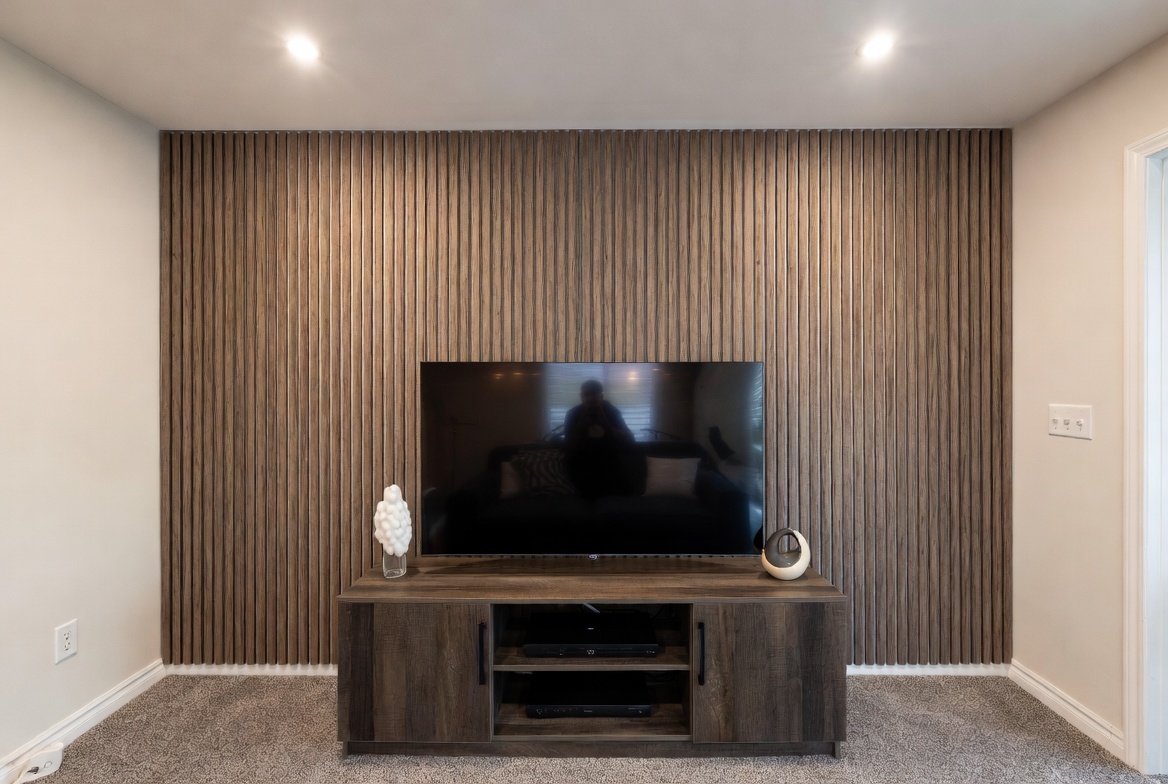
Wood Slat and Stone Veneer Accent Walls
If you want more texture, depth, and visual interest than paint alone can provide, wood slat walls and stone veneer are popular choices. These materials add warmth and character while still working well in basement environments.
Wood Slat Accent Walls
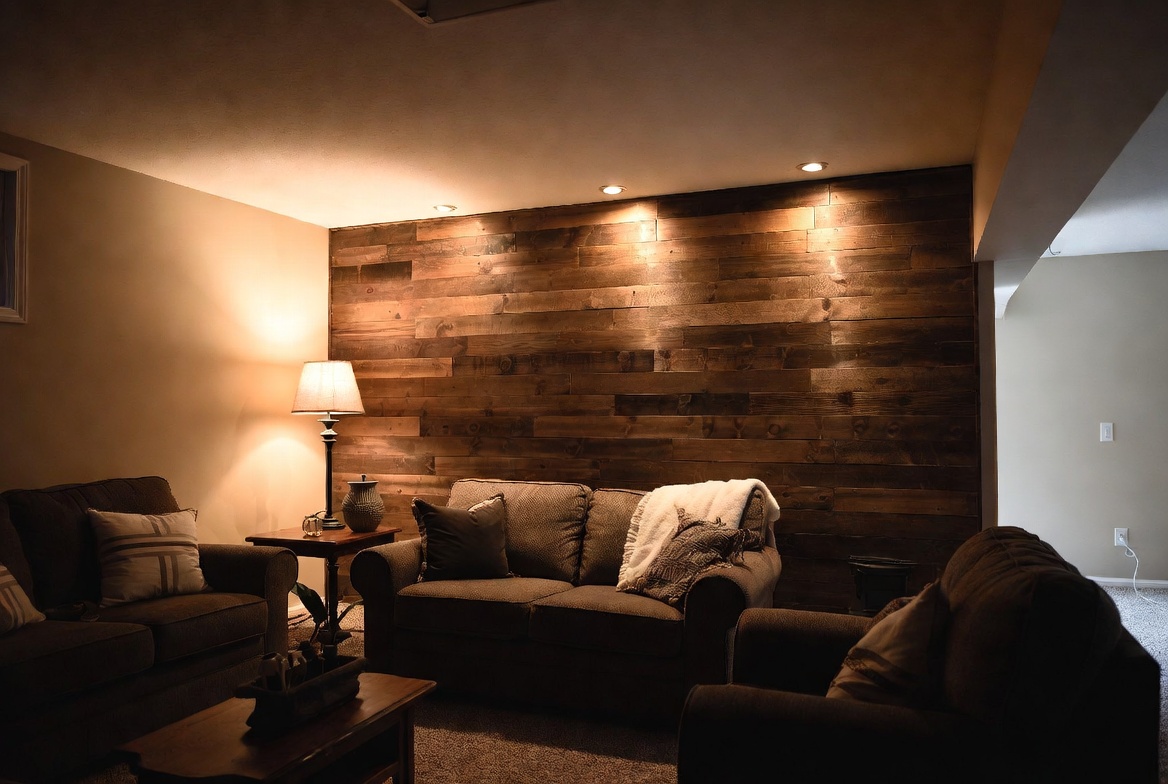
Wood slat walls have become one of the most popular accent wall trends in recent years. They add warmth, texture, and a modern yet cozy feel that works especially well in basements.
- Best placement — Wood slats work particularly well behind a TV, sofa, or fireplace area where they can serve as a natural focal point.
- Material options — You can use real wood, stained plywood strips, or pre-made slat panels. Pre-made options are often faster to install but may cost more.
- Visual effect — The vertical lines can make ceilings feel higher, while the wood tone adds warmth that plain paint cannot achieve.
- Maintenance — Wood slats are generally easy to dust and maintain. Avoid placing them in areas with high moisture unless properly sealed.
Wood slat walls strike a nice balance between modern and cozy, making them a versatile choice for many basement styles.
Stone and Brick Veneer Walls
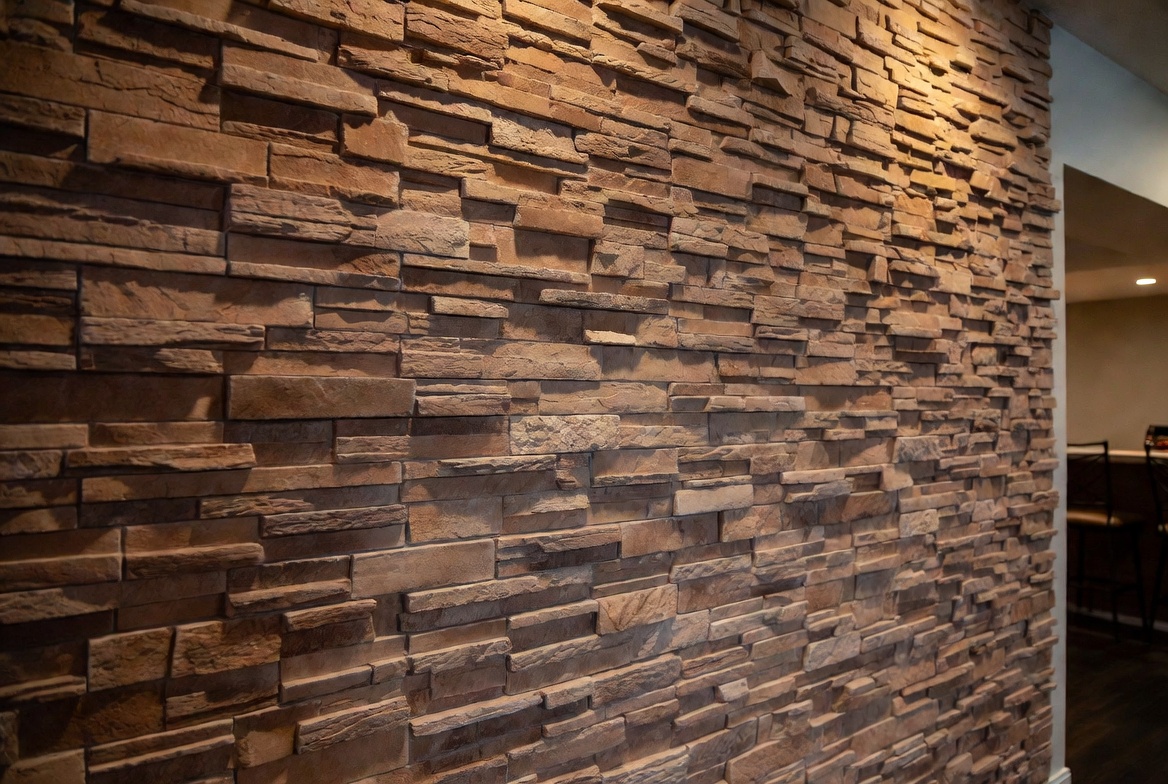
Faux stone or thin brick veneer can give a basement a more rustic, industrial, or textured look. These materials are much lighter and easier to work with than real stone or brick, yet they still deliver significant visual impact.
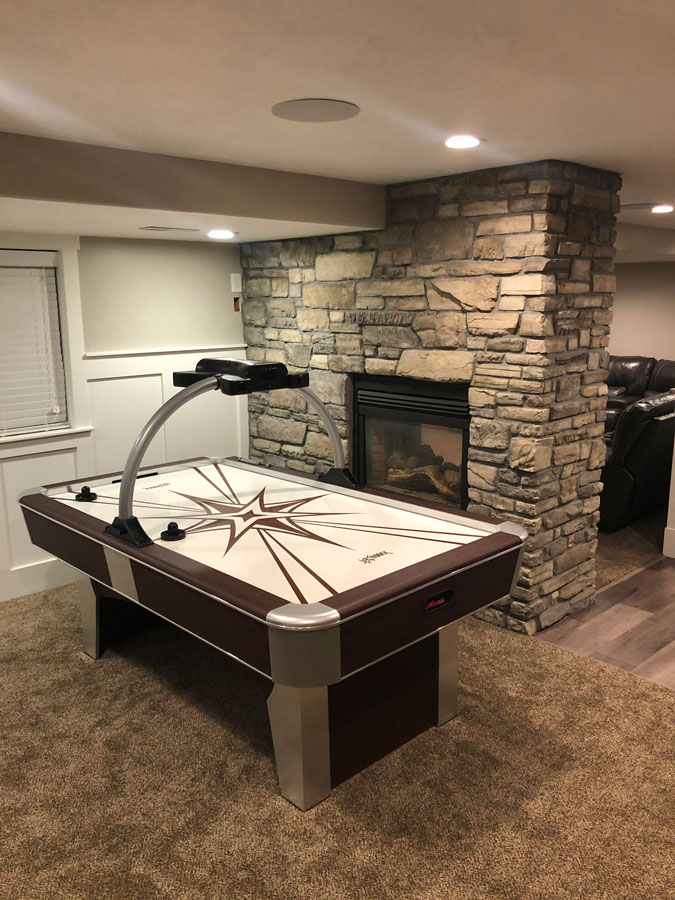
- Best placement — Stone veneer works especially well in entertainment areas, behind bars, or in spaces meant for gathering and games.
- Installation — While DIY-friendly for some, professional installation is often recommended for the best long-term results and appearance.
- Style options — You can choose from stacked stone, ledgestone, or thin brick styles depending on the look you want.
- Maintenance — Stone veneer is generally low maintenance but can collect dust in the texture, so occasional cleaning may be needed.
Stone veneer adds a grounded, architectural feel that can make a basement feel more custom and substantial.
| Feature | Wood Slat Walls | Stone Veneer Walls |
|---|---|---|
| Look & Feel | Warm, modern, and cozy | Rustic, textured, and grounded |
| Best For | TV walls, sofa backdrops, modern spaces | Entertainment areas, bars, industrial or rustic styles |
| DIY Difficulty | Moderate (many homeowners can do it) | Higher (professional installation often recommended) |
| Maintenance | Easy to dust and clean | Low maintenance but can collect dust in texture |
| Cost Range | $800 – $2,500 | $1,200 – $3,500 |
Experience of a Bluffdale Family
A couple in Bluffdale added a wood slat accent wall behind their basement TV area. They did most of the work themselves over a couple of weekends and spent around twelve hundred dollars total. They said it made the space feel much more modern and put-together. Their friends now comment on it every time they come over, and they feel like it was one of the best small upgrades they have done in the house. The texture and warmth completely changed how the basement felt.
Things to Consider Before Choosing
Both wood slat and stone veneer walls can look great, but here are a few practical points to keep in mind:
- Lighting matters — Both materials benefit from good lighting. Consider adding sconces or LED strips to highlight the texture.
- Moisture concerns — In basements, make sure any wood is properly sealed, especially near exterior walls.
- Long-term flexibility — Wood slats and stone veneer are more permanent than paint. Consider whether you might want to change the look in the future.
- Professional help — While many wood slat walls can be DIY, stone veneer often looks best when installed by someone experienced.
Budget-Friendly Accent Wall Options
You do not need to spend a lot of money to create a good-looking accent wall. Some of the most effective options are also the most affordable, especially if you are willing to do a bit of the work yourself or get creative with materials.
Peel and Stick Wallpaper
Peel and stick wallpaper is one of the easiest and most popular budget options. It comes in a wide variety of patterns and textures, and it is relatively simple to install and remove.
- Great for renters or anyone who likes to change their space frequently.
- Many patterns are designed to look like more expensive materials (wood, stone, tile, etc.).
- Installation usually requires minimal tools and can often be done in a weekend.
- Quality varies, so look for thicker, higher-rated products if you want it to last longer.
Board and Batten
Board and batten is a classic look that can be achieved with basic lumber and paint. It gives a custom, architectural feel without requiring expensive materials.
- Can be done for a few hundred dollars in materials depending on wall size.
- Works well in both traditional and modern basements.
- You can adjust the spacing and height of the battens to create different looks.
- Many homeowners successfully complete this project themselves with basic tools.
Painted Texture or Sponge Techniques
If you want to add depth and texture without buying new materials, painted texture techniques can be very effective. Methods like sponging, ragging, or subtle layering can create visual interest using just paint.
- Very low cost if you already have paint or only need to buy a small amount.
- Allows you to create a custom look that is unique to your space.
- Works well for adding subtle texture without making the wall too busy.
- Requires some practice and patience to get an even result.
Reclaimed or Pallet Wood
Using reclaimed wood or pallet wood can be one of the most budget-friendly ways to add texture, especially if you can source the materials for free or very cheaply.
- Can be inexpensive or even free if you find pallets or reclaimed wood locally.
- Gives a rustic or industrial character that is hard to achieve with new materials.
- Requires more time and effort to clean, cut, and prepare the wood properly.
- Make sure any reclaimed wood is properly dried and treated before installing in a basement.
| Option | Typical Cost | DIY Difficulty | Best For |
|---|---|---|---|
| Peel and Stick Wallpaper | $300 – $900 | Easy | Renters, quick changes, pattern lovers |
| Board and Batten | $400 – $1,200 | Moderate | Classic or farmhouse style on a budget |
| Painted Texture Techniques | $100 – $400 | Moderate | Adding depth without new materials |
| Reclaimed / Pallet Wood | $0 – $800 | Harder | Rustic or industrial looks on a very tight budget |
Tips for Keeping Costs Low
- Shop sales and clearance sections for paint and wallpaper.
- Consider doing the work yourself if you have the time and basic skills.
- Look for local sources of reclaimed wood or pallets instead of buying new.
- Start with a smaller section of wall first to test the look before committing to a full wall.
Even with a limited budget, you can create an accent wall that adds real character to your basement. The key is choosing an option that matches both your style and the amount of time and skill you are able to invest.
Design Tips for Basement Accent Walls
A few thoughtful design choices can help your accent wall look intentional and well-planned rather than random or out of place. The goal is to create something that enhances the space without feeling forced or overwhelming.
Choose the Right Wall
Not every wall makes a good candidate for an accent wall. The best results usually come from walls that already have some natural focus or purpose in the room.
- Behind a couch, TV, or fireplace are classic and effective choices.
- Walls that are visible when you first enter the basement often work well as a welcoming feature.
- Avoid walls that are frequently blocked by furniture or have too many interruptions (doors, windows, outlets).
- In open basements, consider which wall will be seen most often from the main seating or activity areas.
Pay Attention to Lighting
Lighting makes a big difference in how an accent wall looks, especially in basements that can feel dark or dim. A well-lit accent wall feels intentional and inviting, while a poorly lit one can look flat or forgotten.
- Consider adding wall sconces, picture lights, or LED strip lighting to highlight the wall.
- Dark colors and textured materials (like wood slats or stone) benefit from good lighting to show their depth.
- If the wall has a window, think about how natural light hits it throughout the day.
- Test your lighting plan before finalizing the accent wall treatment.
Keep the Rest of the Room Balanced
An accent wall works best when it has room to stand out. If the rest of the space is already busy with patterns, colors, or furniture, the accent wall can get lost or feel overwhelming.
- Keep surrounding walls, furniture, and decor relatively simple so the accent wall remains the focus.
- If your accent wall is bold or textured, consider using more neutral tones elsewhere in the room.
- Too many competing features can make the space feel chaotic instead of designed.
Think About Scale and Proportion
The size and boldness of your accent wall should feel appropriate for the size of your basement and how the space is used.
- In smaller basements, very bold patterns or very dark colors can sometimes feel overwhelming.
- Consider doing a half wall, a smaller section, or a lighter color if the space is compact.
- In larger basements, you have more flexibility to go bold with color, pattern, or texture.
- Make sure the scale of the accent wall feels balanced with the furniture and other features in the room.
| Design Tip | Why It Matters | Quick Recommendation |
|---|---|---|
| Choose the Right Wall | Not every wall deserves focus | Pick walls with natural focal points (behind TV, sofa, fireplace) |
| Plan for Lighting | Poor lighting makes even good walls look flat | Add sconces or LED lighting to highlight texture and color |
| Keep Balance | Too much going on dilutes the impact | Keep surrounding areas simpler so the accent wall stands out |
| Consider Scale | Bold choices can overwhelm small spaces | Adjust boldness based on basement size and how the space is used |
Experience of a Riverton Utah Family
A family in Riverton used peel and stick wallpaper with a subtle geometric pattern on one wall in their basement. It cost them around six hundred dollars and took them a weekend to install. They said it was one of the easiest projects they have done and it made the space feel much more finished. Their teenagers actually started hanging out downstairs more after the change. They chose a wall that was visible from the main seating area, which helped the new wall feel intentional rather than random.
Taking a little time to think through these design details usually results in an accent wall that feels like a natural and thoughtful part of the basement rather than an afterthought.
Common Mistakes With Basement Accent Walls
Many people make similar mistakes when adding accent walls to their basements. These issues often come from focusing too much on how something looks in photos rather than how it will actually work in a real basement with real lighting, use, and family life. Avoiding these common pitfalls can help your accent wall look intentional and last longer.
| Common Mistake | Why It Happens | Better Approach |
|---|---|---|
| Choosing the wrong wall | Picking any wall without considering if it has natural focus | Choose walls that already serve as a focal point (behind TV, sofa, or fireplace) |
| Going too dark or bold | Not accounting for how dark basements can feel | Test samples in your actual lighting and consider balance with the rest of the room |
| Picking hard-to-maintain materials | Choosing trendy options without thinking about cleaning and kids | Select materials that are reasonably easy to clean, especially in family spaces |
| Poor wall prep | Rushing into painting or installing without proper prep | Clean, patch, and prime the wall properly before starting |
| Competing with too many features | Trying to make everything in the room stand out | Keep the rest of the space relatively simple so the accent wall can shine |
| Ignoring lighting | Assuming overhead lights will be enough | Plan for task or accent lighting to properly highlight the wall |
| Not thinking about longevity | Choosing something trendy without considering how long you’ll keep it | Pick options that you can live with for several years or that are easy to update later |
How to Avoid These Mistakes
Most of these issues are much easier to prevent during the planning stage than to fix later. Here are a few practical ways to stay on track:
- Take photos of your basement and look at them objectively before deciding which wall to accent.
- Test paint colors and materials in your actual space and lighting before committing.
- Think about how the space is actually used day to day, especially if you have kids or pets.
- Consider how easy the accent wall will be to clean and maintain over time.
- Keep the rest of the room relatively calm so the accent wall has room to stand out.
Taking a little extra time to think through these details usually leads to an accent wall that looks intentional, works well with your space, and holds up better over time.
What to Think About Before You Start
Before committing to an accent wall, think about how long you want it to last and how much maintenance you are willing to do. Also consider the overall style of your basement and whether the accent wall will still feel good in a few years.
If you are unsure, starting with paint is usually the safest and most affordable option. You can always add texture or a different material later if you decide you want more impact.
Practical tip: Take photos of your basement walls and test paint samples or wallpaper samples in the actual space before committing. Lighting in basements can make colors look very different than they do in the store or online.
Final Thoughts
An accent wall is one of the simplest ways to give a basement more personality and warmth. You do not need to spend a lot of money or do a full renovation to make a meaningful difference in how the space feels.
Whether you choose paint, wood, stone, or something more budget-friendly, the key is picking something that fits your style and the way your family actually uses the basement. Done well, a good accent wall can make your lower level feel more like a true extension of your home.
Frequently Asked Questions
What is the cheapest way to do a basement accent wall?
Painting is usually the most affordable option. A good quality paint job on one wall can cost just a few hundred dollars and still make a noticeable difference. Peel and stick wallpaper is another budget-friendly choice that is easy to install and remove.
How long does an accent wall last?
It depends on the material and how well it was installed. Paint can last many years. Good quality wallpaper and wood slat walls can also last a long time if done properly. Most accent walls are relatively easy to update or change when you are ready for something new.
Can I do an accent wall myself?
Yes. Painted walls and peel and stick wallpaper are very DIY friendly for most people. Wood slat walls and board and batten can also be done by handy homeowners, though they take more time and basic carpentry skills. Stone veneer is usually best left to professionals.
What color works best for a basement accent wall?
It depends on the mood you want. Darker, richer colors like navy, charcoal, forest green, or deep terracotta can make a basement feel cozier and more intimate. Lighter or neutral tones can help brighten the space. Always test paint samples directly on your wall and observe them in your actual lighting before deciding.
Do accent walls work in small basements?
Yes, but scale and boldness matter. In smaller spaces, consider doing a half wall, a smaller section of wall, or using a lighter color so it does not feel overwhelming. Very dark or heavily patterned walls can sometimes make small basements feel more cramped if not balanced well.
Should I choose paint or wallpaper for my accent wall?
Paint is the most flexible and affordable option if you want a solid color or simple pattern. Wallpaper (especially peel and stick) is better if you want texture, pattern, or a look that mimics wood or stone. Paint is easier to change later, while wallpaper can offer more visual impact with less skill required.
What if I want to remove the accent wall later?
Painted walls are the easiest to change — you can simply repaint. Peel and stick wallpaper is also designed to be removable. Wood slat walls and stone veneer are more permanent and harder to remove cleanly, so consider how long you want to keep the look before choosing these options.
How important is lighting for an accent wall in a basement?
Very important. Basements often have limited natural light, so accent walls can look flat or dark without proper lighting. Adding wall sconces, picture lights, or LED strip lighting can dramatically improve how the wall looks and make the space feel more intentional and inviting.
Basement Accent Wall Ideas • Cheap Basement Makeover • Basement Feature Wall Utah

Bryant Bitner
Founder & Lead Project Manager, Pro-Worx Construction
Bryant leads Pro-Worx Construction and has helped many Utah families refresh their basements with simple, affordable upgrades. He focuses on practical accent wall ideas that add character without requiring a full renovation.
When he is not on job sites, he enjoys helping homeowners find small changes that make their lower level feel more like home.