
Overview
This guide breaks down exactly what it costs in 2026 to remove lally columns from a Utah basement, when it’s actually possible, and what it really means for your finished space. You’ll get clear pricing ranges, the real process step by step, engineering requirements, Utah-specific factors like snow load and soil, and stories from local families who’ve already done it. Whether you’re trying to open up a family room, add a bar, or just stop working around those metal poles, this covers the practical details you need before making the call.
Table of Contents
- What Are Lally Columns and Why Are They There?
- When Can You Actually Remove Them?
- What Does It Cost in Utah Right Now?
- What the Removal Process Actually Looks Like
- Utah-Specific Things That Affect the Job
- Common Mistakes People Make
- How It Changes What You Can Do With Your Basement
- How Long Does the Whole Thing Take?
- Frequently Asked Questions
Those steel posts standing in the middle of the basement are probably lally columns. They’re holding up the floor above, but they also tend to get in the way of any layout that actually feels open and usable. A lot of Utah homeowners reach the point where they want them gone so they can finally finish the space the way they’ve pictured it.
Removing them isn’t a simple weekend job though. It’s structural work that needs proper planning. This guide lays out what it really costs in 2026, what the process involves, and what local families have learned from going through it.
What Are Lally Columns and Why Are They There?
Lally columns are steel support posts that run from the basement floor up to the floor joists above. Most are filled with concrete for extra strength. They were installed during construction to hold up the weight of the house where the span between foundation walls was too wide for the joists to carry on their own.
Why Builders Installed Them
These columns became common because they offered a simple and affordable way to support the structure. Here is why they show up in so many basements:
- They are quick and inexpensive to install compared to building full support walls.
- They work well in homes where the basement is wide and the joists above need extra help in the middle.
- They were a standard solution for many builders, especially in homes built from the 1970s through the early 2000s.
- They take up very little floor space while still doing a heavy structural job.
The Downside Once You Want to Finish the Space
While they do their job, lally columns often create problems when homeowners start planning how they actually want to use the basement.
- They break up the floor plan and make it harder to arrange furniture or create open areas.
- They can feel like obstacles when trying to design a family room, bar, or guest space.
- Many people end up working around them instead of getting the layout they originally wanted.
| Feature | Lally Column | Full Support Wall |
|---|---|---|
| Space Taken Up | Very little floor space | Takes up a full wall |
| Cost to Install | Lower | Higher |
| Flexibility for Finishing | Limits open layouts | Creates solid walls for rooms |
| Common in Utah Homes | Very common | Less common in older homes |
When Can You Actually Remove Them?
Not every lally column can be removed. It depends on whether the weight it is carrying can be safely moved to something else, like a beam or wall. An engineer needs to review the structure and decide if removal is possible without causing problems higher up in the house.
What an Engineer Checks First
- Whether the floor joists above can span the distance without the column.
- If a beam can be installed to carry the load instead.
- How the change will affect the rest of the structure, including walls and the roof.
- Whether the foundation and footings can handle any new point loads from a beam.
Utah Factors That Matter
Utah homes often have extra considerations that affect whether removal makes sense.
- Snow load: Engineers must account for the weight of snow on the roof, which can be heavy in our area.
- Clay soil: Shifting soil around the foundation can influence how loads are transferred after a column is removed.
- Older construction: Many homes built before the mid-1990s used different standards, so the existing framing needs careful review.
- Location of the column: Columns near the center of the house are often easier to remove than ones near exterior walls or under heavy roof loads.
| Factor | Makes Removal Easier | Makes Removal Harder |
|---|---|---|
| Column Location | Near the center of the basement | Near exterior walls or under heavy roof loads |
| Roof Load | Light roof load above | Heavy snow load or complex roof |
| Soil Conditions | Stable soil with good drainage | Expansive clay soil that shifts |
| Age of Home | Newer construction with clear framing | Older homes with unknown modifications |
The only reliable way to know whether a column can be removed is to have a structural engineer evaluate your specific home. Some columns come out with relatively simple beam work. Others would require major changes higher in the house, which makes removal much more expensive and complicated.
What Does It Cost in Utah Right Now?
Prices in 2026 for removing lally columns on the Wasatch Front generally fall into these ranges. The final number depends on how many columns you’re taking out and how big the replacement beam needs to be.
| Part of the Job | Typical Price Range | What Drives the Cost |
|---|---|---|
| Engineering and Drawings | $800 – $2,500 | How complex the load transfer is |
| Beam and Installation (1–2 columns) | $4,500 – $9,500 | Beam material and temporary shoring needed |
| Beam and Installation (3+ columns) | $10,000 – $22,000+ | Larger beams and more structural work |
| Permits and Inspections | $500 – $1,600 | City requirements and number of inspections |
| Full Project (Most Common) | $8,000 – $26,000 | Depends on number of columns and beam size |
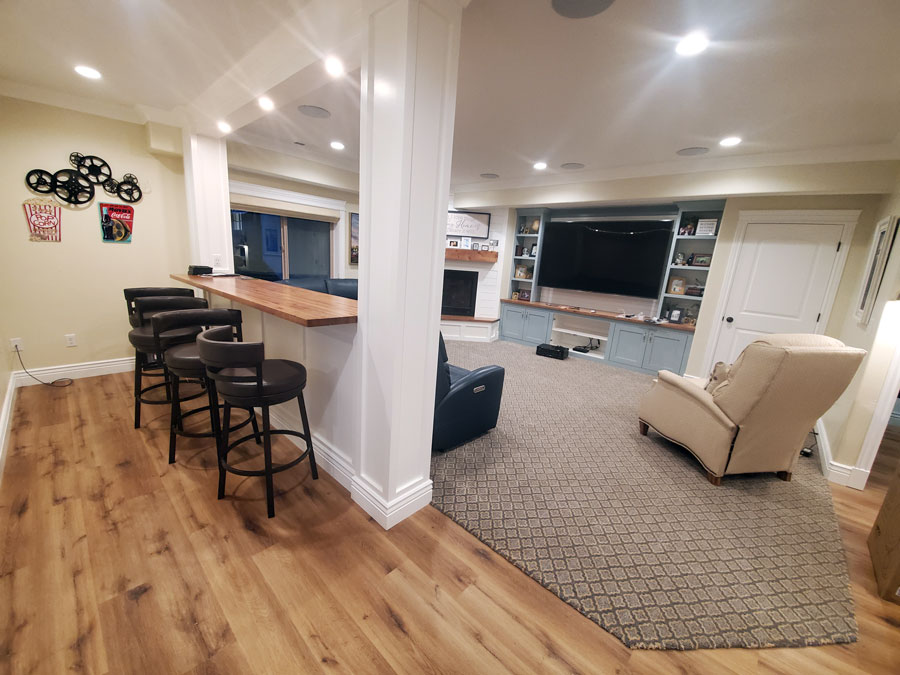
A homeowner in Park City had two columns they wanted gone so they could open up the basement for a bigger family room and bar. After engineering and a steel beam, the whole job landed right around $14,800. They said the difference in how the space feels was worth every dollar, the room suddenly felt twice as big and actually usable.

What the Removal Process Actually Looks Like
This isn’t something you can knock out in a couple of days. It follows a pretty set sequence.
- An engineer comes out, looks at the structure, and designs what needs to replace the columns.
- Permits get pulled through the city.
- Temporary supports go in so the floor stays stable while the work happens.
- The new beam gets installed and secured.
- The old columns come out once the beam is carrying the weight.
- The beam gets finished and the city does its inspections.
What Went Wrong for One Couple
A couple in Vineyard tried to take one column out on their own to save money. They quickly realized they needed proper temporary supports and engineering. Once they brought in the right people, the job got done safely, but it ended up costing more than if they’d started with professionals from the beginning.

Challenges and Considerations For Utah Basements
Utah homes often have a few extra factors that affect structural work in the basement. These can influence both the cost and the approach when removing lally columns.
Snow Load on the Roof
- Utah gets significant snowfall in many areas, which adds extra weight on the roof.
- Engineers must design beams that can safely carry both the normal floor load and the additional snow load above.
- This sometimes means using larger or stronger beams than would be needed in milder climates.
Clay Soil and Foundation Movement
- Much of the Wasatch Front has expansive clay soil that swells and shrinks with moisture changes.
- This movement can affect how loads transfer once a column is removed.
- Good drainage around the foundation becomes especially important to limit soil shifting over time.
Older Home Construction
- Many Utah homes built before the mid-1990s used different building standards than what is common today.
- Framing details and load paths are sometimes harder to determine without opening up walls or ceilings.
- This can lead to more detailed engineering work before any columns can be safely removed.
| Utah Factor | How It Affects Column Removal | What Usually Helps |
|---|---|---|
| Snow Load | Requires stronger beams to handle extra roof weight | Proper engineering that accounts for local snow conditions |
| Clay Soil | Can shift and affect how new loads are supported | Good drainage and proper foundation assessment |
| Older Homes | Framing details are sometimes unclear or outdated | More thorough engineering review before work begins |

Common Mistakes People Make
Removing lally columns is structural work, and several mistakes show up repeatedly. Here are the most common ones and better ways to approach them.
| Common Mistake | Why It Happens | Better Approach |
|---|---|---|
| Skipping engineering | Thinking the columns are not doing much or hoping it will be fine | Always start with a structural engineer before any work begins |
| Underestimating beam and support costs | Focusing only on removing the columns without planning the replacement | Get full pricing that includes the beam, temporary supports, and finishing |
| Forgetting permits | Not realizing structural changes require city approval | Pull permits early so everything is documented and legal |
| Ignoring how the beam will look | Focusing only on the structural side and not the finished appearance | Plan how the beam will be finished or hidden before work starts |

How It Changes What You Can Do With Your Basement
Once the columns are gone, the basement usually becomes much more flexible. The difference is often bigger than people expect until they see the space opened up.
Better Layout Options
- Open floor plans become realistic instead of having to work around poles in the middle of the room.
- Furniture can be arranged the way you actually want it without awkward gaps or blocked views.
- It becomes much easier to create larger gathering spaces for family or entertaining.
More Functional Spaces
- Adding a wet bar, small kitchenette, or home theater area gets simpler without columns in the way.
- Bedrooms or guest suites can be laid out more naturally with better furniture placement.
- The overall space tends to feel bigger and more connected rather than broken into awkward sections.
What Changed for One Family
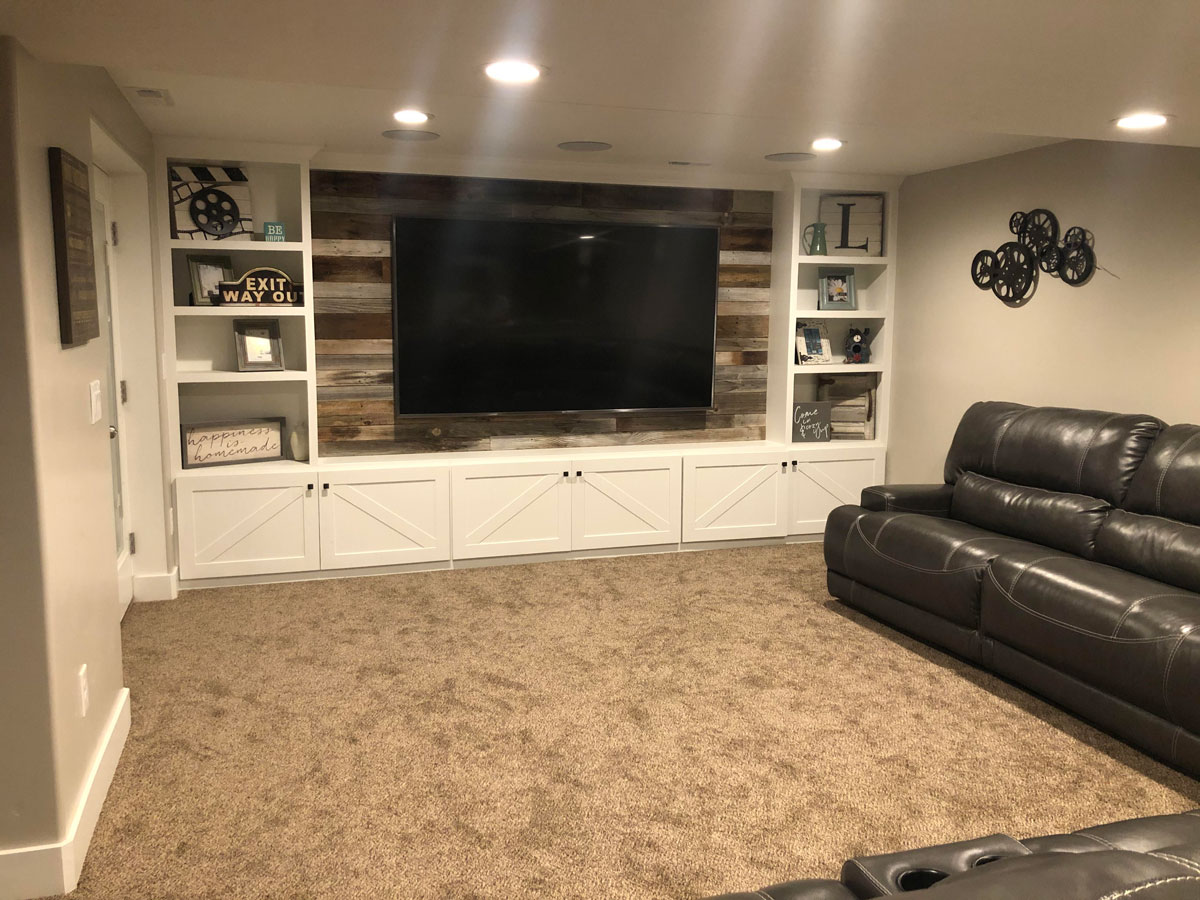
A family in South Jordan took out two columns when they finished their basement. With the open space, they were able to put in a big sectional, a decent-sized TV area, and a small bar without anything getting in the way. They say the basement went from a room they rarely used to the place everyone hangs out now.
How Long Does the Whole Thing Take?
Most projects take between 6 and 12 weeks from the first engineering visit to the day everything is finished and inspected. The actual removal and beam work usually happens pretty quickly once the planning is done, often just a few days of the heavy lifting.
Final Thoughts
Taking out lally columns can make a basement feel completely different, but it’s structural work that needs to be done properly. In Utah, that means paying attention to snow loads, soil, and local codes so the job holds up over time.
If those columns are standing between you and the basement you actually want, it’s worth having someone who knows what they’re doing take a look. Done right, it can turn a space that always felt limited into something that finally works for how you live.
Frequently Asked Questions
How much does it cost to remove lally columns in Utah?
Most projects in 2026 fall between $8,000 and $26,000. The final price depends on how many columns you’re removing, the size of the beam needed, and whether any extra structural work is required.
Do I need an engineer to remove lally columns?
Yes. Structural engineering is required. An engineer will determine if the load can be safely transferred to a beam and will provide the stamped plans needed for permits.
When is it not possible to remove lally columns?
It’s not always possible if the column is carrying too much load or if removing it would require major changes higher up in the house. An engineer will tell you whether removal is realistic for your specific home.
How long does it take to remove lally columns?
Most projects take between 6 and 12 weeks from the first engineering visit to final inspection. The actual removal and beam installation usually happens in just a few days once everything is planned and permitted.
Will removing lally columns increase my home value?
It often does. Open floor plans are popular with buyers, and removing the columns can make the basement feel significantly larger and more usable.
Can I remove lally columns myself?
No. This is structural work that requires engineering, temporary supports, and proper permits. Doing it incorrectly can cause serious damage to your home.
What happens if I can’t remove the columns?
There are still options. Some people build around the columns with creative layouts, while others box them in or turn them into design features. A good designer can often work with the existing columns instead of removing them.
Do I need permits to remove lally columns in Utah?
Yes. Structural changes require permits in almost every Utah city and county. Skipping permits can create problems later when you try to sell the house.
How much does engineering cost for lally column removal?
Engineering and stamped drawings usually cost between $800 and $2,500 depending on how complex the job is and how many columns are involved.
Remove Lally Columns Basement • Basement Column Removal Cost Utah

Bryant Bitner
Founder & Lead Project Manager, Pro-Worx Construction
Bryant has worked with quite a few Utah families on removing lally columns so they could finally open up their basements. He focuses on doing the structural work right the first time so the finished space actually lasts and feels worth the investment.
When he’s not on job sites, he’s usually talking to homeowners about why proper engineering and planning saves money and headaches down the road.